- Invisible zippers are designed to disappear into the seam, making them ideal for bridal and formal dresses.
- Nylon coil construction is preferred for softness, flexibility, and cleaner seam hiding.
- Wholesale buyers should verify length, color matching, tape stability, and sample consistency before bulk orders.
- For wedding dresses and evening gowns, the best zipper is the one that balances concealment, comfort, and sewing efficiency.
- Matching the zipper to the fabric weight and seam construction matters more than choosing the longest or strongest option.
Best invisible zippers for wedding dresses and evening gowns are defined by concealment, seam compatibility, and dependable stitching performance, not by a single universal specification. In garment engineering, invisible zippers are usually nylon coil zippers with the teeth rolled to the back side, which allows the seam to close over them and hide the closure. For precision-driven apparel production, even small alignment issues matter: ISO 4915 defines seam and stitch types used in apparel construction, while industrial sewing teams often work around seam allowances of 1.0 cm to 1.5 cm depending on the pattern and fabric. For wholesale buyers sourcing bridal and formalwear components, zippers, lace, and sewing accessories should be selected as a system, not as isolated parts.
What Makes an Invisible Zipper the Best Choice for Wedding Dress and Evening Gown Construction?
The best invisible zipper is the one that supports the dress silhouette without drawing attention to the closure.
Bridal and eveningwear are visually unforgiving because the back seam is often placed in a high-focus area, especially on fitted bodices, mermaid skirts, and illusion-back designs. A standard exposed zipper can interrupt satin sheen, lace symmetry, or beading layout. An invisible zipper solves that problem by sitting inside the seam line, leaving only a narrow pull tab visible when closed. In production terms, that means cleaner presentation, easier styling, and less rework from visible hardware mismatch.
There are three practical reasons designers prefer invisible zipper formats for formalwear. First, they reduce seam bulk, which matters when the fabric is delicate or layered. Second, they preserve the vertical line of the garment, which helps the dress fall smoothly over the torso and hips. Third, they support fast alterations because the closure can be inserted into a standard center-back seam without redesigning the pattern.
For buyers, the key question is not whether the zipper is invisible, but whether it remains stable under repeated fitting, pressing, and wear. In bulk purchasing, consistency across dye lots and tape tension is often more important than a single product feature. That is why wedding dress and evening gown buyers usually request samples before ordering by the carton.
| Feature | Why It Matters | Typical Wholesale Check |
|---|---|---|
| Nylon coil teeth | Soft, flexible, low-bulk seam profile | Even coil size, smooth glide, no sharp edges |
| Fine tape | Better concealment in light fabrics | Tape width suitable for seam allowance and needle path |
| Color range | Critical for bridal, satin, and pastel gowns | White, ivory, black, beige, custom shades |
| Slider smoothness | Affects fitting speed and final user experience | Repeated open-close testing without snagging |
Invisible Zipper vs Wedding Dress Zipper vs Dress Zipper: What Is the Real Difference?
These three phrases are related, but they do not mean exactly the same thing.
Invisible zipper is the technical product term. Wedding dress zipper is a use-case term, usually describing a hidden closure selected for bridal gowns. Dress zipper is broader and can refer to any closure used in dresses, including invisible, centered, separable, or decorative zippers. For SEO and sourcing, that difference matters because buyers search by both product type and application.
In formalwear sourcing, the best product description should combine all three terms naturally: invisible zipper for wedding dress, dress zipper for evening gown, and hidden zipper for bridal wear. That helps match the search intent of designers, pattern makers, and wholesale procurement teams who may not use identical terminology.
From a manufacturing perspective, invisible zippers are often preferred in lightweight or medium-weight fabrics such as chiffon overlays, satin crepe, tulle-backed bodices, and lace applications. Heavier exposed metal zippers may suit outerwear, but they are usually too visible and too rigid for bridal garments. The goal is not maximum strength; the goal is closure performance that disappears into the garment architecture.
| Term | Meaning | Best Use Case | Buyer Intent |
|---|---|---|---|
| Invisible zipper | Hidden coil zipper placed inside the seam | Wedding dresses, gowns, skirts | Technical product search |
| Wedding dress zipper | Zipper chosen for bridal garments | Bridal bodices, formal backs | Application search |
| Dress zipper | General zipper for dresses | Everyday and formal dresses | Broad sourcing search |
How to Choose the Best Invisible Zipper for Bridal and Formalwear Wholesale
The right invisible zipper begins with garment fabric weight and seam design.
Wholesale buyers should evaluate length, tape color, coil fineness, and packaging before placing bulk orders. A zipper that works in a prototype may fail in production if the tape is too stiff, the slider too tight, or the color too warm for ivory fabric. In bridal sourcing, a small mismatch can become visible under photography lights, so sample approval is essential.
For most wedding dresses, zipper length is determined by the seam opening, not by a fixed catalog number. A common production approach is to measure the center-back opening after pattern grading and then select the nearest matching length. Evening gowns often need longer openings for easier fitting, while fitted bridal bodices may require a shorter closure that ends above the waist seam. The best choice is the one that follows the silhouette without stressing the fabric.
The table below is a practical wholesale checklist for purchasing invisible zippers for dresses.
| Selection Factor | Recommended Range | Why It Helps | Wholesale Risk if Ignored |
|---|---|---|---|
| Zipper type | Nylon invisible coil | Lightweight, flexible, hidden in seam | Visible closure line |
| Length | Match to opening, often garment-specific | Improves fit and sewing efficiency | Rework and alteration delays |
| Color matching | Ivory, white, black, nude, custom | Reduces visual mismatch | Shade contrast on premium fabrics |
| Packaging | Bulk bag, carded, or custom labeled | Supports warehouse and retail needs | Poor inventory handling |
For trade buyers, zipper assortment planning should account for bridal season peaks, color demand, and minimum order quantities. If your catalog includes embellishment or trimming programs, pairing closures with satin ribbon and wedding lace can improve cross-category sourcing efficiency.
Performance Standards and Quantitative Details Buyers Should Verify
Quantitative checks are the fastest way to separate a dependable zipper from a risky bulk lot.
While product specifications vary by supplier, buyers can evaluate invisible zippers using measurable criteria instead of subjective feel alone. Textile sewing references commonly rely on seam allowance control of 1.0 cm to 1.5 cm in dress construction, because consistent allowance directly affects zipper insertion accuracy. ISO 4915 and ISO 4916 are useful references for stitch and seam classification when communicating with production teams, pattern makers, and quality inspectors. For material handling and wear resistance, manufacturers should also test slider operation under repeated cycles rather than relying on visual inspection alone.
The U.S. Consumer Product Safety Commission’s textile labeling framework and ASTM textile testing methods are not zipper-specific, but they reinforce the larger principle that component claims should be measurable and verifiable. For procurement, that means asking for coil width, tape width, sample consistency, and batch traceability.
Below is a realistic quality-control matrix for formalwear invisible zippers.
| QC Item | Typical Value or Check | Why It Matters |
|---|---|---|
| Seam allowance | 1.0 cm to 1.5 cm | Controls insertion accuracy and concealment |
| Stitch reference | ISO 4915 / ISO 4916 | Standardizes communication with production teams |
| Slider test | Repeated open-close cycles | Reveals snagging and tension issues |
| Color consistency | Batch-to-batch visual match | Prevents shade variation in bridal sets |
For broader textile compliance references, buyers can review ISO 4915, ISO 4916, and the U.S. CPSC textile guidance at CPSC Textiles, Clothing, and Accessories.
Best Invisible Zipper Sizes and Color Matching for Wedding Dresses
Size and shade matching determine whether a zipper disappears or becomes noticeable.
For wedding dresses, ivory and white remain the most common zipper colors, but nude and black are also needed for certain design palettes. Evening gowns may use deep jewel tones, metallic fabrics, or layered lace, so color matching should be built into the buying process. The best zipper for a white satin bridal gown may look wrong on an off-white lace dress if the undertone is too cool or too warm.
Wholesale buyers should standardize a color swatch system. That helps reduce returns and saves time during sampling. If your business serves both bridal and casual apparel, a mixed inventory of invisible zippers can be more efficient than a single-color program, especially when serving alteration shops and garment factories at the same time.
Length planning also matters. Shorter invisible zippers are often used in fitted waists or side seams, while longer zippers support back openings in formal gowns. Because dress construction varies by silhouette, the zipper should be chosen after the pattern is approved, not before.
| Dress Type | Typical Zipper Need | Color Priority | Buyer Note |
|---|---|---|---|
| Wedding gown | Invisible zipper in center back | White, ivory, nude | Must match fabric undertone |
| Evening gown | Invisible or hidden dress zipper | Black, jewel tones, nude | Depends on design and lining |
| Bridesmaid dress | Invisible zipper, often color-specific | Seasonal palette match | Bulk color planning reduces waste |
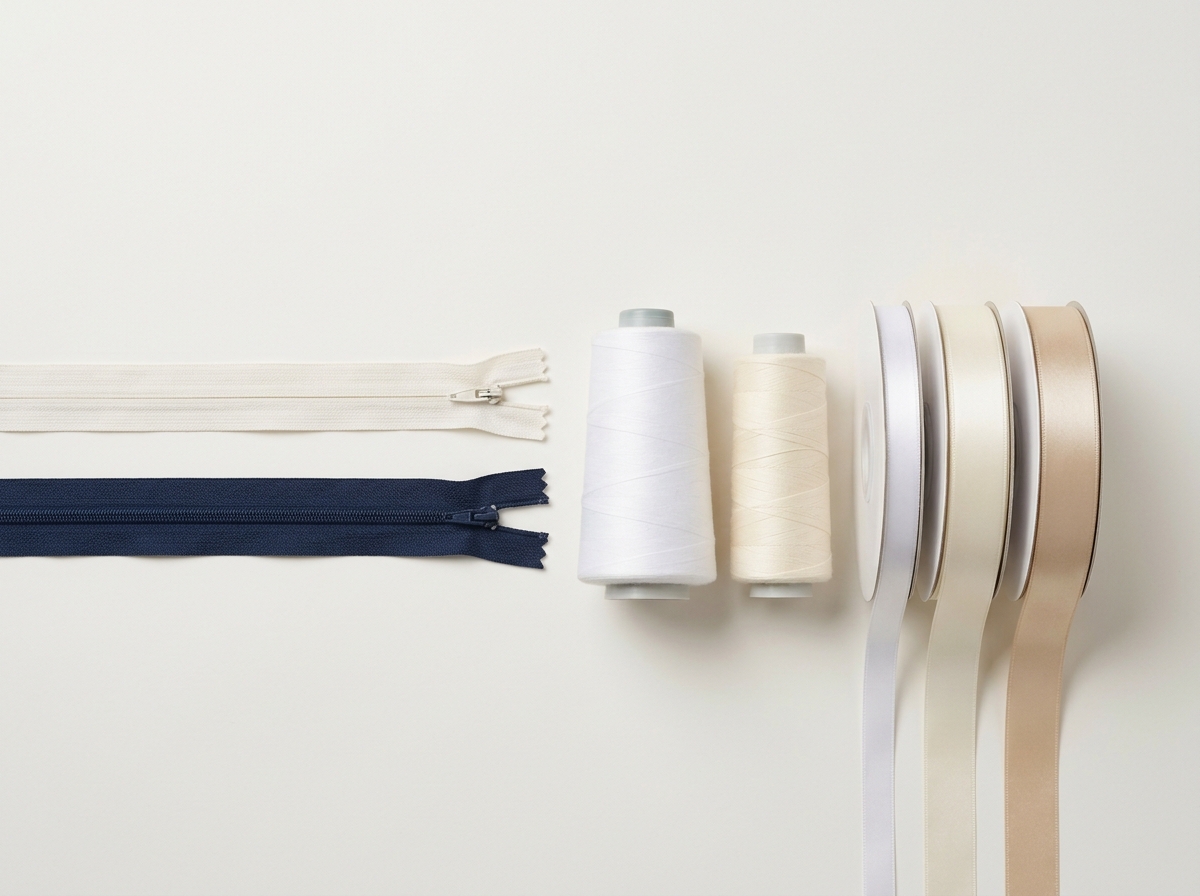 Wholesale Purchasing Factors: MOQ, Samples, Packaging, and Lead Time
Wholesale sourcing success depends on supply control as much as on product quality.
For B2B buyers, invisible zippers are rarely purchased one by one. The real procurement questions are MOQ, sample turnaround, color availability, carton packing, and lead time. Bridal collections are seasonal, and formalwear production often runs on deadline. If a supplier cannot provide consistent sample approval and repeat orders, the cost of delay may outweigh any unit-price advantage.
When negotiating bulk orders, ask for the following:
- Sample set by length and color
- Production lead time and cut-off date
- Carton quantity and inner packing method
- Color consistency across future replenishment
- Documentation for lot tracking and export packing
Because wedding and eveningwear buyers often reorder the same closure styles across collections, a stable supply program is more valuable than a single low-price transaction. That is especially true for factories that support OEM, private label, or alteration workflows. A well-managed zipper program reduces sewing interruptions and lowers the chance of mismatched components during final assembly.
If your sourcing plan includes other garment trims, it can be efficient to consolidate orders across sewing thread, sewing tools, and trim lace so the warehouse handles fewer separate supplier shipments.
How Invisible Zippers Affect the Final Look of Wedding Dresses and Evening Gowns
The zipper affects silhouette, fit perception, and visual luxury more than many buyers expect.
A visible or stiff closure can break the smooth back line of a fitted dress. In contrast, a properly inserted invisible zipper lets the fabric read as one continuous surface. This is especially important under photography lighting, where seam irregularity becomes more obvious. For brides and formalwear customers, the closure should support the emotional experience of the garment, not distract from it.
The zipper also influences fitting behavior. A smooth slider reduces stress for stylists and seamstresses during final alterations, especially when multiple try-ons are required. If a zipper catches during fitting, the garment may be interpreted as poorly made even when the fabric and pattern are excellent. That is why professional buyers treat zipper quality as part of the overall dress standard, not as an afterthought.
In practice, the best invisible zipper is one that works with the dress architecture. It should be discreet on the outside, reliable in motion, and compatible with the dress’s lining, boning, and finishing method.
Common Mistakes When Buying Invisible Zippers for Dress Production
Most sourcing problems come from mismatched assumptions, not from the zipper itself.
- Choosing by price alone instead of by fabric compatibility.
- Ignoring color undertone when matching ivory, cream, or white.
- Ordering the wrong length and forcing alterations later.
- Skipping sample testing on real fabric before bulk purchase.
- Overlooking packaging needs for factory, retail, or alteration use.
A good purchase process starts with fabric swatches, sewing samples, and a confirmed size chart. If the dress line is built for bridal retail, the buyer should test the zipper under pressing and fitting conditions, not only in a flat catalog sample. That approach prevents costly surprises when production scales.
When to Use an Invisible Zipper Instead of Other Dress Closures
Invisible zippers are the best choice when the garment must look seamless from the outside.
Use them for fitted wedding dresses, formal gowns, bridesmaid dresses, and occasion wear where the back seam should not compete with lace, embroidery, or beading. If the dress needs frequent opening and closing, or if a more decorative closure is part of the design, another zipper type may be more appropriate. The point is to match closure function to the dress’s visual and mechanical requirements.
For wholesalers, this means offering a clear product matrix that separates invisible zippers, standard dress zippers, and decorative options. Buyers value that clarity because it reduces ordering errors and shortens sampling time. In a category where many products look similar at first glance, precise labeling is a real competitive advantage.
FAQ
What is the best invisible zipper for a wedding dress?
The best invisible zipper for a wedding dress is usually a fine nylon coil zipper with a soft tape, smooth slider action, and a color that matches the gown exactly. The right length should follow the garment opening rather than a fixed standard size.
Should an evening gown use an invisible zipper or a regular dress zipper?
An evening gown usually looks cleaner with an invisible zipper when the design emphasizes a smooth back or side seam. A regular dress zipper may be suitable only when the closure is meant to be visible or decorative.
What color invisible zipper is most used for bridal wear?
White and ivory are the most common bridal colors, but nude and custom shades are often needed for lace overlays and soft-toned fabrics. Color undertone matters as much as the base color name.
How do I choose the correct zipper length for a dress?
Measure the finished seam opening after pattern approval and select the nearest matching zipper length. Do not choose length before the garment structure is finalized.
What is the difference between invisible zipper and hidden zipper?
In most garment sourcing contexts, the terms overlap. Invisible zipper is the more precise technical term, while hidden zipper is a broader descriptive term used by many buyers and designers.
Why does zipper quality matter in wedding dress production?
Zipper quality affects fit, appearance, fitting speed, and final customer satisfaction. Even a small snag or color mismatch can be noticeable on a premium bridal garment.
What should wholesale buyers request before placing a bulk order?
Buyers should request samples, color cards, MOQ details, lead time, carton packing information, and repeat-order consistency. For formalwear, sample approval on real fabric is essential.

Post time: Jul-08-2026