- Coil nylon zippers are usually the most practical option for backpacks and luggage because they balance flexibility, cost, and smooth operation.
- For travel and school bags, zipper gauge, tape strength, and slider quality matter more than appearance alone.
- Wholesale buyers should evaluate sample length, color matching, MOQ, packing method, and delivery lead time before placing bulk orders.
- Standards such as ISO 12947-2 and ASTM D1776 help buyers understand textile durability and conditioning methods used in quality testing.
Best nylon zipper selection for school backpacks and business luggage starts with a simple fact: the zipper is one of the most frequently handled components on a bag, so a small failure can damage the whole product experience. Nylon coil zippers are widely used because they offer flexibility, low weight, and good bend recovery, which makes them suitable for curved backpack openings and structured luggage panels. In quality control, textile products are commonly conditioned at 21°C and 65% relative humidity under ASTM D1776, while abrasion resistance is often evaluated with the ISO 12947-2 Martindale method. For procurement teams, that means the zipper should be judged not only by price, but also by how it behaves under repeated loading, travel vibration, and daily school use. If you need broader bag sourcing support, see New Swell, the nylon zippers collection, and the sewing accessories category.
Why Nylon Zippers Fit School Backpack and Business Luggage Use Cases
Nylon coil zippers are the most common choice for flexible bag constructions because they bend well without creating hard stress points.
School backpacks usually open and close many times per day, so the zipper needs a smooth pull force, soft tape, and low snag risk around curved seams and pocket corners. Business luggage, by contrast, often needs a more polished look, better abrasion resistance, and a zipper that stays aligned when the case is overpacked. That is why many buyers compare coil nylon zipper options against metal zippers and plastic molded zippers before making a bulk purchase. Coil nylon zippers are often preferred when the bag body uses polyester, nylon, oxford cloth, or blended fabrics, because the flexible tape integrates cleanly with the shell and lining.
Another reason nylon zipper products are popular in wholesale sourcing is their versatility across sizes and closure styles. A school backpack may need a lightweight main compartment zipper plus smaller pocket zippers, while business luggage may require a longer main opening, a two-way pull, or a lock-compatible design. In procurement terms, the best result usually comes from matching zipper gauge, slider style, and tape specification to the product’s actual usage scenario rather than choosing one universal zipper for every bag.
Core Nylon Zipper Specs Buyers Should Check Before Bulk Ordering
The best backpack zipper or luggage zipper is the one that matches load, opening frequency, and fabric structure, not just the one with the lowest unit price.
| Purchase Factor | Typical Buyer Question | Why It Matters | Common Spec Range |
|---|---|---|---|
| Zipper type | Coil, molded, or metal? | Flexibility and appearance differ | Coil nylon is often preferred for curved seams |
| Gauge | What size fits the bag? | Controls strength and bulk | Common bag sizes include #3, #5, and #8 |
| Slider | Single or double pull? | Affects usability and security | Two-way sliders are common for luggage |
| Tape width | Will it sew cleanly? | Impacts seam stability | Usually selected by sample and construction |
| Color matching | Can it match fabric? | Affects retail appearance | Bulk buyers often require color chips or lab dips |
In real sourcing work, these details decide whether the zipper feels premium or frustrating. A #3 nylon zipper can be suitable for lighter pockets, organizers, and small compartments, while a #5 zipper is commonly chosen for backpack main openings and mid-duty luggage panels. For larger travel cases or heavily loaded compartments, buyers often move to a stronger size such as #8. The exact selection should be based on sample testing because the same gauge can behave differently depending on tape weave, stitching density, and the bag’s seam geometry.
Nylon Zipper Performance Metrics That Matter for Backpacks and Luggage
Measured performance is more useful than a generic “durable” claim when sourcing nylon zippers wholesale.
| Performance Area | What to Test | Reference or Method | Why It Matters |
|---|---|---|---|
| Abrasion resistance | Surface wear on tape and teeth | ISO 12947-2 | Shows whether the zipper survives repeated rubbing in daily use |
| Textile conditioning | Test environment before inspection | ASTM D1776 | Keeps comparison results consistent |
| Dimensional consistency | Length, tape width, and stitching alignment | Factory QC + sample approval | Reduces assembly issues and visual defects |
| Operating smoothness | Slider movement under load | Cycle testing in production QC | Prevents snagging in school and travel use |
For zipper buyers, the most meaningful failure is often not total breakage but early-use frustration: jamming, uneven closing, or a slider that feels loose after a few weeks. In bag manufacturing, even a small closure issue can trigger returns because users touch the zipper several times per day. That is why business luggage buyers often request cycle testing, especially on long main zippers and two-way closures. While test setups vary by supplier, the key is to approve the zipper against the exact bag construction, not a generic lab sample.
Textile and trim testing also depends on stable environmental conditioning. Under ASTM D1776, many laboratories condition specimens in a controlled atmosphere of 21°C and 65% relative humidity before testing. This is important because bag tape and sewn components can behave differently when humidity changes. If a supplier cannot explain its conditioning and inspection method, that is usually a warning sign for wholesale buyers who need consistent bulk quality.
How to Choose the Best Backpack Zipper for School Use
The best backpack zipper for school use is usually a lightweight coil zipper with easy pull action and strong seam compatibility.
School backpacks face a different pattern of stress than travel luggage. They are opened quickly, packed unevenly, dragged on desks, and often overloaded with books, devices, and lunch containers. For that reason, the zipper must tolerate frequent lateral stress, not just straight-line pulling. A well-matched nylon zipper should open smoothly even when the bag is slightly twisted or overfilled.
- Choose a coil zipper that bends cleanly around pocket curves and panel seams.
- Select a gauge that matches the bag weight class, usually #3 for light compartments and #5 for main openings.
- Ask for a slider that feels stable under repeated use, especially for student backpacks used every day.
- Check tape color and stitch visibility if the backpack will be sold in a retail environment.
- Request production samples before bulk approval, because zipper feel is difficult to judge from catalog photos alone.
For school backpack programs, buyers often focus on cost per unit, but long-term return rates matter more. A cheaper zipper that snags or separates can create more after-sales problems than a slightly higher-priced zipper with better consistency. This is especially true for export buyers who need stable quality across multiple colorways and seasonal orders.
How to Choose the Best Luggage Zipper for Business Travel
The best luggage zipper for business travel is typically a stronger nylon coil zipper with a cleaner finish, better alignment, and a slider designed for repeated movement.
Business luggage is judged differently from school bags because the buyer expects a more professional appearance and less tolerance for visible distortion. A zipper on a hard-sided or semi-structured travel case must keep the shell aligned, especially on long perimeter runs. In this scenario, two-way zippers are often practical because they distribute stress and make large openings easier to manage. For premium luggage programs, buyers may also request smoother pull force and better surface consistency so the zipper does not visually conflict with the product’s clean lines.
Two factors are easy to overlook. First, overpacking can place high tension on the zipper at the corners, which increases risk of slider misalignment. Second, repeated airport handling exposes luggage to abrasion, impact, and sudden force changes. That is why quality teams usually approve luggage zippers only after fitting them to a sample case and checking closure behavior under load, not just on a flat swatch.
| Luggage Scenario | Recommended Focus | Practical Zipper Choice | Buyer Risk If Ignored |
|---|---|---|---|
| Business carry-on | Clean appearance and smooth pull | #5 or #8 coil nylon zipper | Visible puckering or user dissatisfaction |
| Soft travel bag | Flexibility and opening width | Two-way coil zipper | Poor access and seam stress |
| Expandable case | Load tolerance | Higher-gauge coil zipper | Premature separation at stress points |
| Security-focused luggage | Compatibility with lock design | Lock-ready zipper slider | Reduced functional integration |
For importers, the right luggage zipper choice also affects packing efficiency. If the zipper is too stiff or too thick, sewing lines can become inconsistent and production speed can drop. If it is too light for the product, the return rate can rise later in the market. The best wholesale decision is therefore a balance of appearance, strength, and manufacturing efficiency.
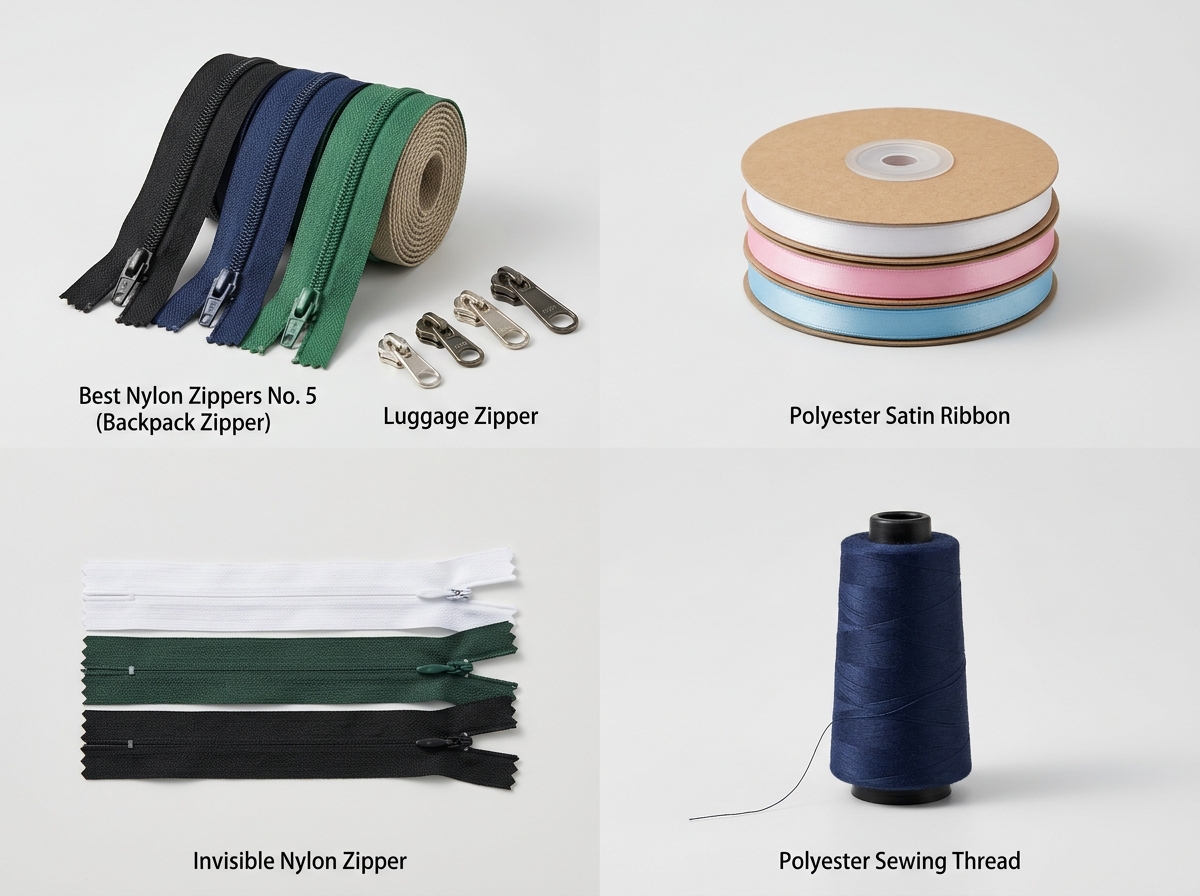 Wholesale Procurement Checklist for Nylon Zippers
Clear procurement requirements reduce defect risk, lead-time confusion, and quality disputes in bulk zipper orders.
- Confirm zipper type, gauge, length, and slider style before asking for quotation.
- Request color references, especially if the backpack or luggage shell uses a custom fabric shade.
- Define MOQ, sample quantity, packing format, and carton configuration early.
- Ask whether the supplier can provide consistent repeat orders across seasons.
- Test the zipper on the actual bag body, not only on a standard strip sample.
Wholesale buyers should also confirm whether the supplier can support mixed SKUs. In the bag market, it is common to need different zipper lengths for main compartments, front pockets, and accessory pockets. If a supplier can standardize these details across a collection, inventory planning becomes easier and the customer experience is more consistent.
Nylon Zipper vs Metal Zipper vs Molded Zipper
Nylon coil zippers often win on flexibility, while metal zippers win on perceived premium feel and molded zippers win on certain rugged applications.
| Zipper Type | Strength Profile | Flexibility | Appearance | Typical Use |
|---|---|---|---|---|
| Nylon coil | Balanced | High | Clean and adaptable | Backpacks, luggage, apparel |
| Metal | High | Lower | Distinctive and premium | Fashion and decorative products |
| Molded plastic | Moderate to high | Moderate | Chunkier profile | Outdoor and utility products |
For school backpacks and business luggage, the practical advantage of nylon zipper construction is that it follows the contour of the product without adding excessive stiffness. This reduces stress at corners and keeps sewing more manageable for manufacturers. Metal zippers can be attractive, but they are usually less forgiving on curved openings and may add weight. Molded zippers can be strong, but they are not always the best fit when the design goal is a slim, refined silhouette.
Common Zipper Problems and How Buyers Can Avoid Them
Most zipper failures in bags come from specification mismatch, not from the material name alone.
- Problem: Slider feels loose. Solution: Approve slider samples under repeated cycling and load.
- Problem: Tape puckers after sewing. Solution: Match tape width and stitch density to the fabric weight.
- Problem: Zipper catches at corners. Solution: Use a more flexible coil zipper and adjust seam turning radius.
- Problem: Color mismatch on finished bags. Solution: Set color standards before production, not after.
- Problem: Early returns from users. Solution: Test on real product samples under realistic filling conditions.
These issues matter because buyers often discover them only after mass production, when correction costs are high. A small improvement in sample approval discipline can prevent major losses in export orders. For that reason, many experienced purchasing teams keep a zipper approval sheet that records gauge, tape width, color code, slider type, pull feel, and bag compatibility.
Where Nylon Zippers Fit in a Broader Bag and Sewing Supply Strategy
Nylon zippers are only one part of a broader sourcing plan for bags, accessories, and textile trims.
For many buyers, the real challenge is not finding a zipper alone but building a stable supply chain for the entire bag component set. That includes closures, tape, stitching materials, sewing tools, and accessories used in sampling or repair. When these items are aligned, product development is faster and the chance of late-stage mismatch drops. For businesses that source through a wholesale supply model, a category-based buying plan is often more efficient than ordering each component in isolation.
If you are building a bag or luggage product line, it is useful to think in systems. The zipper must work with fabric weight, seam construction, user behavior, and brand positioning. A zipper that is technically fine but visually wrong can still hurt conversion. Likewise, a zipper that looks good but fails under repeated use will damage trust. That is why the best sourcing decisions combine lab thinking with real-world usage testing.
Best Nylon Zipper Buying Guidance by Buyer Type
Different buyer types should optimize for different zipper priorities.
| Buyer Type | Main Priority | Recommended Focus | Risk to Watch |
|---|---|---|---|
| School bag importer | Cost stability | Reliable #3 and #5 coil options | High return rate from jamming |
| Business luggage brand | Appearance and performance | Cleaner finish and stronger slider control | Premium image damage |
| OEM factory | Assembly efficiency | Consistent tape and sewability | Production slowdown |
| Wholesale distributor | SKU flexibility | Multiple lengths and colorways | Inventory complexity |
In practice, the right zipper decision often comes down to how the buyer sells. Mass-market school bags need repeatable value and broad compatibility. Business luggage needs a more refined user experience and lower defect tolerance. That is why one zipper catalog page can support multiple business models, but the final selection should always follow the end-use.
FAQ About Nylon Zipper Selection for School Backpacks and Business Luggage
What is the best nylon zipper for a school backpack?
A lightweight coil nylon zipper is usually the best choice for a school backpack because it is flexible, affordable, and easy to sew into curved openings. Buyers often choose #3 for lighter sections and #5 for main compartments.
What is the best zipper size for business luggage?
Many business luggage designs use #5 or #8 coil zippers depending on the panel size, travel load, and structural requirement. The best size is the one that passes real sample testing on the finished case.
Why do manufacturers use nylon zippers in bags?
Manufacturers use nylon zippers because they bend easily, reduce seam stress, and work well with common bag fabrics such as polyester, nylon, and oxford cloth.
How can I test zipper quality before bulk purchase?
Test the zipper on an actual bag sample, check pull smoothness, verify color consistency, and confirm that the zipper remains aligned after repeated opening and closing. If possible, ask for test methods aligned with ISO 12947-2 and conditioning practices from ASTM D1776.
Is a two-way zipper better for luggage?
A two-way zipper is often better for luggage because it improves access, helps distribute stress, and makes large openings easier to manage. It is especially useful for soft-sided travel cases and expandable designs.
What should wholesale buyers ask a supplier?
Wholesale buyers should ask about MOQ, sample time, color matching, packing method, repeat-order consistency, and whether the supplier can deliver the same zipper specification across multiple production runs.
Can nylon zippers be used in both backpacks and luggage?
Yes, nylon zippers are widely used in both backpacks and luggage because they offer a good balance of flexibility, strength, and cost efficiency. The exact gauge and slider should be matched to the product use case.

Post time: Jul-24-2026