- Polyester sewing thread is usually the most practical all-around choice for automated garment production.
- High-speed performance depends on thread finish, balance of twist, machine needle size, and fabric construction, not thread count alone.
- Buyer risk is often commercial rather than technical: inconsistent dye lots, poor cone winding, and unstable bulk supply can interrupt production.
- Standards such as ISO 2060 and ISO 13934-1 help frame how textile yarn properties and seam strength are evaluated.
- For wholesale sourcing, request samples, shade cards, cone dimensions, lead time, and carton pack data before placing a full PO.
Choosing the right sewing thread for high-speed automated production lines means aligning sewing thread, industrial sewing thread, and polyester sewing thread with the fabric, seam type, and line speed, because industrial sewing machines can run at very high needle frequencies, often around 5,000 to 10,000 stitches per minute depending on the model and application; that makes thread friction, thermal stability, and tensile behavior critical, not optional, as reflected in textile testing frameworks such as ASTM D2256 and the yarn linear density method in ISO 2060.
Sewing thread selection for high-speed automated production lines: what actually matters
The best thread for automation is the one that survives speed, heat, and repeatable motion without destabilizing the seam.
On a modern garment line, the thread must pass through the needle eye, form a consistent loop, and lock with the bobbin thread under rapidly changing tension. If the thread sheds too much lint, varies in diameter, or stretches unpredictably, the machine may produce skipped stitches, tension imbalance, seam puckering, or broken thread events. Those defects matter more than small price differences because one stoppage can affect an entire bundle of work-in-progress.
In practical wholesale sourcing, buyers usually compare three families: cotton sewing thread, polyester sewing thread, and specialty core-spun constructions. Cotton has a softer hand but less environmental and abrasion stability under demanding automation. Polyester sewing thread is the standard workhorse for most apparel because it combines good strength retention, dimensional stability, and resistance to moisture and many laundering cycles. Core-spun variants can improve sewing feel and seam appearance in specific garments, but they can also require tighter process control.
For suppliers and B2B buyers, the decision is not only technical. It is also commercial. You need predictable shade matching, stable cone winding, clear MOQ, and reliable bulk packaging. That is why many apparel buyers prefer a supplier that can support coordinated accessories rather than a single isolated item page, such as sewing thread wholesale, sewing accessories, and DIY tools as part of one purchasing flow.
Polyester sewing thread vs cotton and specialty threads
Polyester sewing thread is the most versatile choice for automated garment production, but it is not the only correct choice.
| Thread type | Main advantage | Typical limitation | Best use case | Commercial note |
|---|---|---|---|---|
| Polyester sewing thread | Good abrasion resistance and color stability | Less natural hand than cotton | Daily apparel, uniforms, general assembly | Best wholesale default for repeat orders |
| Cotton sewing thread | Soft appearance and natural fiber compatibility | Lower durability under harsh washing | Vintage garments, breathable cotton styles | More niche demand in bulk |
| Core-spun thread | Balanced seam strength and sewability | Higher cost and tighter process control | Denim, workwear, stress seams | Requires clearer spec communication |
| Textured filament thread | Soft seam feel and coverage | Not ideal for every lockstitch setup | Overlock and covering seams | Machine compatibility must be checked |
Polyester remains the most common recommendation in high-speed automated lines because it tolerates the combination of speed, heat, and friction better than many general-purpose alternatives. In many factories, the real cost driver is not the thread price per cone but the defect rate caused by thread mismatch. When production changes from a stable thread to an unstable one, the line may need more stops for rethreading, more quality checks, and more rework on seam appearance.
A useful way to think about selection is by seam function. If the seam is structural, prioritize strength and consistency. If the seam is visible, prioritize appearance and low seam distortion. If the seam is decorative, prioritize coverage and stitch clarity. That logic matters in categories like polyester ribbons and laces as well, because the same procurement team often buys all of them together for apparel, wedding, and DIY projects.
How line speed, needle heat, and stitch type change sewing thread performance
High-speed automation exposes weak thread choices quickly.
At elevated stitch rates, friction between thread, needle, fabric, and tension discs increases heat generation. That heat can weaken the thread surface, change lubrication behavior, and increase breakage probability if the yarn is poorly balanced. This is why the same sewing thread can look fine in a sample room but fail in mass production when the machine reaches full duty cycle.
Needle selection also affects performance. A smaller needle may reduce fabric damage but increase friction if the thread is too bulky. A larger needle may improve passage but leave visible holes in delicate fabrics. The best setup is a system match: thread linear density, needle size, stitch type, and fabric thickness must work together rather than being tuned independently.
| Production factor | Why it matters | Practical risk if mismatched | Buyer check |
|---|---|---|---|
| Stitch rate | Raises friction and heat | Thread breaks, glazing, skipped stitches | Ask for the target machine speed in stitches per minute |
| Needle size | Controls passage and hole size | Fabric damage or extra friction | Confirm needle system and size range |
| Stitch type | Changes thread consumption and load | Uneven seam balance | Identify lockstitch, overlock, coverstitch, or chainstitch |
| Fabric structure | Influences friction and seam stability | Puckering or seam slippage | Test on the actual fabric, not only on swatches |
For technical benchmarking, seam strength testing is commonly aligned with ISO 13934-1, which defines tensile testing for fabrics, while textile yarn linear density is covered by ISO 2060. These standards do not tell you which thread to buy, but they do provide a common language for comparing supplier claims and lab results.
If you are sourcing for a factory line, ask for a sample run at the intended speed instead of relying only on brochure specifications. A thread that performs well at a slow demo speed may fail once the operator increases throughput. That is especially relevant for automated sewing in woven shirts, lightweight dresses, and high-volume basics where output consistency is more valuable than occasional peak performance.
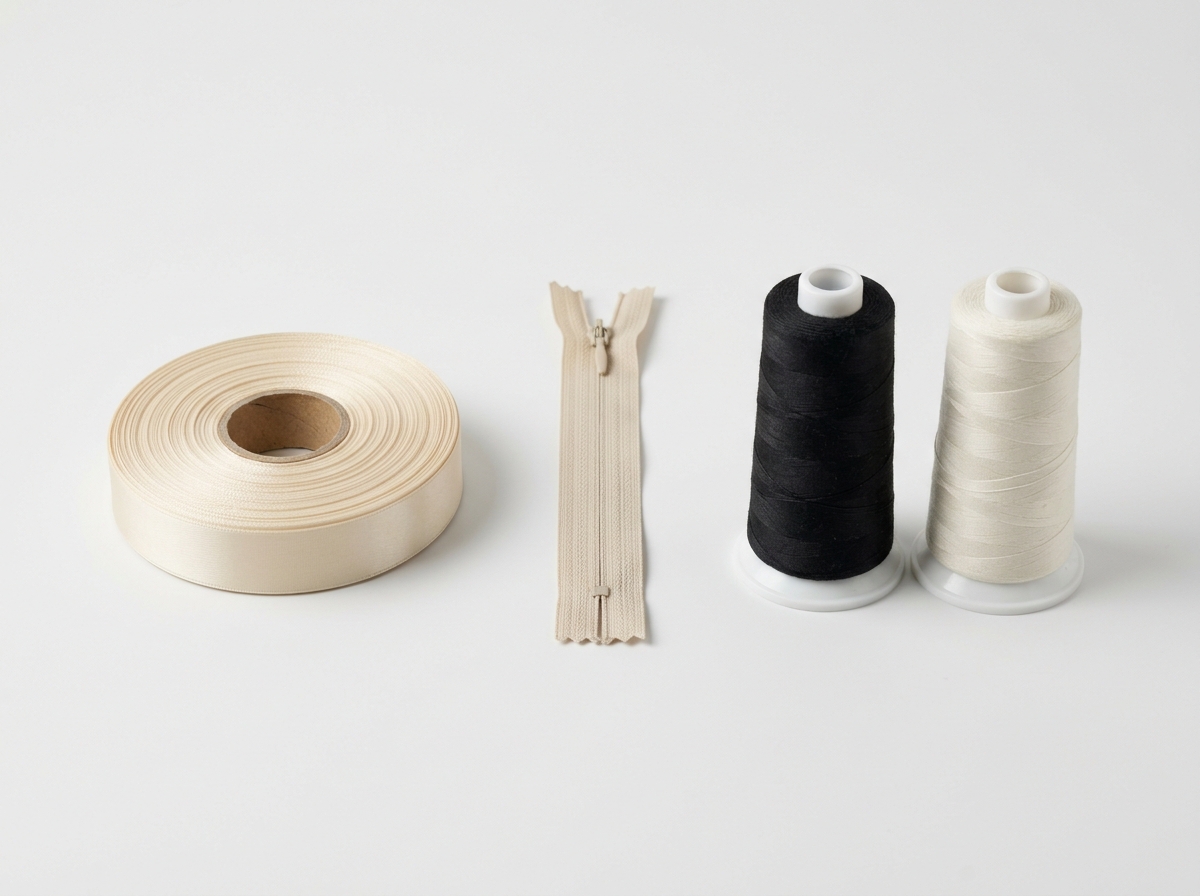 Industrial sewing thread specifications buyers should verify before bulk purchase
Wholesale buyers should treat thread as a controlled input, not a commodity line item.
The most common hidden cost in industrial sewing thread sourcing is variation: variation in cone winding, in shade lot, in twist balance, and in package count. The thread itself may meet the nominal count, but if the cones unwind inconsistently or the lot-to-lot color shifts are visible under factory lighting, production delays follow quickly.
- Verify linear density and count system, such as tex, denier, or ticket number.
- Confirm tensile behavior and elongation range for the intended seam load.
- Request shade cards and ask whether dye lots can be controlled across repeat orders.
- Check cone size, winding direction, and package stability for automated unwinding.
- Confirm carton packing, MOQ, and lead time before production planning starts.
For suppliers serving export customers, packaging consistency matters almost as much as the thread quality itself. A factory using multiple machines may consume dozens of cones per shift, so the cone shape, tension release, and end-knot quality must be consistent enough to avoid line interruptions. This is why B2B buyers often prefer a supplier capable of coordinating thread with complementary accessories rather than purchasing only a single SKU, especially when product planning also includes zippers and sewing kits.
| Specification | What to ask | Why it matters in automation | Buyer target |
|---|---|---|---|
| Thread count / tex | What is the exact linear density? | Affects needle passage and seam strength | Match to fabric weight and stitch type |
| Twist direction | S or Z twist? | Impacts stitch formation and seam balance | Match machine and process |
| Finish / lubrication | Is the thread lubricated? | Reduces friction and heat build-up | Required for high-speed use |
| Shade tolerance | How tight is lot-to-lot control? | Prevents visible color drift | Important for uniforms and fashion |
Quantitatively, textile testing often works with measurable ranges rather than vague quality language. For example, tensile and elongation values can be compared through standardized lab methods, and yarn density can be tracked by standardized count systems under ISO 2060. The point is not to memorize the standard number, but to use it to align vendor promises with measurable properties.
Common failure modes in automated sewing and how to avoid them
Most sewing thread failures in automation come from system mismatch, not from a single bad cone.
When a line breaks thread repeatedly, the root cause is often one of five issues: the thread is too weak for the seam load, the needle is too small, the tension is too high, the thread finish is inadequate, or the fabric has edges or coatings that increase friction. A disciplined troubleshooting sequence saves time and reduces guesswork.
- Check whether the issue appears at all stations or only one machine.
- Inspect the needle for wear, burrs, or incorrect size.
- Review upper and lower tension settings before changing thread type.
- Test the same thread on a different fabric lot.
- Compare defect frequency after changing cone package or supplier batch.
Thread breakage can also be amplified by poor bobbin winding or contaminated machine path components. In high-speed lines, even small buildup of lint or adhesive residue changes friction. That is why maintenance discipline is part of thread performance. A strong thread cannot fully compensate for a worn needle bar, an abrasive throat plate, or inconsistent operator setup.
When buyers ask for a cheaper thread, the right question is usually whether the thread can reduce total cost per seam rather than unit cost per cone. A slightly better polyester sewing thread may reduce stoppages and rework enough to offset the price difference. That is especially true in high-volume categories like uniforms, basics, and repeat fashion programs where consistency matters more than novelty.
How wholesale buyers should source sewing thread for garment, wedding, and DIY channels
Wholesale sourcing works best when the purchase plan reflects the end use.
In garment production, the buyer usually wants stable color, repeatable supply, and fast replenishment. In wedding and decorative applications, the buyer may care more about shade matching, appearance, and packaging presentation. In DIY channels, the product may need a broader assortment and lower barrier to entry, such as small packs, mixed colors, or bundled kits.
For this reason, a supplier with a broader catalogue can be useful if it supports a mix of product and scene planning. For example, procurement teams often combine sewing thread with ribbons, lace trims, and DIY tools for seasonal or event-driven orders. That broader directory structure can simplify quotation, consolidation, and shipping.
| Use scenario | Priority | Recommended thread focus | Ordering note |
|---|---|---|---|
| Mass apparel production | Stability and line efficiency | Polyester sewing thread | Ask for bulk cones and consistent shade lots |
| Wedding or decorative garments | Appearance and seam neatness | Fine polyester or specialty finish | Request sample stitching on the final fabric |
| DIY retail or kits | Ease of use and broad appeal | Universal sewing thread assortment | Consider mixed-color packs and smaller SKUs |
| Repair and maintenance | Availability and fast delivery | General-purpose industrial sewing thread | Keep top-selling shades in stock |
From a buyer perspective, packaging can be a purchasing criterion. Larger cones reduce changeovers in factories, while smaller retail-friendly packs fit DIY and household use. If you source across channels, ask whether the supplier can support both wholesale carton packing and smaller market-ready packaging. This is where a multi-category supplier can be more efficient than a single-purpose seller, especially when threads must be coordinated with other apparel components.
Practical procurement checklist for high-speed automated production lines
A good thread purchase starts with a short technical checklist and ends with a controlled sample test.
- Define the fabric type, seam type, and machine model before selecting thread.
- Ask for the exact thread count system, twist type, and finish description.
- Request sample cones from the intended shade lot, not just a master color swatch.
- Run a pilot at the actual line speed and operator setting.
- Measure breakage, seam appearance, and rework rate before full release.
- Confirm MOQ, packaging, carton size, and expected replenishment lead time.
A useful internal rule is to approve thread only after it passes both a physical and commercial test. The physical test checks stitch quality and machine compatibility. The commercial test checks whether the supplier can repeat the same quality in bulk, on time, and with traceable lots. In export-oriented garment sourcing, that repeatability is often more valuable than any single lab number.
For buyers balancing several categories, choosing a supplier that also offers related lines such as industrial sewing thread, sewing accessories, and wholesale zippers can simplify coordination across the bill of materials. The advantage is not just convenience; it can reduce sourcing fragmentation and make sample approval faster.
What the standards and test methods mean in real buying decisions
Standards help buyers compare products that otherwise look similar.
When a supplier says a thread is strong or smooth, the question is how that claim is measured. ASTM D2256 is commonly used for tensile testing of yarns, while ISO 2060 defines a method for determining yarn linear density. For finished fabric behavior and seam-related comparisons, ISO 13934-1 provides a tensile framework.
These references matter because production decisions should be repeatable. If two suppliers both offer polyester sewing thread, the one that can explain test methods, lot control, and sewing performance in measurable terms is usually the safer sourcing choice. That does not guarantee perfection, but it reduces ambiguity, and ambiguity is what often breaks a high-speed line.
In procurement language, this means you should not ask only “Is the thread good?” Ask instead: “What is the count, what is the finish, what test method supports the claim, and can this exact lot be repeated next quarter?” That question set is more useful for automated production than generic quality statements.
FAQ: sewing thread for automated production lines
1. What is the best sewing thread for high-speed automated production lines?
For most apparel applications, polyester sewing thread is the best default because it offers a strong balance of abrasion resistance, seam stability, and supply consistency.
2. Why does thread break more often at higher machine speeds?
Higher speed increases friction and heat, which can weaken poor-quality thread or expose tension and needle problems that are not visible at slower speeds.
3. How do I choose the right industrial sewing thread count?
Match thread count to fabric weight, seam load, and needle size, then confirm the choice with a sample run on the actual production machine.
4. Is cotton thread still used in automated garment lines?
Yes, but it is more common in niche or appearance-driven applications; polyester is generally preferred for repeatable industrial use.
5. What should I ask a wholesale thread supplier before ordering?
Ask for count, twist, finish, shade lot control, cone size, MOQ, packaging format, and the lead time for repeat orders.
6. How do I test whether a thread is suitable for my line?
Run the thread on the actual machine, at the actual speed, with the actual fabric, and evaluate breakage, seam appearance, and rework rate.
7. Can one supplier handle sewing thread and other garment accessories together?
Yes, and that can reduce sourcing complexity when the supplier also supports related categories such as ribbons, zippers, lace trims, and sewing accessories.
In the end, choosing sewing thread for high-speed automated production lines is a sourcing discipline as much as a technical one. The right polyester sewing thread should run cleanly, match the seam requirement, and arrive in a repeatable bulk format that your factory can trust. If the supplier can prove consistency with sample testing, measurable specifications, and stable replenishment, you reduce both production risk and hidden cost.

Post time: Sep-16-2026