- Custom embroidery succeeds when thread type, stitch density, and fabric weight are matched early.
- Polyester thread is the most versatile choice for wholesale and production embroidery because of its durability and color resistance.
- Supplier selection should include MOQ, dye-lot stability, sample approval, and documented quality checks.
- For B2B buyers, the best embroidery thread supplier is the one that can support consistent bulk supply, not only attractive catalog photos.
- Scene-specific sourcing for wedding, womenswear, and DIY projects reduces rework and improves visual consistency.
For custom embroidery thread sourcing, the key is not just finding a product labeled embroidery thread supplier, but selecting a wholesale partner that can deliver repeatable results across fabrics, trims, and production runs. In dimensional control, textile manufacturers often work to tight tolerances; for reference, ISO 230-1:2022 defines positioning accuracy and repeatability concepts for machine performance, while textile testing standards such as ASTM D1423 help standardize yarn and thread evaluation methods. For buyers planning wedding, womenswear, or DIY collections, that level of consistency is what protects margins and brand perception. A dependable supplier also needs clear bulk terms, sample support, and stable color management across dye lots.
What an embroidery thread supplier must deliver for custom textile projects
A strong embroidery thread supplier should solve production risk, not just sell spools.
In custom textile projects, the supplier’s job is to keep stitch appearance, break resistance, and color matching stable from the first sample to the final bulk order. That means evaluating fiber composition, filament uniformity, twist level, package build, and production traceability. For embroidery-heavy work such as logos, wedding monograms, decorative florals, or brand labels, variation in thread surface or tension behavior can show up immediately on the finished piece.
From a sourcing perspective, the most useful supplier is one that can explain which embroidery thread is best for your fabric. Polyester embroidery thread is widely used in wholesale programs because it resists washing and sunlight better than many alternatives. Rayon is often selected for a higher-luster look on decorative pieces. Cotton may be chosen when a matte finish or traditional handcraft feel is desired. The right answer depends on the garment category, the stitch density, and the buyer’s cost target.
For buyers working with wholesale sewing thread, the same logic applies: thread specification is a production variable, not an afterthought. If the supplier cannot maintain consistent color and package quality, rework costs can easily exceed the price difference between vendors.
Embroidery thread material choices: polyester, rayon, and cotton
Fiber choice is the fastest way to narrow down the right embroidery thread supplier.
Polyester embroidery thread is the most common industrial choice because it balances strength, durability, and broad application. It is usually the safest pick for custom embroidery on uniforms, fashion apparel, promotional items, and products that will be washed frequently. Rayon offers a smoother, more reflective surface, which can improve perceived richness in decorative applications. Cotton is less glossy, but it is often preferred for natural-fiber aesthetics, heritage garments, and some craft-oriented work.
| Thread type | Main advantage | Typical use case | Buyer priority |
|---|---|---|---|
| Polyester | High durability and broad color stability | Apparel, uniforms, logos, bulk embroidery | Production consistency |
| Rayon | Bright sheen and smooth visual finish | Decorative lettering, premium embellishment | Appearance |
| Cotton | Soft, matte, natural look | Crafts, heritage textiles, specialty detailing | Texture and style |
The practical sourcing rule is simple: if the project is commercial and repeatable, start with polyester embroidery thread. If the project is visual-first and low-abrasion, rayon can be a better fit. If the project is handmade or heritage-driven, cotton may align better with the final look.
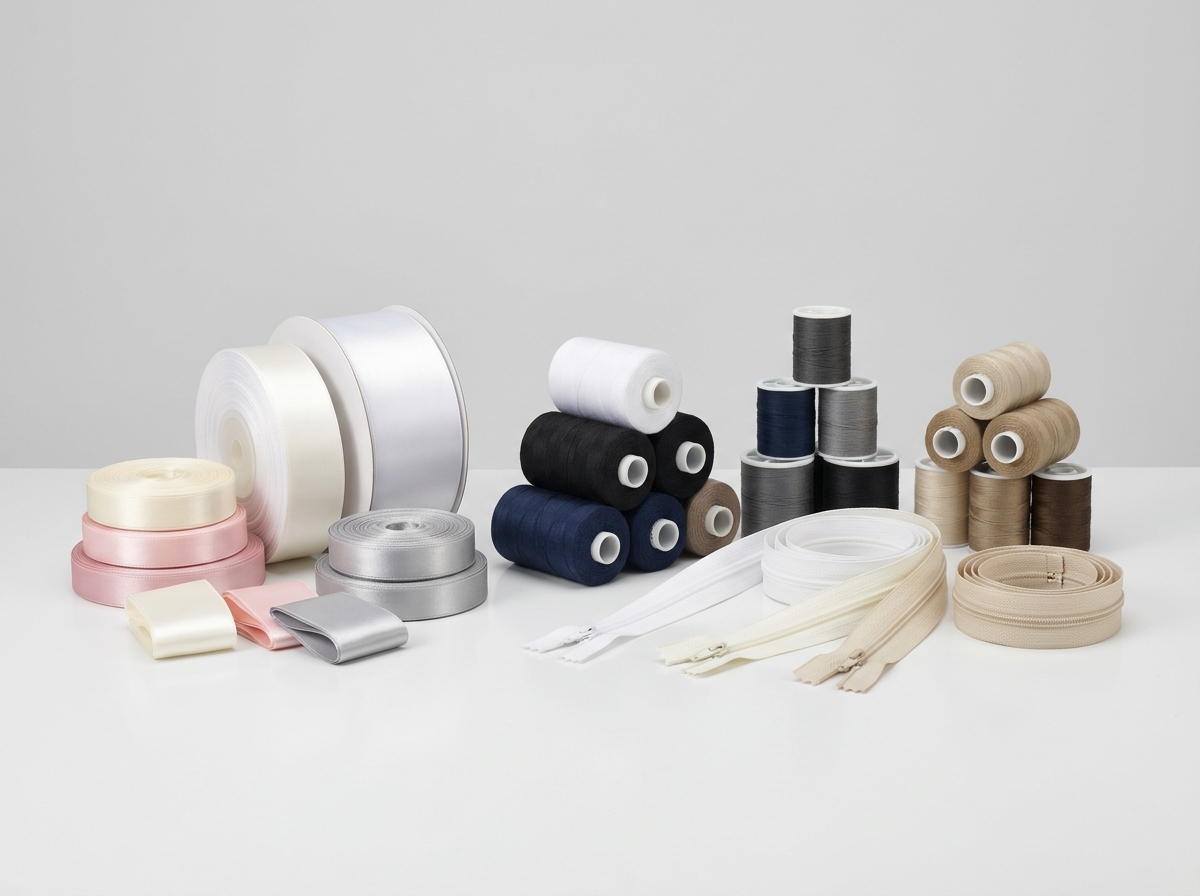
For buyers developing custom embroidery thread programs, a good supplier should provide product-specific guidance instead of pushing one universal solution. That matters especially for mixed-category buyers who also source trims like ribbon for packaging and garment decoration or decorative lace for wedding and womenswear applications, because the visual language of the full product line must stay coherent.
 How to compare embroidery thread supplier quality before placing bulk orders
Supplier comparison should begin with measurable quality controls.
Buyers often ask which embroidery thread supplier is best, but the better question is which supplier can prove quality with repeatable checks. Before placing a bulk order, request information on tex or denier, filament count, twist direction, color fastness procedures, and package weight tolerance. Even when the end buyer only sees the finished embroidery, the performance of the thread inside the machine determines whether the line runs smoothly.
Quality testing is especially important for custom embroidery because stitch density, fabric structure, and needle selection can amplify weak thread behavior. The U.S. National Institute of Standards and Technology maintains a useful overview of metrology concepts and measurement consistency at NIST, which is relevant because embroidery production depends on controlled, repeatable measurement even when the process itself looks simple on the surface. For yarn and thread buyers, measurable consistency is a commercial advantage.
| Evaluation item | Why it matters | What to ask the supplier |
|---|---|---|
| Color lot control | Prevents visible shade mismatch in repeat orders | Do you keep dye-lot records and re-dye limits? |
| Thread break resistance | Reduces machine stops and rework | What testing method do you use for tensile performance? |
| Package uniformity | Improves tension consistency during embroidery | What is the spool weight tolerance? |
| Sample approval | Confirms appearance before production | Can I approve a pre-bulk sample set? |
A supplier that answers these questions clearly is usually more reliable than one that only lists thread colors. In bulk sourcing, documentation is often the difference between a smooth season and a delayed shipment.
MOQ, lead time, and color matching in custom embroidery thread wholesale
Wholesale buyers should optimize for planning stability, not the lowest unit quote.
MOQ, sampling, and lead time are critical because custom embroidery programs rarely succeed with one-off purchasing. If your order supports wedding collections, seasonal womenswear, or a DIY starter line, you need a supplier that can hold repeat colors and replenish quickly. That is why the best embroidery thread supplier is usually the one with predictable supply planning and flexible packaging options.
Color matching is where many projects fail. Thread may look correct in a catalog but shift once stitched on satin, mesh, cotton twill, or knitwear. A practical workflow is to approve a lab sample, then a stitched strike-off, and only then a bulk run. This is especially important for embroidery thread used on dresses, veils, logo patches, and promotional goods, where visual drift is easy to detect.
| Buying factor | Low-risk target | Why it helps custom projects |
|---|---|---|
| MOQ | Flexible enough for test orders | Reduces inventory risk during design validation |
| Sample lead time | Short and predictable | Speeds approval for seasonal launches |
| Bulk lead time | Stable and documented | Protects ship dates for retail or contract work |
| Color matching | Available by lot and stitch sample | Improves repeatability across reorder cycles |
For buyers who also source finishing components such as invisible zipper solutions for dresses and womenswear, a synchronized purchase plan can reduce carton split, simplify color coordination, and improve overall procurement efficiency.
Embroidery thread for wedding, womenswear, and DIY scenes
Scene-specific sourcing is the most efficient way to choose the right embroidery thread supplier.
Wedding projects usually demand elegant sheen, refined color coordination, and low visual defect tolerance. Womenswear often needs a balance of softness, drape compatibility, and wash durability. DIY projects need easy handling, smaller order flexibility, and broad color availability. Those are different sourcing problems, even if all three use embroidery thread.
For wedding decoration and bridal garments, the thread must support delicate motifs without adding stiffness or obvious texture mismatch. For womenswear, thread should perform well on lightweight fabrics and fashion silhouettes where seam appearance matters. For DIY sellers and hobby users, usability matters almost as much as technical performance, because the product may be handled by beginners or mixed-skill teams.
- Wedding: prioritize sheen consistency, color harmony, and elegant stitch finish.
- Womenswear: prioritize wash performance, fabric compatibility, and low puckering risk.
- DIY: prioritize ease of use, broad color range, and practical pack sizes.
These scenes also influence related trim purchases. If the final product needs a decorative edge, buyers often coordinate embroidery thread with specialty lace for bridal and decorative applications or with sewing accessories for broad finishing workflows. That wider sourcing view can improve both aesthetics and margin control.
Technical specifications buyers should request from an embroidery thread supplier
Technical documentation is the fastest way to separate capable suppliers from catalog resellers.
When sourcing custom embroidery thread, request the thread count system, fiber composition, twist direction, recommended needle range, and packaging details. Even if the supplier does not publish every item in a formal datasheet, a serious B2B partner should be able to provide enough information for production planning. This is especially important when embroidery thread is being used on high-speed machines or on delicate textiles with low tolerance for puckering.
At the machine level, production reliability is driven by how thread behaves under tension, heat, and repeated needle penetration. Textile quality standards such as ASTM methods help buyers think in measurable terms, and the broader ISO ecosystem also reinforces the importance of standardized process control. For custom work, standardized checks matter more than brand claims.
| Specification | Why it matters | What a buyer should confirm |
|---|---|---|
| Fiber content | Determines sheen, strength, and wash behavior | Polyester, rayon, or cotton |
| Thread count / tex | Helps match stitch size and fabric weight | Exact sizing system used |
| Twist direction | Affects stitch stability and machine behavior | S or Z twist format |
| Needle compatibility | Prevents thread damage and breakage | Recommended needle size range |
In practical sourcing, the best embroidery thread supplier can translate these specifications into business terms: fewer machine interruptions, better first-pass yield, and more consistent visuals across reorders. That is the kind of support wholesale buyers need.
How to reduce defects when using custom embroidery thread
Most embroidery defects are preventable with better sourcing and setup.
Defects in custom embroidery usually come from four causes: thread incompatibility, incorrect tension, weak stabilizer choice, and poor color control. A supplier cannot solve machine setup alone, but the right embroidery thread can make the process far more forgiving. That is why wholesale buyers should test on the actual fabric rather than relying on generic thread claims.
Practical testing should include a stitched sample, wash or rub checks if relevant, and a visual review under the same light source used for final approval. For commercial embroidery, the goal is not perfection in theory; it is predictable quality on the actual garment or accessory.
- Test the thread on the target fabric before bulk production.
- Compare stitch fill, edge sharpness, and sheen under the final viewing light.
- Verify that the color remains stable after finishing or washing, when applicable.
- Document the approved lot number so the reorder path is traceable.
Good suppliers understand that testing is part of the sale. They provide samples, explain differences between embroidery thread types, and help buyers avoid invisible cost leaks from rework or downtime.
Why wholesale buyers should choose a supplier, not just a product
Long-term value comes from supply continuity, not from one low quote.
Many buyers search for embroidery thread supplier because they need more than a spool. They need a partner who can support bulk procurement, custom color development, and scene-specific packaging. For export-oriented buyers, this also means predictable carton standards, export-ready labeling, and enough consistency to support repeated production runs.
The best suppliers reduce friction across the whole procurement chain. They answer technical questions quickly, keep product naming organized, and understand that embroidery thread is part of a broader trim ecosystem. That ecosystem may also include ribbon, lace, zippers, and sewing accessories, especially for wedding, womenswear, and DIY markets. Coordinated sourcing saves time and reduces mismatches across the final collection.
When the supplier can support both technical and commercial needs, the buyer gains a real advantage: faster approvals, fewer defects, and cleaner replenishment.
FAQ
What is the best embroidery thread for custom projects?
Polyester embroidery thread is usually the best all-purpose choice because it balances strength, color stability, and broad application across apparel and decorative goods.
How do I choose an embroidery thread supplier for wholesale orders?
Compare fiber type, color consistency, MOQ, sample support, lead time, and whether the supplier can document quality control for repeat orders.
Is rayon embroidery thread better than polyester?
Rayon can offer a brighter sheen, but polyester is generally more durable and better suited to frequent washing and production use.
What should I ask before placing a custom embroidery thread order?
Ask about dye-lot control, sample approval, package weights, thread sizing, needle compatibility, and bulk lead time.
Can embroidery thread be matched to wedding and womenswear projects?
Yes. Wedding and womenswear projects often require coordinated sheen, color harmony, and a thread finish that complements the fabric and trim.
Why does thread quality affect embroidery machine performance?
Thread quality affects tension stability, break frequency, and stitch appearance, which directly influence downtime and rework.
Do I need a custom embroidery thread supplier for small DIY orders?
Yes, if you want color variety, reliable sampling, and packaging that works for hobby users or small-batch sellers.

Post time: Aug-18-2026