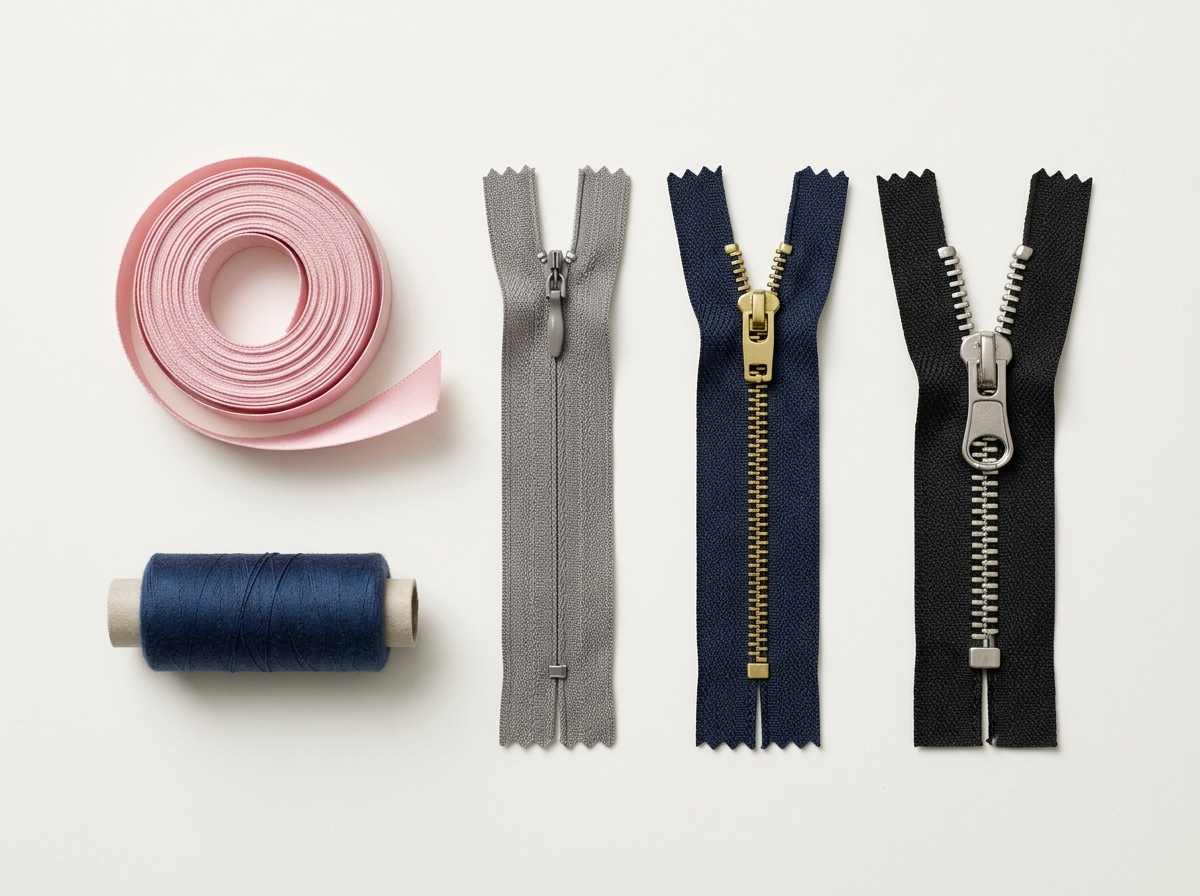
- Brass metal zippers are the most common choice for denim, workwear, and heavier garments because they balance strength and appearance.
- Aluminum zippers are lighter, but they are usually selected more carefully because they can be softer under repeated stress.
- Closed-end zippers fit skirts, trousers, and dresses, while separating zippers are standard for jackets and outerwear.
- Wholesale buyers should check chain gauge, tape width, slider type, and salt-spray or abrasion performance before placing bulk orders.
- For modern clothing, zipper selection is both a functional decision and a design decision, especially in visible-front fashion pieces.
Metal zipper selection matters because a garment zipper affects comfort, durability, repair rate, and visual finish, not just closure performance. In apparel production, a zipper that is too heavy for the fabric can distort the seam, while one that is too light can fail early under repeated use; this is why manufacturers often test closure strength, slider movement, and dimensional consistency before bulk purchasing. For reference, many sewn-product quality systems rely on measurable criteria rather than visual judgment alone, and stitch and seam performance can be checked within frameworks such as ISO 4915:1991. If you are sourcing zipper products for dresses, denim, or outerwear, the correct metal zipper type should match the garment’s stress zone, fashion profile, and production method.
Common Types of Metal Zippers in Modern Clothing
The most useful way to classify a metal zipper is by construction and end use. In clothing, closed-end zippers are used where the two sides must stay together, separating zippers are used where the garment opens fully, and two-way styles are used when wearers need opening from either direction. These functional differences matter more than appearance because they determine how the garment moves, where strain concentrates, and how the zipper is sewn into the product.
For wholesale buyers, this classification also improves procurement accuracy. A dress factory does not need the same garment zipper as a biker jacket maker, and a denim brand does not want a delicate slider designed for lightweight fashion. The right zipper family reduces alteration time, customer complaints, and after-sales replacement costs.
| Zipper Type | Typical Clothing Use | Typical End Style | Buying Priority |
|---|---|---|---|
| Brass metal zipper | Denim, jackets, workwear | Closed-end or separating | Strength, appearance, corrosion control |
| Aluminum metal zipper | Light jackets, fashionwear | Closed-end or separating | Lower weight, smooth operation |
| Nickel-plated zipper | Fashion garments, outerwear | Mostly separating | Bright finish, stable look |
| Two-way metal zipper | Coats, long jackets | Separating | Mobility and layering comfort |
Brass Metal Zipper: The Standard Choice for Denim and Heavy Garments
Brass metal zippers are the most widely used visible metal zipper option in heavier apparel because they offer a strong balance of hardness, wear resistance, and premium appearance. Their warm metallic tone also suits denim, utility jackets, and fashion items where the zipper is intended to be seen rather than hidden. In many cases, brass is preferred because it resists deformation better than softer metals under repeated opening and closing.
For garments that experience repeated pulling, such as jeans and casual jackets, the zipper chain and slider must handle high cycle counts. Industry testing commonly evaluates closure durability by repeated actuation, because failure usually appears after many cycles rather than on the first use. When sourcing metal zippers for bulk production, buyers should ask for cycle-test results, slider fit consistency, and plating quality, especially if the garment will be washed frequently or worn outdoors.
| Brass Zipper Factor | Typical Range or Consideration | Why It Matters |
|---|---|---|
| Use cases | Denim, jackets, workwear | High stress and visible styling |
| Chain weight | Medium to heavy gauge | Improves strength and shape retention |
| Finish options | Polished, antique, matte | Supports garment design language |
| Buyer checks | Slider smoothness, plating, puller style | Reduces defects and returns |
Brass also works well when a brand wants a fashion-forward hardware look without moving into luxury trim costs. That is one reason it remains common in retail and wholesale clothing programs where durability and visual consistency both matter.
Aluminum and Nickel-Plated Metal Zippers for Lightweight Fashion
Aluminum and nickel-plated metal zippers are often chosen when the design needs a lighter visual profile or a brighter decorative effect. Aluminum can reduce perceived bulk, which is helpful in some fashion tops, skirts, and light jackets, while nickel-plated finishes create a cleaner silver tone that matches modern urban styling. The trade-off is that lighter metals may require more careful specification in high-stress zones.
For women’s clothing and slim-fit garments, the zipper should move cleanly without twisting the tape or distorting the seam allowance. This matters especially in dresses and fitted skirts where the closure is close to the body. Buyers sourcing clothing zipper options for dress programs should ask for sample length verification, tape width consistency, and pull-force evaluation before approving mass production.
| Lightweight Metal Option | Strength Profile | Best Garment Match | Risk to Watch |
|---|---|---|---|
| Aluminum | Lower than brass | Light fashion pieces | Deformation under stress |
| Nickel-plated metal | Moderate to strong | Fashion outerwear | Finish wear over time |
| Antique-finish metal | Moderate | Vintage looks | Color consistency between lots |
In practice, the best choice is often not the lightest zipper but the one that stays aligned after repeated garment movement. That is why sample approval should include both visual review and function testing.
Closed-End vs Separating Garment Zipper Types
The end construction of a garment zipper determines the clothing category it can serve. Closed-end zippers are used in skirts, pants, handbags, and dresses because the bottom stop keeps the chain joined. Separating zippers are used in jackets, hoodies, and coats because the wearer needs full opening at the hem. Two-way separating versions are especially useful in long outerwear, where sitting, driving, or layering demands extra flexibility.
This distinction is more important than many first-time buyers expect, because selecting the wrong end type creates immediate fit and sewing problems. A skirt factory cannot use a jacket-style zipper without redesigning the hem finish, and a coat factory will reject a closed-end zipper because it cannot separate fully. For a sourcing team, the safest process is to define the garment function before choosing the hardware.
- Identify whether the garment must open fully or partially.
- Confirm the required zipper length and seam allowance.
- Choose the stop type and slider direction.
- Verify that the fabric weight matches the zipper gauge.
- Approve a pre-production sample before bulk order.
Metal Zipper Size, Gauge, and Performance Benchmarks
Metal zipper performance is closely tied to size, gauge, and tape compatibility, not just material. In apparel sourcing, the same visual style can behave differently if the chain gauge changes, because the teeth size affects flexibility, tooth engagement, and seam bulk. A heavier gauge usually improves robustness, while a lighter gauge can improve comfort and drape in fashion garments.
Quantitative checks are essential. Buyers commonly specify length tolerance, slider fit, and closure consistency in the tech pack so the supplier can control lot-to-lot variation. In industrial garment workflows, precision matters because even a small mismatch can create visible puckering or topstitch misalignment. When a zipper is installed in a narrow seam, a small dimensional error can create a disproportionately large quality issue.
| Parameter | Typical Buying Check | Why It Is Measured |
|---|---|---|
| Length tolerance | Within tech-pack spec | Prevents seam mismatch |
| Tape width | Matched to seam allowance | Reduces puckering |
| Slider smoothness | No skip or bind during cycling | Improves user experience |
| Surface finish | Uniform color and plating | Supports garment appearance |
For formal quality systems, buyers often connect zipper checks with broader sewn-product inspection routines. That helps reduce surprises after bulk production starts.
How to Choose the Right Metal Zipper for Clothing
The best garment zipper is the one that matches the fabric, use case, and finishing requirements. A denim jacket, a wedding dress, and a casual skirt all need different zipper behavior even if they are the same length. This is why sourcing teams should never choose by color alone.
A practical selection method starts with garment weight and usage frequency. Heavier garments need stronger hardware, while lightweight fashion pieces may prioritize appearance and lower bulk. If the zipper will be exposed, its color tone and puller shape become part of the design. If it will be concealed, performance and sewing compatibility matter more than finish.
- Choose brass for denim, utility wear, and higher-abrasion products.
- Choose nickel-plated or finished metal for cleaner fashion styling.
- Choose separating zippers for jackets and coats.
- Choose closed-end zippers for skirts, dresses, and pants.
- Ask for samples when the garment is fitted, stretchy, or highly visible.
For buyers looking beyond the zipper itself, it is often efficient to source related trim together, such as sewing accessories for production kits or sewing tools for workshop use. Bundled sourcing can simplify packaging, warehousing, and replenishment planning.
 Wholesale Buying Checklist for Metal Zippers
Wholesale procurement is more reliable when every order is based on a measurable checklist. The main risks in bulk zipper buying are color variation, inconsistent slider feel, mixed lengths, and packaging errors. Because zippers are standard components, many quality issues are only visible after several thousand units, which makes sample approval essential.
Buyers should also clarify MOQ, lead time, carton packing, and labeling conventions before confirming the order. In cross-border sourcing, even a small issue such as mixed left/right pullers or incorrectly packed lengths can disrupt production flow and create avoidable labor costs. This is especially relevant for wholesale zippers ordered for seasonal apparel programs.
| Checklist Item | Buyer Question | Result If Missed |
|---|---|---|
| MOQ | Can the factory support the required volume? | Delayed sampling or higher unit cost |
| Sample approval | Has the exact color and length been approved? | Mismatch in bulk production |
| Packing method | Are zippers bundled by size and color? | Sorting labor and inventory confusion |
| Lead time | Will delivery align with sewing schedule? | Production delay |
Quality Standards and Testing for Metal Clothing Zippers
Quality control is the difference between a useful garment zipper and a high-return component. Although many apparel buyers focus on color and price, the real cost is often hidden in defects, rework, and customer complaints. That is why reputable sourcing teams review standards-based test methods, not only visual samples.
For safety and product performance references, ASTM F2091 is widely cited in clothing-related fastener safety discussions, while textile construction and stitch classification often rely on ISO 4915:1991. In addition, zipper components and associated materials should be checked for corrosion, plating wear, and repeated-use durability. In real garment programs, salt-spray exposure and cyclic opening tests are useful for outerwear and garments worn in humid climates.
For buyers serving export markets, this is not just a technical issue. It is a commercial one, because lower defect rates improve repeat orders and lower overall replacement costs. In practical terms, a zipper that performs consistently across samples is easier to industrialize than one that only looks good on a showroom sample.
Where Metal Zippers Fit in Modern Clothing Design
Metal zippers are no longer only functional hardware; they are often a design signal. In denim, the zipper can become part of the garment identity. In jackets, it can add contrast and structure. In women’s fashion, it can either support a clean hidden line or create an intentional metallic accent.
This is why modern apparel teams treat zippers as part of the styling brief. The puller shape, tooth finish, and surface tone all influence how premium the garment feels. For that reason, designers frequently coordinate zipper selection with buttons, trims, lace, and other accessories so the final collection feels coherent.
When a buyer understands this design role, zipper sourcing becomes much easier. The question is not simply “Which metal zipper is cheapest?” but “Which zipper supports the garment’s fit, look, and end-use performance with the lowest risk?” That framing usually leads to better supplier communication and fewer revisions.
FAQ
What is the most common type of metal zipper used in clothing?
Brass metal zippers are among the most common choices for denim, jackets, and workwear because they balance strength, appearance, and durability.
Which metal zipper is best for dresses?
Closed-end metal zippers with a smooth slider and light-to-medium gauge are often preferred for dresses, especially when the zipper must stay discreet and comfortable.
What is the difference between a separating zipper and a closed-end zipper?
A separating zipper opens fully at the bottom, which makes it suitable for jackets and coats, while a closed-end zipper stays joined at the bottom and is used in skirts, pants, and dresses.
Are aluminum metal zippers weaker than brass zippers?
In general, aluminum is lighter and can be softer than brass, so it is usually selected more carefully for lower-stress fashion applications.
What should wholesale buyers test before ordering metal zippers in bulk?
Buyers should test length tolerance, slider smoothness, plating consistency, packaging accuracy, and durability under repeated use.
Why do some metal zippers look antique or matte?
Antique and matte finishes are used to match specific garment styles, such as vintage denim, utility fashion, or subdued outerwear.
Can metal zippers be used in lightweight clothing?
Yes, but the gauge and finish must be chosen carefully so the zipper does not distort the fabric or feel too heavy for the garment.

Post time: Jul-12-2026