- Compare an invisible zipper supplier on measurable quality points, not sales promises.
- Ask for samples, bulk lead times, color consistency data, and defect-handling rules before contract signing.
- Use contract terms that cover MOQ, replacement policy, packaging, and inspection criteria.
- Match zipper construction to the end use: dress, wedding gown, or DIY sewing projects.
- For repeat sourcing, supplier stability matters as much as unit cost.
Comparing an invisible zipper supplier before a long-term contract should start with the product spec sheet, because invisible zipper performance is tied to measurable details such as tape width, coil uniformity, slider fit, and inspection tolerance. In apparel manufacturing, tolerance control is not a luxury: according to ISO 4413-style quality discipline used across industrial systems, buyers should document acceptance criteria before volume orders, while textile-related measurement practices are often evaluated under standardized inspection methods such as ISO 2859-1. For dress and wedding applications, the wrong zipper can ruin drape, and for DIY sewing, inconsistent pull force can cause avoidable returns. New Swell’s zipper category, sewing accessories catalog, and ribbon selection are useful reference pages when buyers are comparing broader trim supply options, while company background helps verify export capability and procurement structure.
What an invisible zipper supplier should prove before a long-term contract
The supplier should prove repeatable quality, not just attractive catalog photos.
Long-term contracts fail most often when buyers evaluate only price per piece and ignore the operational details behind it. A reliable invisible zipper manufacturer should be able to show how the zipper is produced, inspected, packed, and re-ordered across multiple color lots. That matters because apparel buyers are not just buying metal or nylon; they are buying a hidden closure that must disappear visually while still opening and closing smoothly after repeated use. In dressmaking, even a small defect in the coil can show through lightweight fabrics, and in wedding garments the margin for error is even smaller.
From a procurement perspective, the first checkpoint is the supplier’s ability to define a clear technical specification. Buyers should request zipper type, material composition, size range, tape color options, slider finish, and intended garment use. A proper invisible zipper supplier should also clarify whether the product is designed for women’s dresses, formalwear, skirts, or DIY sewing kits. That segmentation matters because one zipper construction rarely fits all end uses.
For overseas sourcing, buyers should also ask how the zipper factory handles repeat orders. Color consistency, batch labeling, carton marking, and replenishment cycles are often more important than a small unit price reduction. If a supplier cannot explain how they preserve consistency across reorders, the contract may create hidden costs later in the form of mismatched inventory and production delays.
Invisible zipper supplier quality metrics to compare
Measured quality is the fastest way to separate serious suppliers from trading-only listings.
Comparing suppliers becomes much easier when the discussion moves from marketing language to technical checks. The most useful request is a sample pack with multiple sizes, colors, and sliders, followed by a written inspection checklist. Apparel factories commonly evaluate closure performance by pull smoothness, coil alignment, tape straightness, and visual concealment after stitching. The buyer should also ask whether the factory can provide a defined inspection level such as AQL sampling under ISO 2859-1, because that gives both sides a clearer acceptance basis.
Invisible zippers are often used in garments where the visual line matters, so dimensional drift is a practical risk. For that reason, the supplier should state the nominal size clearly and confirm whether the zipper is suitable for dress weights, medium fabric weights, or decorative DIY projects. If a supplier cannot provide a repeatable specification framework, long-term sourcing becomes harder to control.
| Comparison point | What to request | Why it matters | Typical buyer risk if ignored |
|---|---|---|---|
| Size consistency | Nominal size, length tolerance, batch label | Ensures repeated fit in garment patterns | Mismatch during bulk sewing |
| Coil alignment | Sample photos, pull test, visual inspection rules | Affects hidden appearance and smooth function | Visible waviness through lightweight fabric |
| Color control | Shade card, dye lot record, reorder match policy | Prevents tone variation across shipments | Mixed shades in one production run |
| Inspection method | AQL terms, defect grading, replacement policy | Creates a contractable quality standard | Disputes over accepted defect levels |
In practical sourcing terms, this table is more useful than a simple price comparison because invisible zipper defects are not equally visible across all fabrics. A slight coil misalignment may be acceptable in a thicker skirt, but not in a bridal gown or satin dress where the closure sits close to the outer surface. Buyers who source for wedding or premium women’s wear should therefore demand stricter sample approval than buyers sourcing for basic DIY sewing kits.
 Invisible zipper manufacturer capabilities that affect contract risk
Factory capability determines whether the supplier can support volume without quality drift.
A true invisible zipper manufacturer should be able to explain production capacity, incoming material checks, and final packing control. This is especially important for long-term contracts because a supplier may pass a sample order but fail once volume increases. Buyers should ask whether the factory controls tape cutting, zipper chain consistency, slider attachment, and final carton verification in-house or through subcontracting. The more steps handled under one quality system, the easier it is to keep repeat orders stable.
One of the most overlooked points is packaging. For apparel accessories, packaging influences not only shipment safety but also warehouse efficiency and downstream sewing line handling. If invisible zippers are packed in inconsistent counts or without clear size labels, factory planners spend more time sorting and reconciling inventory. In a bulk sourcing scenario, that is a real hidden cost.
For importers, documentation also matters. A responsive supplier should provide commercial invoice details, packing list consistency, and clear carton markings. If the contract spans multiple seasons, ask whether the supplier can reserve the same zipper specification and provide reorder continuity for the same article number. Buyers in dress and wedding supply chains often need this kind of continuity more than they need a one-off discount.
| Factory capability | Buyer question | Preferred answer | Contract impact |
|---|---|---|---|
| Production control | Which steps are in-house? | Chain finishing, slider fit, packing | Lower risk of subcontract variation |
| Reorder stability | Can the same spec be repeated? | Yes, with fixed article code | Better long-term inventory planning |
| Packaging system | How are sizes and colors labeled? | Clear size, color, lot and quantity labels | Fewer warehouse errors |
| Documentation | Can you issue complete export docs? | Invoice, packing list, carton marks | Smoother customs and receiving |
New Swell’s broader lace category and sewing thread category are useful context pages because many apparel buyers source zippers alongside other trims. That mixed-basket buying behavior is common in wholesale sourcing, especially for garment factories that need one supplier for multiple consumables.
How to compare bulk pricing, MOQ, and lead time with an invisible zipper supplier
Price only becomes meaningful when MOQ and lead time are fully visible.
Buyers often focus on unit price, but wholesale zipper sourcing is actually a three-part equation: price, MOQ, and delivery speed. A low quote can become expensive if it forces a larger minimum order than the factory can store or if the lead time does not fit the production calendar. For a long-term contract, the buyer should ask for price tiers by quantity, sample charge rules, and whether custom color matching changes the MOQ.
MOQ should be evaluated against reorder frequency. A fashion brand with seasonal collections may need more flexibility than a uniform supplier that repeats the same style every month. If the invisible zipper supplier only offers a rigid MOQ with no restock planning, the contract may tie up cash in slow-moving stock. On the other hand, a supplier willing to support mixed-size orders, stable carton packing, and predictable replenishment can reduce working capital pressure.
Lead time matters even more when the zipper is a schedule-critical component. A garment can be cut, stitched, and finished only if the closure arrives on time. For that reason, buyers should ask for a written timeline that covers sample confirmation, production start, and shipment readiness. If the supplier cannot separate these stages, the promised date may be too vague to rely on.
- Request a quoted price at three volume points, such as sample, pilot batch, and full bulk order.
- Confirm whether MOQ changes for custom dye lots or special slider finishes.
- Ask for production calendar milestones, not only the final shipment date.
- Check whether partial shipments are allowed for urgent garment lines.
- Negotiate carton packing rules that match your warehouse receiving process.
For buyers sourcing through a zipper factory, the best contract is usually the one that reduces hidden friction, not the one that looks cheapest on paper. That is particularly true for invisible zippers used in dresses and wedding garments, where a delayed closure can stop an entire production batch.
Invisible zipper supplier selection for dress, wedding, and DIY sewing markets
End use should drive supplier choice because each market tolerates defects differently.
Invisible zippers for dresses are usually judged by how seamlessly they disappear into the seam. For wedding garments, the standard is stricter because the fabric is often more delicate and the closure sits closer to the visual focus of the garment. For DIY sewing, the buyer may value easier handling, broad color availability, and clear pack labeling more than premium finishing. These three use cases may all use the same product family, but they do not use the same sourcing logic.
In women’s fashion, buyers should focus on smooth closure action and fabric compatibility. In bridal supply, they should focus on visual concealment and reliable color matching. In DIY channels, especially for hobbyists and small sellers, the most important features may be convenience, clear packaging, and acceptable defect tolerance for lower-value projects. A strong supplier will explain these differences instead of pushing one universal option.
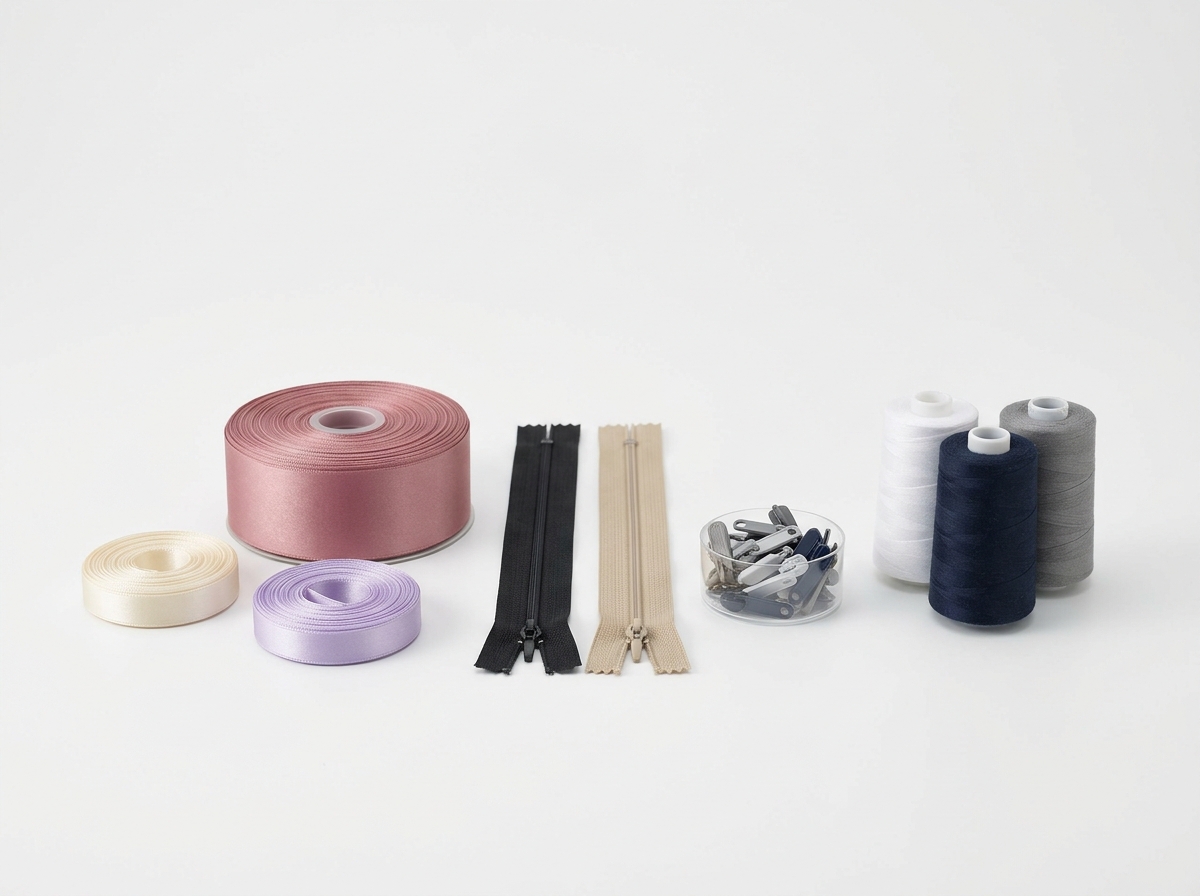
Because the New Swell catalog is built around wholesale sewing accessories and trims, buyers can often source related items in one procurement cycle. That is useful when a garment factory needs zippers, lace, thread, and ribbons together. The advantage is not only fewer vendors but also more consistent inbound logistics.
| End use | Top priority | Risk to watch | Best sourcing question |
|---|---|---|---|
| Dress | Smooth hidden finish | Coil visibility through fabric | Will the zipper disappear under light fabric? |
| Wedding | Appearance and color match | Shade mismatch in premium garments | Can you match the fabric lot and trim shade? |
| DIY sewing | Ease of use and clear labeling | Confusion over size or pack count | How is each pack identified for retail or home use? |
This end-use view helps buyers avoid a common mistake: choosing a supplier optimized for one market and expecting it to perform equally well in another. Long-term contracts work best when the product definition aligns with the actual customer segment.
Inspection, standards, and acceptance criteria for long-term zipper sourcing
Clear acceptance criteria protect both buyer and supplier.
Long-term sourcing contracts should specify how the invisible zipper will be checked, because quality disputes are easier to prevent than resolve. Buyers often rely on sample approval, but sample approval alone is not enough. The contract should define what counts as a major defect, what counts as a minor defect, and how disputes will be reviewed. International sampling methods such as ISO 2859-1 help buyers create a consistent inspection language, especially when multiple factories or sourcing agents are involved.
Where applicable, buyers can also reference testing approaches used in material verification. For example, tensile testing protocols are often built around standards such as ASTM D3822 for textile yarn and related component evaluation, while lab verification of textile flammability may reference NIST textile flame test resources. Not every zipper order needs the same level of testing, but the contract should state which tests are mandatory for the end market.
The practical buyer takeaway is simple: if the supplier cannot tell you how they inspect, label, and release goods, the contract is not yet ready for signing. A professional zipper factory should welcome that conversation because it reduces downstream complaints.
- Approve a pre-production sample before any bulk run.
- Write down inspection criteria for size, color, slide action, and packaging.
- Define replacement terms for damaged cartons or confirmed defects.
- Specify whether reorders must match the original article code and shade lot.
- Document who pays for return freight when a quality claim is valid.
What a good long-term invisible zipper contract should include
A strong contract turns uncertain sourcing into repeatable supply.
The contract should include product description, MOQ, unit price tiers, lead time, sample policy, inspection method, packing standard, and dispute resolution. It should also name the exact zipper article or specification so that future orders cannot drift silently. If the supplier offers multiple invisible zipper variants, each variant should be listed separately to avoid confusion later.
It is also wise to define business continuity expectations. For example, if the buyer depends on one zipper style for a season, the contract should state whether the supplier will keep the material or construction unchanged for the agreed term. This is especially important for fashion programs where reorders may arrive months after the first batch. A supplier that can support continuity across seasons is often more valuable than one that simply offers the lowest introductory quote.
Finally, make sure the contract reflects your real buying pattern. If your business buys zippers together with other sewing accessories, ask whether consolidated shipment and mixed-item packing are possible. That can simplify import handling and reduce total logistics work.
FAQ
How do I know if an invisible zipper supplier is reliable?
A reliable supplier can provide samples, written specifications, repeat-order consistency, clear lead times, and a documented inspection method. If they cannot explain those basics, the sourcing risk is too high for a long-term contract.
What is the most important quality check for invisible zippers?
Coil alignment and smooth pull action are usually the most important checks because they affect both function and appearance. For dress and wedding use, visual concealment matters as much as opening performance.
Should I choose the lowest price from a zipper factory?
No. The lowest quote is often not the best long-term value if it comes with high MOQ, unstable color matching, or weak defect control. Total sourcing cost matters more than unit price alone.
What documents should a wholesale zipper supplier provide?
At minimum, ask for product specifications, sample confirmation, packing details, commercial invoice information, packing list, and carton markings. These documents reduce receiving errors and customs delays.
How can I compare suppliers for wedding garments?
Use stricter criteria for shade match, hidden finish, and sample approval. Wedding garments are less forgiving, so the supplier must prove better consistency than a general-purpose bulk seller.
Is MOQ negotiable for long-term orders?
Often yes, especially if the supplier expects repeat business. Ask for tiered pricing, mixed-size packing options, and a replenishment plan that fits your seasonal demand.
Can one supplier cover zippers, thread, lace, and ribbons?
Yes, if the supplier operates as a broader sewing accessories wholesaler rather than a single-item specialist. That can simplify procurement for garment factories and DIY resellers.

Post time: Sep-14-2026