- Double sided satin ribbon creates a polished finish because both surfaces carry the same glossy appearance, which improves bouquet presentation and product photography.
- Width, drape, and edge stability matter more than decoration alone; a ribbon that is too wide can overpower a compact flower box.
- For wholesale buyers, the most practical purchase filters are material, width, roll length, color fastness, MOQ, and packing format.
- Premium flower packaging is not only visual; it also affects handling, shipping appearance, and perceived value at unboxing.
- Reliable sourcing depends on matching ribbon choice with use case: wedding, luxury gifting, retail bouquets, or DIY floral packaging.
Double sided satin ribbon is a high-impact decorative ribbon choice for flower packaging ribbon applications because satin’s smooth surface reflects light evenly and supports a premium unboxing experience. For dimensional control, packaging engineers and textile buyers often compare ribbon behavior against measurable standards such as tensile strength testing under ASTM D2256/D2256M for yarn breaking force, and color assessment under ISO 105-A02 for grey-scale color change. In practical sourcing, a 10 mm, 16 mm, 25 mm, or 38 mm double sided satin ribbon is usually selected based on bouquet size and box width, with wholesale buyers also checking roll length, edge sealing quality, and packaging uniformity before placing a bulk order.
For buyers who need a broader sourcing view, the same decorative logic often connects with satin ribbon wholesale options, wedding lace collections, and sewing accessories when a floral package needs both finishing and assembly support.
Why double sided satin ribbon works so well in premium flower packaging
Double sided satin ribbon works because it keeps the visual quality consistent from every viewing angle.
In premium flower packaging, the customer often sees the bouquet from above, from the side, and again during unboxing, so a one-sided ribbon can look uneven. A double sided satin construction reduces that risk by keeping the sheen and hand feel consistent across the full wrap. That consistency matters for florist boxes, bridal bouquets, preserved flower sets, and gift sleeves where presentation must stay intact during transport.
Wholesale buyers also value satin ribbon because it bridges aesthetics and process efficiency. The material ties quickly, forms neat loops, and typically handles repeated handling better than fragile ornament-only trims. For wedding and retail floral packaging, that means fewer rewraps, cleaner labor output, and a more repeatable presentation standard across batches.
| Packaging use case | Recommended ribbon width | Typical look | Practical note |
|---|---|---|---|
| Single bouquet stem wrap | 10 mm to 16 mm | Light and refined | Best for minimal branding and small floral bundles |
| Retail bouquet sleeve | 16 mm to 25 mm | Balanced premium finish | Works well for everyday florist packaging |
| Bridal bouquet | 25 mm to 38 mm | Elegant and visible | Supports photography and ceremonial detail |
| Gift box or hamper | 38 mm or wider | Bold premium framing | Useful when the ribbon must visually anchor the package |
The key design rule is simple: the larger the package face, the wider the ribbon can be without looking crowded.
Double sided satin ribbon styling ideas for wedding and florist packaging
Wedding packaging benefits most from ribbon styling that feels structured but not heavy.
A bridal bouquet wrapped with double sided satin ribbon looks premium when the knot placement is hidden under the floral head and the tails fall with controlled length. For wedding gift boxes, a centered bow with balanced loops creates symmetry, while a side-tied ribbon can make a package feel more editorial and modern. For florists, the ribbon can also be used to unify a mixed arrangement by repeating one color across bouquet wrap, box edge, and tag tie.
Color choice should follow the flower palette, not compete with it. White, ivory, blush, dusty pink, champagne, and deep green are common premium directions because they either blend softly or create elegant contrast. When the bouquet already contains strong color variation, a neutral decorative ribbon often works better than a bright accent.
- Use ivory or champagne for bridal sets with white roses and hydrangea.
- Use dusty rose or mauve for romantic gifting bouquets.
- Use forest green or burgundy for seasonal premium packaging.
- Use black satin sparingly when the goal is modern luxury contrast.
For suppliers serving wedding buyers, the selling point is not only the ribbon itself but the repeatability of the finish. A florist arranging 200 bouquets needs the same width, shade, and surface quality across the whole batch, which is why bulk consistency can matter more than small price differences.
Choosing decorative ribbon for premium flower packaging by material and finish
Material choice determines whether the ribbon looks luxury, practical, or craft-oriented.
Polyester satin is the most common choice for wholesale flower packaging because it combines sheen, wrinkle resistance, and cost control. It is also easy to cut and heat-seal in production, which reduces fraying at the ends. Compared with softer textile trims, polyester satin usually gives a cleaner retail appearance and better batch consistency.
| Ribbon type | Typical advantage | Potential limitation | Best packaging scenario |
|---|---|---|---|
| Double sided satin ribbon | Same glossy look on both sides | Shows creases if compressed heavily | Wedding bouquets, gift boxes, florist sleeves |
| Single sided satin ribbon | Lower cost | Back side may look dull | Basic retail wrapping |
| Organza ribbon | Light and airy | Less structured knot definition | Soft romantic floral styling |
| Grosgrain ribbon | Textured grip and shape | Less glossy luxury effect | Minimalist or rustic packaging |
In premium flower packaging, the finish is usually judged by how the ribbon behaves after tying. A good decorative ribbon should hold a bow shape without collapsing, sit flat where needed, and maintain a crisp look after transport. That is why buyers often ask for sample rolls before confirming a bulk order.
If you are comparing different floral presentation materials, lace fabric and polyester thread can also support the package when the ribbon is part of a wider handmade assembly workflow.
Wholesale buying checklist for flower packaging ribbon
Wholesale sourcing works best when the buyer defines the packaging job before requesting price.
For flower packaging ribbon, the most common sourcing mistake is starting with color instead of structure. A buyer should first decide the package type, then the width, then the roll length, and only then the color and finishing details. This reduces sampling cycles and helps standardize purchase decisions across wedding, retail, and DIY lines.
- Confirm package type: bouquet, box, sleeve, hamper, or craft assembly.
- Select width based on visible surface area and bow size.
- Check roll length to reduce waste and restocking frequency.
- Request color swatches for batch consistency.
- Confirm edge finish, fray control, and packaging format.
- Ask about MOQ, sample policy, and lead time before final PO.
For B2B buyers, the real cost is not only ribbon price per roll. It also includes labor time, rework rate, packaging waste, and how many presentations can be made from one roll. That is why wholesale flower packaging suppliers typically present ribbon as part of a broader sourcing conversation rather than as a single isolated SKU.
| Buyer question | Why it matters | What to request |
|---|---|---|
| What is the MOQ? | Affects trial flexibility | MOQ per color and per width |
| Can I get samples? | Checks shade and hand feel | Cut sample or sample roll |
| What is the roll length? | Determines production efficiency | Meters per roll and pack count |
| How is the ribbon packed? | Impacts storage and shipping | Single roll, shrink wrap, or carton pack |
| Can color be matched? | Ensures brand consistency | Pantone reference or swatch approval |
Design rules that make flower packaging ribbon look premium, not busy
Premium packaging looks intentional when one visual element leads and the rest support it.
In flower packaging, the ribbon should frame the product rather than fight with it. This means keeping bow volume proportional to the bouquet size, using one dominant ribbon color per package, and limiting the number of surface textures on the same product. A shiny satin ribbon with a highly patterned wrap can easily look overloaded unless the overall composition is carefully balanced.
A useful rule is to treat the ribbon as a line, not a decoration pile. Straight wraps create order, while loops create softness. If the flower arrangement is already full and lush, use a tighter ribbon knot and shorter tails. If the arrangement is simple or minimalist, longer tails can add movement and perceived value.
- Match ribbon width to bouquet diameter.
- Use one primary finish per package.
- Keep bow tails proportional to the visible front face.
- Leave space for brand tags, labels, or care cards.
This approach is especially useful in wedding packaging, where the visual standard is often higher than in everyday gifting. It also helps social media presentation, because a clean ribbon line photographs better than layered clutter.
 Performance and quality benchmarks buyers can actually check
Quality control for double sided satin ribbon should focus on repeatable appearance and handling performance.
For imported decorative ribbon, buyers often ask for measurable specifications such as width tolerance, color consistency, and edge sealing quality. While exact buyer requirements vary, lab-style verification is most credible when it refers to recognized methods. For color stability, ISO 105-A02 is commonly used to assess color change by grey scale, and for tensile behavior textile buyers may reference ASTM D2256/D2256M. For environmental safety and broader material control, some procurement teams also consult U.S. textile guidance from the Federal Trade Commission textile labeling guidance.
A practical wholesale spec sheet for premium flower packaging often includes the following fields:
| Specification | Typical buyer target | Why it matters |
|---|---|---|
| Width | 10 mm, 16 mm, 25 mm, 38 mm | Controls visual scale |
| Roll length | 20 m, 50 m, 100 m | Impacts production efficiency |
| Color consistency | Approved swatch match | Prevents batch mismatch |
| Edge finish | Heat-sealed or clean-cut | Reduces fraying risk |
| Packaging format | Single roll or carton pack | Supports storage and shipping |
One numeric reference point that matters in packaging is color consistency. Under ISO grey-scale evaluation, a high-quality production lot should aim for minimal visible change when checked against the approved standard sample, because even a small shade shift is noticeable in bridal and premium gift packaging.
How flower packaging ribbon supports broader floral and DIY assortments
Flower packaging ribbon often sells better when it is part of a complete decorative system.
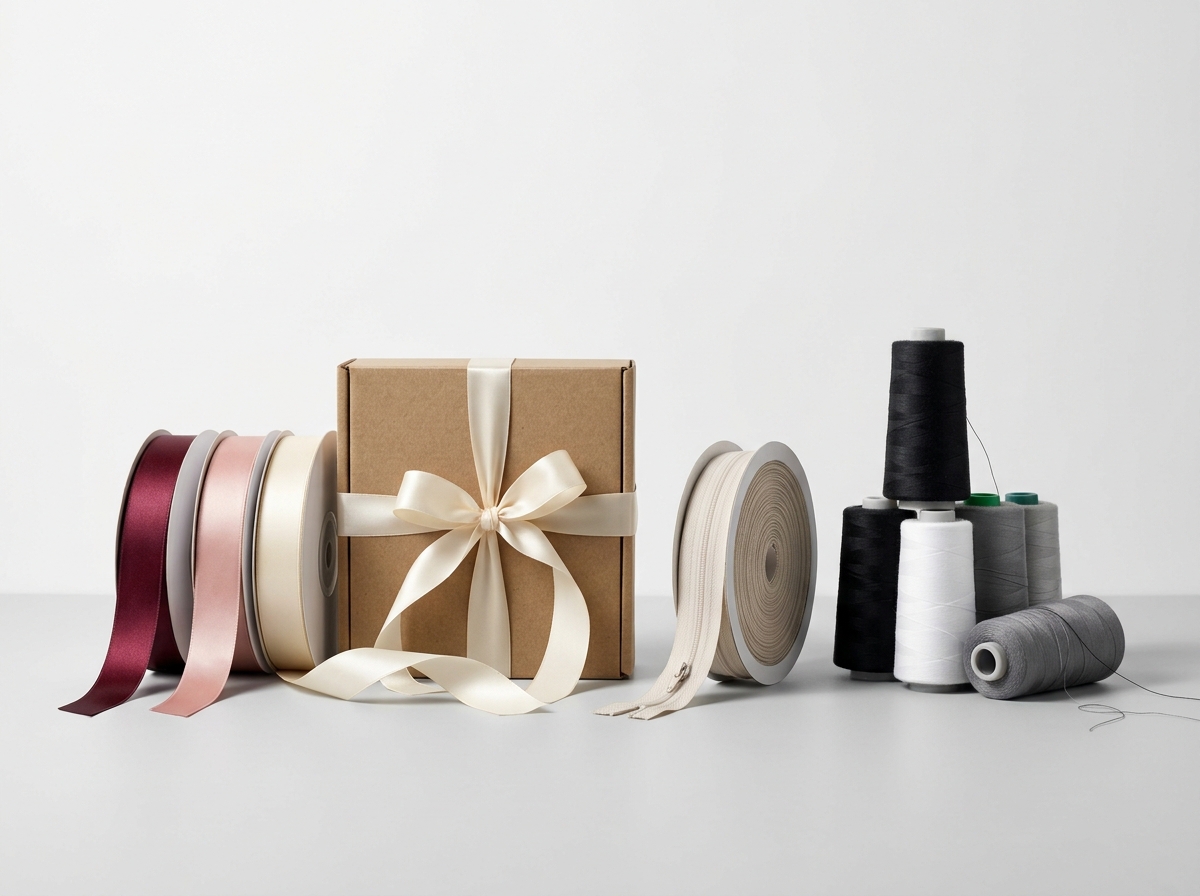
Buyers who purchase satin ribbon for floristry frequently also need product families that support finishing, assembly, and seasonal display. That is why a supplier like New Swell can position ribbon alongside complementary categories such as lace fabric, sewing kit, and scissors for DIY and packaging workflows. In practice, this matters for gift studios, bridal craft sellers, and small floral brands that need one source for multiple consumables.
The commercial value is in convenience and compatibility. When packaging teams can source ribbon, lace, thread, and cutting tools from the same supplier, they reduce procurement complexity and often improve color and material matching across products. For export buyers, this also simplifies consolidation of cartons and makes reordering easier across multiple seasonal campaigns.
Common styling mistakes in premium flower packaging
Most ribbon mistakes come from scale mismatch, not from the ribbon itself.
The most common error is using a ribbon that is too wide for the package. This makes a delicate bouquet look heavy and hides the floral structure. Another frequent issue is ignoring crease memory; if ribbon is crushed in storage, it can lose the crisp finish expected in premium packaging. A third mistake is mixing too many materials, which reduces the elegance that buyers expect from a satin finish.
- Avoid over-wide bows on small bouquets.
- Avoid mixing glossy satin with too many competing textures.
- Avoid low-contrast color pairings that flatten the presentation.
- Avoid buying without sample approval for shade and sheen.
In premium flower packaging, fewer decisions often produce a better result. A single well-chosen double sided satin ribbon can make a bouquet feel more expensive than multiple decorative accents placed without hierarchy.
FAQ about double sided satin ribbon and flower packaging ribbon
What is the main advantage of double sided satin ribbon?
The main advantage is visual consistency, because both sides present a smooth satin finish that looks polished from every angle.
What ribbon width is best for premium flower packaging?
Most bouquet and florist packaging works well with 10 mm to 25 mm widths, while gift boxes and larger arrangements often need 38 mm or wider.
Is double sided satin ribbon better than single sided satin ribbon?
It is usually better for premium presentation because the back side does not look dull, which matters when the ribbon twists or folds during packaging.
How do I choose a decorative ribbon for wedding flowers?
Choose a color that complements the bouquet, then match width to the bouquet size and request a sample to check sheen and drape.
What should wholesale buyers check before ordering flower packaging ribbon?
They should check MOQ, color consistency, roll length, edge finish, and packaging format, because these factors affect production and reordering.
Can satin ribbon be used with other floral packaging materials?
Yes, it works well with lace, tags, tissue, boxes, and handmade finishing items when the full presentation is coordinated.
Why does premium flower packaging need a high-quality ribbon?
Because ribbon is part of the customer’s first visual impression, and poor sheen, fraying, or color inconsistency can reduce perceived value immediately.

Post time: Sep-04-2026