- Auto lock metal zippers help prevent unintended opening and improve wear confidence in fitted garments.
- Durability depends on the full closure system: slider, teeth, tape, seam allowance, and laundering conditions.
- For wholesale buyers, zipper length, gauge, finish, color consistency, and MOQ matter as much as raw strength.
- Selection should match the use case: dresses, jackets, workwear, or DIY sewing projects need different zipper behavior.
- Testing against standards such as ASTM D2061 and AATCC laundering methods reduces quality risk before bulk order approval.
Auto lock metal zipper performance is not just about appearance; it is about maintaining closure integrity in real garments, where movement, friction, and repeated washing create failure points. ASTM D2061 is a widely used test method for evaluating zipper strength and durability, while ASTM D2061 provides a repeatable framework for measuring chain, slider, and stop performance. For apparel buyers, this matters because a closure failure can trigger returns, rework, and reputation damage. In wholesale sourcing, details such as garment zipper structure, metal zipper finish, and sewing accessories compatibility often decide whether the final garment feels premium or merely assembled.
Why an auto lock metal zipper improves garment quality
Auto lock function improves garment quality because it keeps the slider from drifting when the pull tab is not being actively held.
That small mechanical advantage is easy to overlook, but it helps reduce opening risks in fitted garments, especially during sitting, bending, or repeated movement.
In dresses, skirts, and slim jackets, a zipper that does not creep open preserves the garment silhouette and lowers the chance of a customer noticing a functional defect.
Metal teeth also contribute to a more substantial hand feel than many lightweight closure systems, which is why they are often selected for fashion pieces where perceived durability matters.
| Closure Factor | Auto Lock Metal Zipper | Typical Risk Without Auto Lock | Garment Impact |
|---|---|---|---|
| Slider stability | High under tension | Higher chance of creep | Cleaner fit and fewer complaints |
| Wear confidence | Better retention | Possible accidental opening | Improved consumer trust |
| Perceived quality | Premium feel | Less substantial hand feel | Better retail impression |
| Repair risk | Lower if correctly specified | More rework in QC | Reduced return exposure |
The quality benefit is strongest when the zipper is matched to the garment category rather than chosen only by length and color.
A metal zipper on a wedding dress, for example, may be selected for elegance and stability, while a workwear jacket may prioritize abrasion resistance and pull strength over visual detail.
For buyers sourcing wholesale, the key is to evaluate not only the closure itself but the entire garment use case.
That is why many sourcing teams review invisible zipper options alongside metal closures before finalizing a line plan, even when the final decision still favors metal for visible applications.
How metal zipper construction affects durability and wash performance
Durability starts with the relationship between teeth, tape, slider, and end stops.
If one component is underspecified, the whole closure can fail early even when the zipper looks strong at first glance.
The tape must withstand seam tension, the slider must keep engagement pressure consistent, and the top and bottom stops must prevent chain separation under repeated use.
For apparel buyers, this is why “metal zipper” is not a complete specification; it is only the starting point.
| Component | What It Does | Common Failure Mode | Buyer Check |
|---|---|---|---|
| Metal teeth | Provide interlocking closure | Misalignment or tooth deformation | Check gauge and plating consistency |
| Slider | Guides opening and closing | Poor locking or rough motion | Test smoothness and retention |
| Tape | Anchors zipper to garment | Fraying or seam pull-out | Verify tape strength and width |
| Stops | Keep chain ends secure | Chain separation | Inspect stop fixation under load |
ASTM D2061 is useful because it helps quantify zipper performance instead of relying on visual inspection alone.
In production, this means the supplier should be able to show repeatable results for chain strength, slider operation, and stop security before a bulk order is approved.
For laundering concerns, apparel teams often pair zipper evaluation with textile care testing such as ASTM D4966 for abrasion and AATCC 61 for colorfastness to laundering.
Those tests are not zipper-specific, but they matter because tape, garment fabric, and adjacent trim must survive the same wear environment.
When to choose an auto lock metal zipper for dresses, jackets, and uniforms
The best use cases are garments where closure security and visual finish both matter.
For dresses and skirts, auto lock helps maintain a neat back closure during movement and seating.
For jackets and uniforms, it helps the wearer avoid unexpected opening during active use.
For decorative fashion pieces, the metal teeth can add a more intentional, structured look than softer closure styles.
Here is a practical selection guide for wholesale buyers:
- Choose auto lock metal zippers for visible closures that must stay closed under tension.
- Use longer pull lengths and smoother finishes for garments worn close to the body.
- Prioritize corrosion-resistant plating when garments may be exposed to moisture, sweat, or coastal shipping conditions.
- Request color matching against fabric swatches before bulk production.
- Confirm zipper length tolerance and top-stop position before cutting garment panels.
In high-appearance categories, a zipper mismatch can lower the entire garment’s perceived value, even if the rest of the construction is excellent.
That is why many B2B buyers review product groups such as lace and sewing thread together with closures: the final garment quality is a system, not a single part.
Auto lock metal zipper specifications wholesale buyers should verify
Wholesale sourcing works best when the buyer defines measurable acceptance criteria before requesting samples.
Without those criteria, the same zipper can appear acceptable in a showroom but fail in sewing-line use or after washing.
Most apparel teams should confirm at least five specification groups: length, gauge, tape width, slider behavior, and finish durability.
Below is a practical checklist for bulk procurement.
| Specification | Typical Buying Question | Why It Matters | Verification Method |
|---|---|---|---|
| Length | Does it match pattern allowance? | Prevents cutting errors | Measure sample and pre-production set |
| Gauge | Is it suitable for garment weight? | Affects strength and appearance | Check product sheet and sample fit |
| Tape width | Can it be sewn securely? | Impacts seam stability | Review stitching margin |
| Slider lock | Does it hold under tension? | Reduces accidental opening | Manual pull and wear test |
| Plating finish | Will it resist tarnish? | Improves shelf and wear life | Visual inspection and salt exposure review |
For export-oriented sourcing, buyers should also ask about MOQ, lead time, color availability, and packing format.
Those commercial details matter because a technically good zipper can still fail a production schedule if color matching or packing quantities do not fit the factory workflow.
If your catalog includes mixed trim categories, it can help to benchmark zipper sourcing against other sewing hardware such as scissors and broader sewing accessories bundles to streamline purchase planning.
Testing methods that reduce zipper defects before bulk shipment
Testing before shipment reduces returns, rework, and line stoppages.
A good test plan checks functional opening, static retention, seam interaction, and after-care performance rather than just appearance.
In apparel manufacturing, the most expensive zipper problems are often not the broken parts you can see immediately; they are the hidden issues that only show up after stitching, pressing, or laundering.
Useful tests include:
- Manual slider cycling to detect rough travel or lock failure.
- Seam insertion trials to confirm the zipper behaves correctly under sewing tension.
- Wash and dry checks to observe tape shrinkage, twisting, or finish change.
- Dimensional checks for length consistency across the production lot.
- Packaging inspections to ensure teeth are protected during export handling.
For color stability, AATCC 61 provides a recognized laundering evaluation method, and many apparel teams use it alongside supplier-specific wear checks.
For abrasion resistance of the garment system around the zipper area, ASTM D4966 is commonly cited in textile quality control.
When buyers need a more design-driven closure, they may compare a visible metal zipper against a softer option such as invisible zipper, especially for formalwear where closure concealment is a priority.
 Common quality problems with metal zippers and how to prevent them
Most zipper failures come from specification mismatch, not from the concept of the zipper itself.
If the garment load is higher than the zipper’s intended range, the closure will show stress even when the sample looked fine.
If plating quality is weak, the zipper may tarnish or discolor before the garment reaches its expected life cycle.
If the tape is not matched to the fabric, seam distortion can make the zipper feel defective even when the teeth are intact.
| Problem | Likely Cause | Visible Symptom | Prevention Step |
|---|---|---|---|
| Slider creep | Weak lock function | Unexpected opening | Require auto lock sample approval |
| Chain separation | Poor stop fixation | Ends pull apart | Test end-stop security |
| Tape distortion | Fabric mismatch | Wavy seam line | Check tape width and stitch tension |
| Tarnish | Low finish durability | Dull appearance | Request finish performance data |
For buyers in wedding and women’s apparel, appearance issues can be as serious as functional failures because premium garments are judged visually at first touch.
That is why wholesale teams should review closure samples under the same lighting and handling conditions that the final consumer will experience.
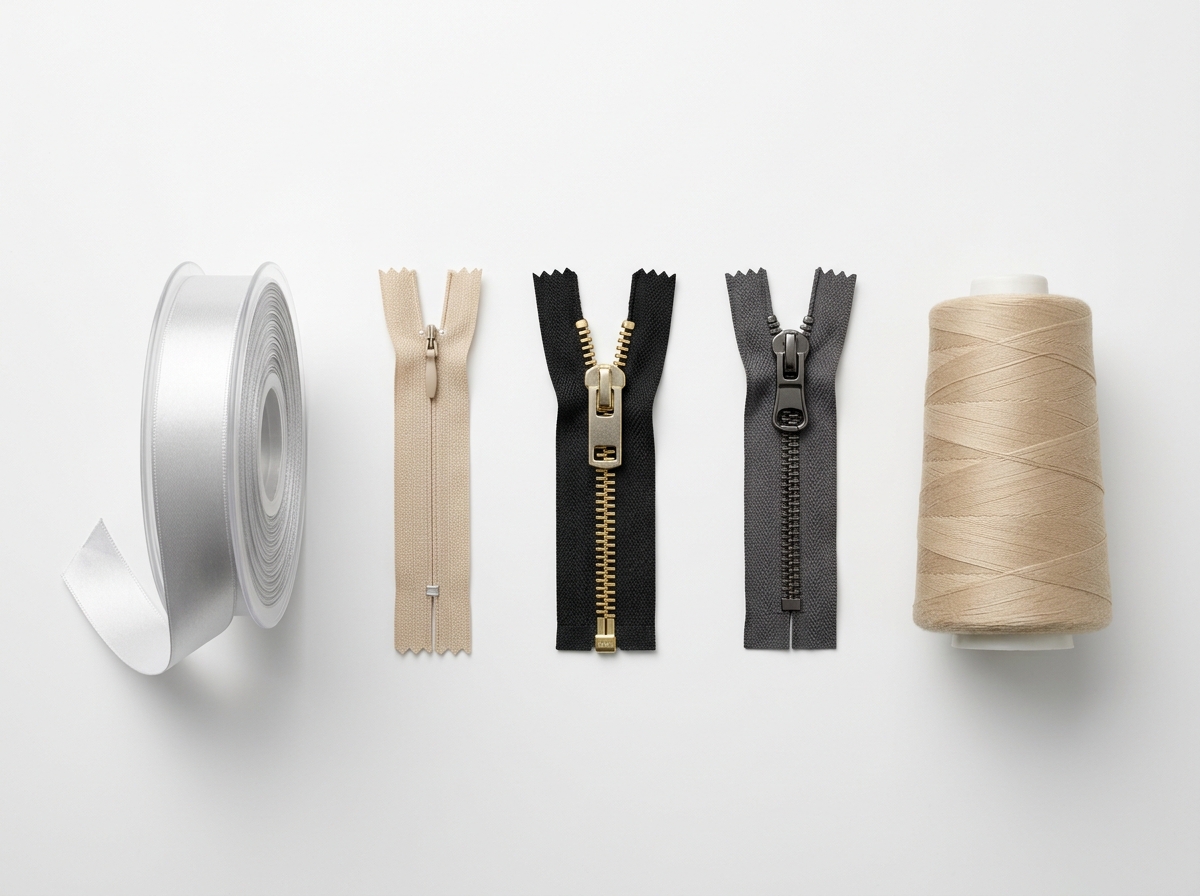
In a broader sourcing program, pairing closure control with consistent trim procurement across ribbon, lace, and thread helps reduce finish variation across the garment line.
Wholesale sourcing checklist for auto lock metal zipper buyers
A clear sourcing checklist reduces errors at the quotation stage and speeds up sampling.
The strongest supplier relationships are built on exact requirements, not vague requests for “better quality.”
Before placing a bulk order, a buyer should confirm the following items.
- Garment use case: dress, jacket, uniform, or DIY project.
- Closure length, gauge, tape width, and color code.
- Required lock behavior and acceptable pull force range.
- Expected washing, pressing, and storage conditions.
- MOQ, sample policy, production lead time, and packing format.
- Acceptance standard for cosmetic finish, plating, and seam alignment.
For importers and garment factories, the hidden cost is usually not the zipper unit price but the combined cost of sampling, rework, and late delivery.
That is why a technically small part can have an outsized effect on commercial performance.
In practice, the most reliable sourcing programs combine product-level verification with category-level planning across New Swell and its supporting trim catalog.
How to balance garment aesthetics, durability, and cost
The right zipper balances three priorities: appearance, function, and total landed cost.
A premium metal zipper can justify itself if it reduces complaints or improves the finished look enough to support higher retail positioning.
At the same time, over-specifying a zipper for a low-margin garment can inflate cost without measurable benefit.
Wholesale buyers should compare the closure decision against the garment’s price point and expected use intensity.
For example, a fashion dress may tolerate a lighter closure if the goal is concealment, while a uniform or outerwear item may need a more durable visible zipper to support repetitive use.
That decision is easier when the supplier can explain product differences clearly and provide samples across adjacent closure types.
When a collection includes both functional and decorative trims, a coordinated procurement plan across zipper, ribbon, lace, and thread usually improves consistency and reduces sourcing complexity.
For that reason, many buyers build a trim matrix rather than ordering each item in isolation.
The result is a more stable garment quality outcome and fewer surprises at final inspection.
FAQ about auto lock metal zippers and garment durability
What makes an auto lock metal zipper different from a standard metal zipper?
An auto lock metal zipper uses a slider mechanism that resists unintended movement when the pull tab is not being actively handled.
That makes it better for garments where closure security matters during wear.
Are metal zippers more durable than plastic zippers?
Metal zippers are often selected for a more substantial feel and strong visual presence, but durability still depends on the full construction and intended use.
Testing against standards such as ASTM D2061 is a better way to compare performance than relying on material alone.
Which garments benefit most from an auto lock metal zipper?
Dresses, skirts, jackets, uniforms, and other fitted garments benefit most because they need stable closure behavior during movement.
They are also useful when the zipper is part of the garment’s visible design language.
What should wholesale buyers check before ordering in bulk?
Buyers should verify length, gauge, tape width, lock behavior, finish, color consistency, MOQ, lead time, and packing format.
Sample approval should always happen before mass production.
How do I test zipper durability before production?
Use manual cycling, seam insertion trials, dimensional checks, and laundering or abrasion checks where relevant.
ASTM D2061, ASTM D4966, and AATCC 61 are useful references for building a structured evaluation plan.
Can auto lock metal zippers improve perceived garment quality?
Yes, because they support cleaner closure lines, better wearing confidence, and a more premium tactile impression.
That effect is especially noticeable in women’s fashion and formalwear.
Should I choose a metal zipper or an invisible zipper for dress production?
Choose a metal zipper when the closure should be visible and structurally expressive.
Choose an invisible zipper when concealment is more important than a visible hardware statement.

Post time: Jul-11-2026