- Decorative resin zippers are used as visible style elements, not just closures.
- Color, tape width, and puller shape influence how the zipper reads in a final garment.
- Wholesale buyers should check sampling, MOQ, lead time, and color consistency before bulk orders.
- Fashion zipper selection must balance aesthetics, seam behavior, and durability in wear.
- Wedding, women’s fashion, and DIY collections are the highest-value use cases for resin zipper design.
Decorative resin zipper design matters because fashion consumers notice hardware first, and a well-chosen fashion zipper can shift a garment from ordinary to editorial in a single seam line. In practical sourcing, designers often compare zipper style with fabric weight, garment use, and production tolerances; for dimensional control, many manufacturers work to very tight tolerances, and general machining references commonly cite precision classes down to 0.005 mm in controlled processes, while textile zipper testing is better evaluated through methods such as ASTM D2061. For wholesale buyers looking beyond one-off styling, categories like zippers, lace, and ribbon can be planned together to build coordinated product stories for dress, wedding, and DIY markets.
How Fashion Designers Use Decorative Resin Zippers Creatively
Fashion designers use decorative resin zippers creatively by turning a practical fastening into a visible part of the silhouette, color story, and brand identity. A resin zipper can echo a garment’s trim, contrast against a plain panel, or become the visual center of a sporty, youthful, or avant-garde design. In wholesale apparel development, that means the zipper is no longer a hidden supply item; it becomes a sourcing decision tied to collection theme, fabric compatibility, and customer perception.
Why Decorative Resin Zippers Matter in Fashion Zipper Design
Decorative resin zippers matter because they let designers control both function and surface design at the same time. Unlike concealed closures that disappear into the seam, a resin zipper is often meant to be seen, photographed, and noticed at retail distance. That visibility creates a styling opportunity for ready-to-wear, wedding accents, women’s casualwear, children’s garments, and DIY projects.
The design value is especially clear in dresses and skirts where the closure runs through a clean vertical line. A matching resin zipper can preserve elegance, while a contrast zipper can create an intentional focal point. In wholesale terms, this gives buyers a way to differentiate otherwise similar SKUs without changing the garment pattern.
| Design Goal | Resin Zipper Choice | Typical Visual Effect | Best Use Case |
|---|---|---|---|
| Quiet elegance | Tone-on-tone tape and teeth | Minimal interruption | Dress, skirt, wedding wear |
| Fashion accent | Contrasting tape color | Visible line detail | Women’s wear, streetwear |
| Playful styling | Bright resin finish | Youthful, energetic look | Children’s wear, DIY bags |
| Editorial effect | Oversized puller or shaped slider | Hardware becomes decoration | Statement garments |
For buyers who manage seasonal assortments, the key is consistency across product lines. If a collection uses resin zipper hardware as a repeated motif, the same tape color family, slider finish, and length logic should be applied across multiple garments so the range feels intentional rather than improvised.
How Designers Use Resin Zippers Creatively in Garments
Designers use resin zippers creatively by placing them where the eye naturally travels. A center-back zipper on a dress, a side zipper on a skirt, or a front closure on a jacket can each create a different visual hierarchy. The zipper can be exposed, partially exposed, color-matched, or paired with contrast stitching to strengthen the design language.
One common method is contrast blocking. A dark garment with a bright resin zipper creates a strong vertical accent, while pastel garments often benefit from white or translucent-looking zipper elements that keep the mood soft. This is why fashion zipper sourcing is closely linked to color development; if the zipper color is even slightly off, the garment can look underdeveloped in photography and on the rack.
Another method is rhythm. Repeating the same decorative resin zipper across a capsule collection gives visual continuity. For example, a wedding capsule may use the same pearl-like or soft-toned hardware on a dress pouch, a small clutch, and a garment closure, while a DIY line may use bold resin zipper colors to signal creativity and ease of use.
- Use the zipper as a line of movement, not only a closure.
- Match zipper scale to garment proportion.
- Keep puller shape consistent with the brand’s design language.
- Test how the zipper photographs under daylight and studio light.
Material and Performance Factors That Affect Resin Zipper Selection
Resin zipper selection should be based on more than appearance because performance still determines whether the garment survives production and wear. The closure has to glide smoothly, resist misalignment, and support repeated opening and closing during the product life cycle. Zipper performance testing is commonly evaluated through methods such as ASTM D2061, which covers standard test methods for zipper durability-related characteristics.
From a sourcing viewpoint, designers and product developers should ask three practical questions: Will the zipper match the fabric weight? Will it open cleanly under seam stress? Will the surface finish remain attractive after handling, transport, and consumer use? These questions matter in wholesale because the failure cost is not just one defective unit; it is a potential batch-level return issue.
| Selection Factor | What to Check | Practical Risk if Ignored | Buyer Action |
|---|---|---|---|
| Fabric weight | Light, medium, or heavy garment | Puckering or distortion | Request sample sewn into target fabric |
| Color consistency | Batch-to-batch shade match | Mismatched production lots | Approve shade standard before bulk order |
| Slider feel | Smoothness and resistance | Customer dissatisfaction | Test repeated opening cycles |
| Tape behavior | Edge stability and stitching response | Seam waviness | Check sewn sample under tension |
For garments sold at scale, even a small appearance issue can become expensive. In apparel quality management, a visible hardware defect may affect the whole style line because buyers tend to judge hardware as part of overall product value, not as a separate component.
Creative Uses in Wedding, Women’s Wear, and DIY Collections
Wedding, women’s wear, and DIY are the strongest creative arenas for a decorative resin zipper because each one rewards visible detail. Wedding garments often need a soft, refined finish, so designers may choose subtle resin tones that blend with satin, lace, or tulle. Women’s wear, especially day dresses and casual skirts, allows more contrast and stronger graphic lines. DIY products, meanwhile, can use bold colors, oversized pullers, and playful styles to encourage user engagement.
In wedding-related products, the zipper often needs to disappear visually while still contributing a premium touch. In this case, pairing the zipper with lace or soft ribbon can help integrate it into the garment’s surface design. For women’s fashion, a resin zipper can also be used intentionally as a design seam that elongates the body line or sharpens a minimalist silhouette.
DIY consumers respond differently. They usually want easy handling, clear color differentiation, and a look that makes handmade items feel complete. For that audience, a fashion zipper is not only a closure component; it is a visible sign that the project was finished professionally.
Wholesale Sourcing Checklist for Decorative Resin Zipper Buyers
Wholesale buyers should source decorative resin zippers with the same discipline they apply to fabric and trim, because small inconsistencies can affect an entire assortment. The most important sourcing variables are color match, length accuracy, slider style, tape width, lead time, and packaging. Since New Swell’s catalog is built around trims and sewing accessories, zippers are most effective when planned as part of a broader purchasing basket rather than as a single isolated SKU.
MOQ and sampling matter because fashion collections often require color approval before launch. Buyers should request strike-offs or pre-production samples, then test the zipper in the intended garment construction. If the closure is for dresses or close-fitting garments, the sewing behavior is just as important as the appearance.
- Confirm garment category, fabric weight, and closure placement.
- Approve color under natural and indoor lighting.
- Check slider movement on actual sewn samples.
- Verify packaging and label requirements for export.
- Lock the approved sample before bulk production.
| Wholesale Question | Why It Matters | Buyer Priority |
|---|---|---|
| Can the zipper color be matched to the garment? | Prevents visual inconsistency | High |
| Is the MOQ suitable for the season order? | Affects stock risk | High |
| Can samples be sent before bulk? | Reduces production error | High |
| Is packing suitable for export and retail? | Protects product quality in transit | Medium |
For export buyers, packaging and documentation should be defined early. A zipper that looks ideal in sample form can still fail operationally if it arrives tangled, scratched, or unlabeled. That is why bulk buyers should treat packaging as part of the product, not as an afterthought.
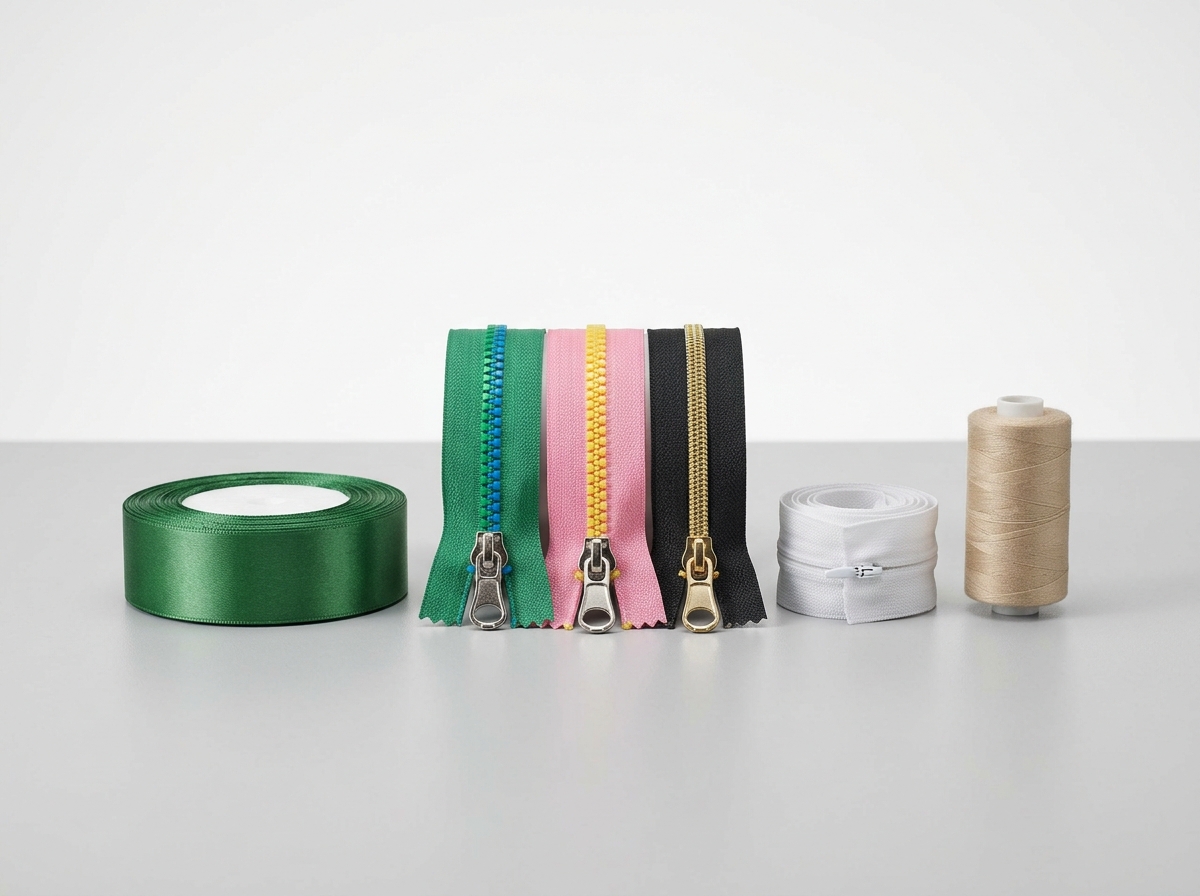
How Decorative Resin Zippers Compare with Other Fashion Closures
Decorative resin zippers occupy a middle ground between hidden closures and highly industrial hardware. They are more visible than concealed nylon zippers, often lighter than metal alternatives, and usually easier to integrate into colorful fashion stories. That makes them especially useful for collections where the closure should contribute to the aesthetic without looking heavy.
By comparison, hidden zippers are better when the garment should remain visually uninterrupted, and metal zippers are better when strength or rugged styling is the goal. Resin zippers are strongest when the design brief calls for controlled color, moderate weight, and a clean fashion finish.
| Closure Type | Visual Presence | Typical Strength Use | Best Design Scenario |
|---|---|---|---|
| Decorative resin zipper | High | Fashion and everyday apparel | Visible style element |
| Concealed zipper | Low | Dress and skirt construction | Invisible closure |
| Metal zipper | High | Denim and outerwear | Rugged or statement styling |
| Coil zipper | Medium | General apparel use | Lightweight, flexible seam |
Designers often choose based on the visual story first and the mechanical requirement second, but the best product outcomes happen when both are aligned from the start. In practice, that means asking whether the garment needs to look delicate, technical, playful, or premium before choosing the zipper family.
Standards, Testing, and Quality Control for Fashion Zippers
Quality control for fashion zippers should be built around repeatability, not subjective approval alone. Textile composition and related material checks are often supported by standards such as ISO 1833-1, while zipper behavior can be checked through ASTM D2061. These references help buyers move from “looks good” to measurable acceptance criteria.
A practical QC routine should include visual shade inspection, opening and closing cycles, seam sewing tests, and packaging review. If the zipper is part of a fashion collection sold in multiple colors, batch variance should be monitored across the full order. For buyers sourcing internationally, that extra control lowers the chance of a style-level complaint after shipment.
- Inspect color under two light sources.
- Test zipper smoothness after sewing into fabric.
- Check puller finish for scratches and plating defects.
- Review tape symmetry and tooth alignment.
- Record approved samples for re-order matching.
When the zipper is decorative, QC becomes even more important because customers judge it visually before they ever test it mechanically. A small finish flaw on a resin zipper can reduce perceived garment value disproportionately.
How to Build a Collection Around Decorative Resin Zippers
A successful collection uses decorative resin zippers as a repeatable design cue rather than a one-time embellishment. Designers can build theme consistency by standardizing zipper color families, slider shapes, and placement rules across multiple styles. That creates a stronger brand signature and makes sourcing more efficient for wholesale replenishment.
A useful strategy is to define one zipper role per collection. For example, a romantic line might use soft-toned zippers that blend into fabric; a youth line might use contrast zippers that feel energetic; a DIY line might use bold, easy-to-handle zipper colors that photograph well in online tutorials. This approach allows the fashion zipper to support storytelling without forcing every garment to look the same.
- Choose the visual role of the zipper before sampling.
- Set a color standard for the full collection.
- Approve the zipper on real fabric, not only on cards.
- Test packaging and labeling for export readiness.
- Keep re-order records for consistent replenishment.
For wholesale buyers, this collection-thinking approach also improves inventory planning. A stable decorative trim concept is easier to reorder than an ad hoc hardware choice, especially when the goal is recurring sales into wedding, women’s fashion, or DIY channels.
FAQ: Decorative Resin Zipper and Fashion Zipper Buying Questions
1. What makes a decorative resin zipper different from a regular fashion zipper?
A decorative resin zipper is designed to be seen, while a regular fashion zipper may be selected mainly for closure function. The resin version usually plays a stronger styling role through color, finish, and puller design.
2. Are resin zippers suitable for dresses and skirts?
Yes, resin zippers are commonly used in dresses and skirts when the designer wants a visible or coordinated closure. They are especially useful when color matching and lightweight visual impact matter.
3. How should wholesale buyers evaluate zipper quality?
Buyers should test appearance, sewing behavior, smoothness, and batch consistency. Standards such as ASTM D2061 support performance-based evaluation.
4. Can a resin zipper be used as a design feature?
Yes, that is one of its main advantages. Designers often use the zipper as a visual line, contrast accent, or branding cue rather than hiding it.
5. What is the most important sourcing step before bulk order?
Approve a sewn sample in the exact fabric and garment construction. That step reveals whether the zipper looks right and functions correctly in the final product.
6. Why do wedding collections often need special zipper selection?
Wedding garments are highly sensitive to surface detail, so the zipper must support a refined look. Small color or finish issues are easier to notice in formalwear.
7. What product categories pair well with decorative resin zippers?
They pair well with lace, ribbon, sewing thread, and DIY accessories, especially when a brand wants a coordinated trim story across multiple SKUs.
For buyers building a trim program, the most effective approach is to treat the decorative resin zipper as part of a larger sourcing system. That system usually includes matching ribbon, decorative lace, and other sewing accessories so the final line feels coherent from sample to shipment.

Post time: Jul-09-2026