- Consistency starts with a written product spec, not with final inspection.
- Large runs require sampling plans, lot traceability, and process control at each stage.
- For apparel accessories, material, color, size, and finish are the main variation points.
- Wholesale buyers should confirm MOQ, samples, packing, and lead time before approving mass production.
- OEM quality control is strongest when the factory measures process drift early, not when defects are already finished.
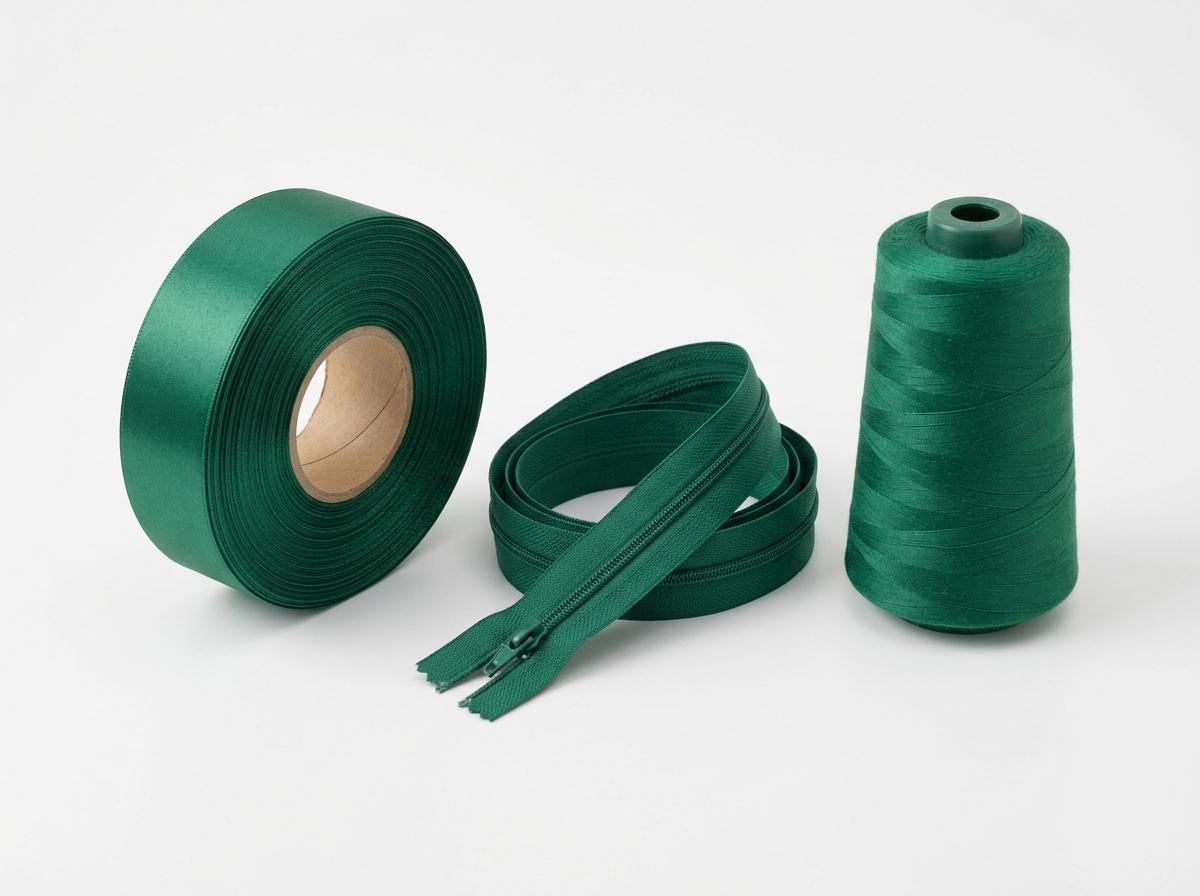
How OEM factories create consistent quality across large production runs depends on one simple principle: the factory must control variation before it becomes waste. In apparel accessories manufacturing, that matters for products like wholesale ribbon, zipper supply, lace trim, and sewing thread, where small differences in color, width, stitch behavior, or finishing can break consistency across a bulk order. ISO 2859-1, the standard most buyers use for acceptance sampling, is built around lot-by-lot inspection and AQL decision-making, which is why it remains central to OEM factory quality control in wholesale production. For buyers, the real question is not whether a factory can make one good sample, but whether it can repeat that result across thousands of units with the same finish, size, and performance.
Why OEM Factory Quality Control Must Start Before Mass Production
The best OEM factory quality control systems prevent variation upstream, because defects become more expensive after production starts. In a large production run, the first approved sample is only a benchmark; it is not enough to guarantee stable output if material lots, machine settings, or operator methods change later.
For garment accessories, the most common drift points are yarn tension, dye lot variation, zipper tape alignment, cutting width, and packing count. A factory that locks these variables early can keep the entire run within tighter limits, reducing rework and shipment disputes.
| Control Point | Typical Risk in Large Runs | Common Measurable Standard | Why It Matters |
|---|---|---|---|
| Raw material approval | Color or strength drift | Lot match, thickness, fiber composition | Prevents batch inconsistency |
| Machine setup | Width, stitch, or tension deviation | Target setting with documented tolerance | Stabilizes output from the first carton |
| In-process inspection | Defects discovered too late | Sampling by lot or interval | Catches drift before full-run waste |
| Final packing audit | Mixing sizes, colors, or counts | Carton count and label verification | Reduces claims and returns |
According to ISO 2859-1, acceptance sampling is designed to evaluate a lot using a defined AQL approach rather than checking every item. That is practical for OEM factory operations because bulk orders can involve thousands of units per style, color, or size. For buyers of wholesale accessories, the key benefit is predictable acceptance criteria instead of subjective judgment.
Quality Control For OEM Factory Runs: The Four Layers That Prevent Defects
Consistent quality across large production runs usually comes from four layers of control, not one inspection stage. Each layer protects a different source of variation.
- Input control: verify material, shade, width, weight, and supplier lot before production.
- Process control: monitor machine settings, operator technique, and output drift during the run.
- Output control: sample finished goods for appearance, dimensions, and functional performance.
- Packing control: confirm quantities, labels, carton marks, and shipment separation.
This layered approach is especially important in sewing accessories, where the product family includes ribbon, thread, lace, scissors, kits, and DIY tools rather than a single uniform item. Different SKUs require different checks, but the logic stays the same: define the acceptable range, test the sample, and keep the lot traceable.
| Quality Layer | What It Checks | Example For Apparel Accessories | Buyer Benefit |
|---|---|---|---|
| Input | Material identity and lot match | Polyester ribbon shade and width | Lower risk of color mismatch |
| Process | Consistency during production | Thread tension and lace pattern stability | Fewer mid-run defects |
| Output | Finished product compliance | Zipper smoothness or ribbon edge finish | Better functional reliability |
| Packing | Quantity and SKU accuracy | Correct count per bag or carton | Less order confusion |
In practice, factories that treat these four layers separately tend to reduce last-minute corrective work. That matters in wholesale procurement because the cost of sorting, repacking, or reworking a large run can easily exceed the cost of prevention.
Material Control In Apparel Accessories Manufacturing
Material control is the foundation of quality consistency in OEM factory production because the raw material defines most of the finished product behavior. For accessories such as lace, zipper tape, ribbon, and sewing thread, the input material affects appearance, strength, elasticity, and wear resistance.
Polyester is widely used in ribbons and sewing thread because it offers good tensile performance and dimensional stability. For example, polyester fiber has a reported tensile strength range of roughly 4 to 9 cN/dtex in standard textile references, which is one reason it performs well in general-purpose sewing and decorative uses. That makes it suitable for wholesale ribbon and bulk sewing thread where repeatability matters more than specialty performance.
| Accessory Type | Primary Material Factor | Typical Buyer Check | Common Failure If Ignored |
|---|---|---|---|
| Ribbon | Shade, weave, edge finish | Width, gloss, color lot | Visible mismatch in packaging or decor |
| Zipper | Tooth alignment, tape stability | Smoothness, length, color | Jamming or uneven appearance |
| Lace | Pattern repeat, stretch, hand feel | Pattern accuracy, elasticity | Asymmetry in garments or trim |
| Thread | Count, twist, breaking strength | Spool consistency, tension behavior | Thread breakage during sewing |
For lace products, consistency is not only visual. Decorative categories such as lace trim can be judged by repeat pattern length, edge integrity, and stretch recovery. In wedding and dress applications, buyers often care about how the trim behaves under cutting, stitching, and pressing, not just how it looks on a sample card.
Process Control During Large Production Runs
Process control is what keeps an OEM factory from drifting after the first approved sample. Once mass production begins, even small changes in machine speed, humidity, operator handling, or bobbin tension can create measurable variation.
Textile manufacturing commonly relies on process-based checks because many outputs are continuous rather than discrete. For sewing thread, for example, tension consistency and package winding quality can influence downstream sewing performance. For lace and ribbon, pattern alignment and edge finish are often the main process indicators. For zippers, the factory should watch closure smoothness, tape alignment, and dimensional accuracy across the full lot.
In dimensional manufacturing, ISO 2768-1 provides general tolerances for linear dimensions when no individual tolerance is specified. That type of standard is useful conceptually for buyers because it shows why measurable tolerance language is better than vague quality promises. In OEM factory sourcing, the more explicit the tolerance, the fewer misunderstandings later.
Many buyers also ask what numbers matter most. The answer is simple: choose the metrics that match the product. A ribbon buyer should check width consistency and edge quality, while a zipper buyer should check tape length and slider function. A sewing thread buyer should focus on spool uniformity and break behavior, while a lace buyer should look at pattern repetition and finish symmetry.
Sampling Plans, AQL, And Final Inspection In OEM Factory Buying
Sampling is the practical bridge between perfection and production reality. No wholesale buyer wants to inspect every piece in a large run, so OEM factory quality control uses statistical sampling to decide whether a lot is acceptable.
ISO 2859-1 is the most recognized reference for lot-by-lot acceptance sampling. In buyer language, it helps define how many pieces to inspect and how many defects are allowed before a lot is rejected or reworked. That makes the process more objective for bulk zipper orders, lace manufacturing, and ribbon wholesale.
| Sampling Item | Factory Question | Example Check | What Buyer Learns |
|---|---|---|---|
| Sample size | How many units to test? | Lot-based plan per AQL | Inspection effort is proportional |
| Critical defect limit | How serious is the issue? | Broken zipper or wrong size | Functional failure is not acceptable |
| Major defect limit | What affects saleability? | Uneven color or visible flaw | Product may need rework or rejection |
| Minor defect limit | What is cosmetic only? | Small trim irregularity | May be acceptable within agreed AQL |
In real procurement, sampling works best when both sides agree on the defect definitions before production begins. A buyer and supplier should not wait until final inspection to decide whether a shade difference, a loose stitch, or a count discrepancy counts as major or minor.
How Wholesale Buyers Should Specify Quality For OEM Factories
Clear specifications are the fastest way to get consistent quality from an OEM factory because they remove guesswork. Buyers who order in bulk should define the measurable details that matter most to their use case.
- Material: polyester, nylon, cotton blend, or other specified fiber.
- Dimension: width, length, thickness, or repeat pattern.
- Color: Pantone reference, sample swatch, or approved lot.
- Performance: tensile, stretch, closure smoothness, or wash behavior.
- Packing: unit count, bag type, carton marks, and master carton quantity.
- Commercial terms: MOQ, sample lead time, bulk lead time, and shipping method.
For example, a wedding buyer sourcing wedding lace may care about hand feel, pattern symmetry, and color tone, while a garment manufacturer sourcing invisible zipper may care more about length accuracy, slider performance, and seam concealment. Both are quality-sensitive, but the acceptance criteria are different.
This is why the best OEM factory relationships are built around written specs, not verbal expectations. If the drawing, sample card, and tolerance sheet all agree, the factory can scale production with less ambiguity.
Common Failure Modes In Large Production Runs
Most quality problems in large runs are repeatable system failures, not random accidents. Identifying them early is how an OEM factory protects consistency.
- Lot mixing: different shades, sizes, or material batches get packed together.
- Machine drift: settings change over time and output slowly moves out of spec.
- Operator variation: different workers apply the same task differently.
- Packing errors: wrong SKU, wrong count, or wrong label enters shipment.
- Inspection gaps: sampling is too weak to detect trend changes.
These failures are especially visible in decorative products. A ribbon roll with inconsistent edge sealing or a lace trim with repeating pattern distortion can look acceptable in one piece but fail visibly in a full garment or wedding installation. That is why finished goods inspection should be connected to process feedback, not treated as a separate administrative step.
 Experience-Based Buying Advice For OEM Factory Sourcing
Experienced buyers reduce risk by asking process questions instead of only asking price questions. In bulk sourcing, the cheapest quote is not necessarily the lowest-risk quote.
Before approving an OEM factory for a large production run, buyers should ask how the factory handles incoming inspection, first-article approval, mid-run sampling, and carton audit. They should also ask whether the factory keeps traceability by production lot, because that makes root-cause analysis possible if a problem appears after shipment.
| Buyer Question | Why It Matters | Good Answer Includes | Risk If Missing |
|---|---|---|---|
| What is your approval process? | Shows control before mass production | Sample, spec sheet, signed confirmation | Misunderstood requirements |
| How do you monitor the run? | Shows process discipline | Inline checks and lot records | Late discovery of drift |
| What is your packing method? | Prevents shipment errors | Count control and label verification | Mixed cartons or shortages |
| How do you handle defects? | Shows corrective capability | Rework, replacement, or sorting plan | Delay and customer claims |
For New Swell, the strongest procurement logic is usually category-based: choose the accessory family, define the use scenario, and then match the technical spec to the market requirement. That approach works well for wedding, dress, and DIY buyers because each scenario has its own tolerance for appearance, function, and cost.
Industry Standards That Support Consistent OEM Factory Quality
Standards matter because they turn quality from opinion into measurable criteria. In OEM factory purchasing, that is the difference between a subjective claim and a testable requirement.
ISO 9001:2015 establishes the framework for a quality management system, while ISO 2859-1 supports acceptance sampling by attributes. For product-level testing and material verification, buyers may also reference industry-specific textile and inspection methods through recognized standards bodies such as ASTM International and the National Institute of Standards and Technology. These references help buyers build a more defensible supplier approval process.
For apparel accessories, the practical use of standards is straightforward: define the requirement, test the sample, document the result, and keep the approved reference. That process is what makes large-scale repeatability possible.
How To Reduce Risk In MOQ, Samples, Packaging, And Lead Time
Commercial controls are part of quality control because they influence whether the factory can execute the order correctly. MOQ, sample timing, packaging detail, and lead time all affect consistency in bulk orders.
- MOQ: confirms whether the factory can produce efficiently without frequent setup changes.
- Sample approval: establishes the baseline for size, color, and finish.
- Packing specification: prevents product mixing and count errors.
- Lead time: affects whether the factory can keep the same material lots through production.
For example, if a buyer changes ribbon color after approval, the factory may need a new dye lot, which increases variation risk. If a lace order is split into too many small batches, color matching becomes harder. If a zipper order is rushed, final inspection may not catch every functional defect.
In wholesale buying, good planning is part of quality control. The most reliable OEM factory is usually the one that can align production discipline with realistic commercial terms.
FAQ
What is the most important step in OEM factory quality control?
The most important step is defining the product specification before mass production starts. Once the approved sample, tolerance, and packing rules are fixed, the factory can control the run more consistently.
How do large production runs stay consistent?
They stay consistent through input checks, process monitoring, sampling, and traceable packing. The factory should detect drift during production, not after shipment.
What is AQL in wholesale inspection?
AQL is the acceptable quality limit used in sampling inspection. It helps buyers decide how many defects are acceptable in a lot under a defined plan such as ISO 2859-1.
Why do garment accessories need strict quality control?
Because small variations in ribbon width, zipper function, lace pattern, or thread strength can create visible or functional problems in finished garments and packaging.
What should buyers confirm before placing a bulk OEM order?
Buyers should confirm material, size, color, packing, MOQ, sample approval, lead time, and defect criteria. These details are essential for repeatable results.
Is final inspection enough for OEM factory quality?
No. Final inspection can catch problems, but it cannot prevent them. Strong factories also use incoming inspection and in-process control to reduce defects earlier.
Which accessories are most sensitive to quality variation?
Decorative and functional items such as lace, invisible zippers, and sewing thread are highly sensitive because buyers notice both appearance and performance differences quickly.

Post time: Sep-01-2026