- Consistent sewing thread quality comes from process control, not only final inspection.
- Polyester sewing thread is favored in wholesale sourcing because it balances strength, abrasion resistance, and color stability.
- Buyers should ask for test data, batch traceability, cone weight tolerance, and packaging details before placing bulk orders.
- Reliable suppliers support wedding, apparel, and DIY use cases with stable shades, clean winding, and predictable performance.
For a sewing thread manufacturer, consistency is the real product. In polyester sewing thread, small variations in twist, denier, moisture, or dye uptake can affect seam appearance, breakage rate, and machine efficiency. Textile testing standards such as ASTM D2256 and ISO 2062 provide measurable ways to check yarn strength, while ISO color management practices help buyers compare shades across batches. For wholesale buyers in apparel, wedding decor, and DIY supply chains, that means the supplier must deliver more than a low quote: it must deliver repeatability, clear specifications, and dependable packing for bulk export.
Why sewing thread quality is the basis of a reliable wholesale supply chain
Quality sewing thread protects the entire sewing process from avoidable defects. When thread breaks, stitches skip, or color shifts from one lot to the next, the cost is not limited to the thread itself. It shows up in machine stoppage, operator frustration, rejected garments, and delayed shipping. In wholesale procurement, that is why buyers evaluate a sewing thread manufacturer by process stability, not by appearance alone.
Polyester sewing thread is especially important because it is used across apparel factories, home sewing, repair work, and decorative projects. It is the default consumable for many buyers because it offers good strength, moisture resistance, and broad compatibility with common fabrics. For a supplier like sewing thread wholesale supply, consistency across spools, colors, and packaging sizes is what turns a commodity into a reliable export item.
One useful benchmark comes from textile testing itself. ASTM D2256 is widely used for tensile testing of yarns and threads, and ISO 2062 defines a standard method for determining the breaking force and elongation of textile yarns. These standards matter because they convert subjective claims such as “strong” or “durable” into measured values that buyers can compare between suppliers and batches.
Sewing thread quality control starts with fiber, twist, and dye consistency
The earliest production stages determine most of the final thread performance. If raw polyester fiber quality varies, later inspection cannot fully recover the lost uniformity. Reliable manufacturers therefore control the incoming material, spinning or twisting process, dye lot management, winding tension, and cone geometry.
| Quality factor | What good control looks like | Why it matters to buyers | Typical measurable check |
|---|---|---|---|
| Fiber selection | Stable polyester input and clean filament uniformity | Reduces breakage and rough hand feel | Lot traceability, visual defect review |
| Twist level | Consistent twist across the same count and color | Affects strength, stitch balance, and lint | Twist per meter or turns per inch |
| Dyeing | Matched shade within the same production lot | Prevents shade mismatch in bulk orders | Color difference testing, lightfastness check |
| Winding tension | Even spool build with no loose edges | Improves feeding on industrial machines | Visual inspection and unwinding test |
Twist consistency is one of the most overlooked quality controls in sewing thread. If the twist is too low, the thread can open and fuzz. If it is too high, the thread may feel harsh and can reduce sewing comfort on certain fabrics. In practice, buyers should ask whether the supplier controls twist by count and whether the same formulation is used across repeated lots.
Shade consistency is equally critical for apparel and wedding orders. A wedding ribbon or dress trim can be judged instantly by color mismatch, and sewing thread often needs to disappear visually into the seam. That is why many wholesale buyers prefer suppliers that can provide shade cards, lot references, and production confirmation before shipment.
How a reliable sewing thread manufacturer tests polyester sewing thread
Testing turns sewing thread quality into evidence. A strong supplier does not rely on appearance or experience alone; it uses repeatable lab and line checks to verify performance before goods are packed for export.
| Test item | Standard or method | What it measures | Buyer value |
|---|---|---|---|
| Tensile strength | ASTM D2256 / ISO 2062 | Breaking force and elongation | Predicts seam durability |
| Color consistency | Lab shade comparison and batch control | Shade deviation between lots | Reduces visible mismatch in bulk orders |
| Package weight | In-house tolerance check | Net content per cone or spool | Supports wholesale acceptance and pricing |
| Winding quality | Visual and feeding test | Uneven build, loose loops, contamination | Prevents snagging and machine interruptions |
Buyers should request test data before confirming a bulk sewing thread order. The most useful documents are a specification sheet, test report, shade reference, and packing list. If the order is for apparel production, the supplier should also confirm recommended needle size, stitch type, and fabric compatibility, because thread selection changes with fabric weight and seam design.
In apparel factories, the practical question is not only “Is the thread strong?” but “Will it run cleanly at speed?” That is why many factories perform a short trial run before full release. For polyester sewing thread used on industrial machines, a clean feeding test can reveal more than a catalog description ever will.
For context, industrial sewing machine performance is commonly discussed in the range of several thousand stitches per minute, and high-speed systems can exceed 4,000 stitches per minute depending on machine type and application. That means thread stability must hold under repetitive loading, friction, and heat. A thread that looks acceptable in a hand test may fail when the machine runs at production speed.
 What buyers should ask before ordering wholesale sewing thread
The best procurement decisions start with the right questions. Bulk buyers do not need marketing language; they need specification clarity, shipping reliability, and process transparency.
- What polyester grade, count, and finish are used for the thread?
- Can the supplier provide tensile data, shade reference, and batch numbers?
- What is the minimum order quantity, and can samples be supplied first?
- How are cones packed to avoid deformation during export transit?
- What is the expected lead time for repeat orders and mixed-color orders?
- Can the supplier support private labeling, carton marking, or custom packaging?
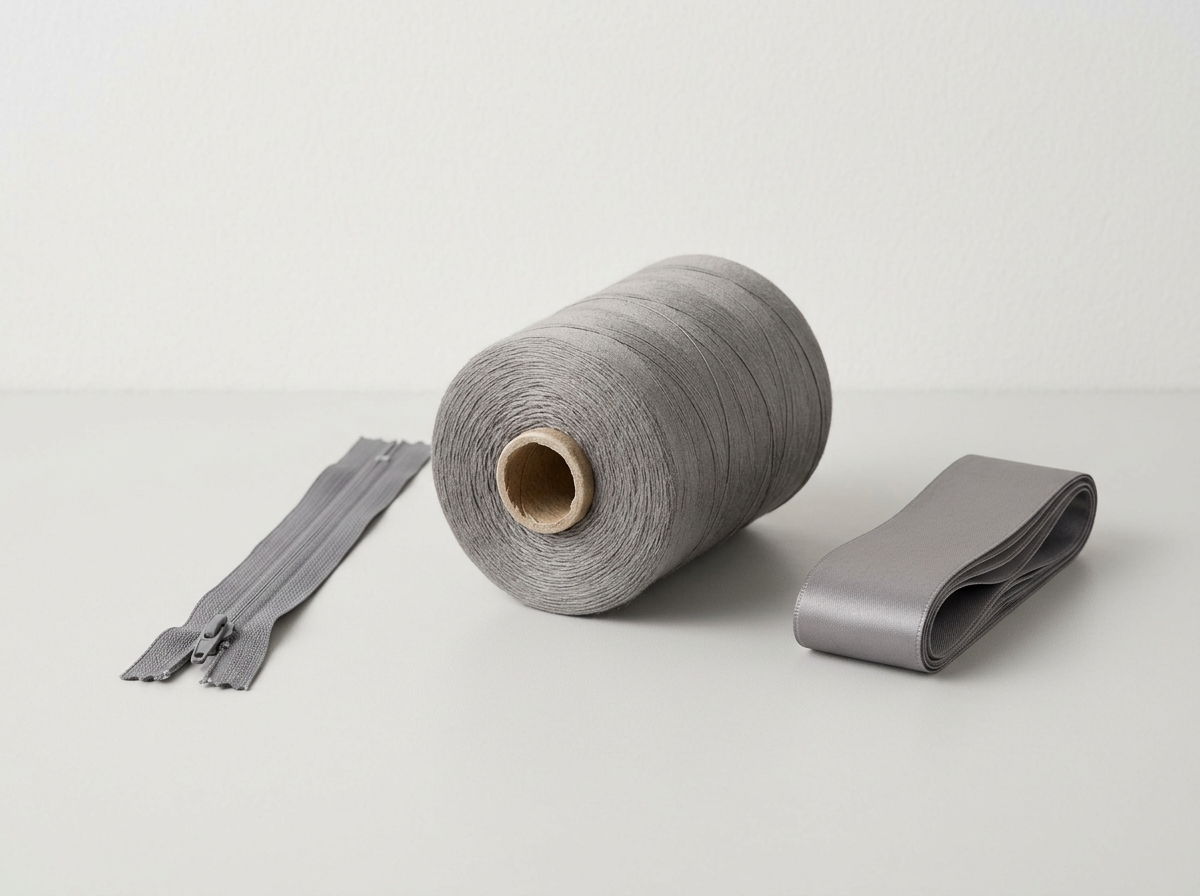
MOQ and sample policy often reveal the supplier’s actual wholesale readiness. A manufacturer that supports samples, repeat lots, and stable packing is usually better aligned with export buyers than a seller that only offers a generic catalog. For a category-based supplier such as wholesale sewing accessories, this matters because the buyer may source thread together with zippers, lace, ribbons, and scissors in one procurement cycle.
Packaging is part of quality control, not an afterthought. Spools that are crushed, dusty, or loosely wrapped can create feeding problems even when the thread itself is within spec. For shipping to apparel factories or online resellers, cartons should protect the cone shape and keep labels readable for warehouse handling.
Table of common polyester sewing thread buying scenarios
Different end uses require different quality priorities. A reliable sewing thread manufacturer adjusts the balance between strength, appearance, and handling based on the buyer’s application.
| Use case | Key priority | Common buyer concern | Supplier response |
|---|---|---|---|
| Apparel factory | Strength and feed stability | Machine stoppage and seam breakage | Lab testing, repeat lot control |
| Wedding and dress work | Shade match and clean seam look | Visible thread lines | Color card, lot tracking, fine count options |
| Home sewing | Ease of use | Snagging and lint | Smooth winding and user-friendly spool sizes |
| Repair and maintenance | Practical versatility | Compatibility with multiple fabrics | General-purpose polyester thread selection |
| DIY and craft resale | Presentation and packaging | Retail appeal and consistency | Clear labeling and mixed-color assortment support |
Wholesale buyers in wedding and DIY categories often care about appearance as much as strength. A thread that performs well technically but looks inconsistent on display can still create downstream problems for resellers. This is why many distributors prefer working with a supplier that also provides adjacent categories such as wholesale ribbons and decorative lace products, since the color management and packaging standards can be aligned across the assortment.
For cross-category sourcing, product structure matters. Thread quality should be evaluated alongside zippers, lace, and tools because buyers often place one combined order for garments or craft kits. A supplier with a broad sewing accessories catalog can reduce vendor management load, but only if each category keeps its own quality documentation.
How to reduce sewing thread defects in real production
Most sewing thread complaints are preventable with routine process checks. In production, the most common issues are breakage, lint, uneven tension, shade variation, and poor winding. Each one has a practical cause.
- Thread breakage: often linked to low tensile strength, incorrect needle size, or poor winding tension.
- Lint and fuzz: usually caused by twist inconsistency or surface abrasion during handling.
- Shade mismatch: often comes from mixed dye lots or weak batch control.
- Snagging: can result from cone deformation or loose winding layers.
- Uneven seam appearance: may indicate thread count mismatch with fabric thickness.
Production teams should run a short sewing trial before full release. A practical trial checks how the thread behaves under the same needle, fabric, speed, and stitch length used in the real order. This is especially important for polyester sewing thread because one formulation may perform well on woven cotton but feel different on stretch fabrics, lining, or decorative seams.
Roll-out discipline matters in bulk orders. The first cartons in a shipment should not be treated as representative unless the supplier confirms lot identity. Good manufacturers label production batches clearly and keep records that allow a later claim to be traced back to a specific dye lot or winding run.
Case logic for apparel, wedding, and DIY buyers
The same sewing thread manufacturer can serve very different buyers, but the quality lens changes by scenario. A garment factory wants predictable runnability, a wedding buyer wants shade perfection, and a DIY reseller wants packaging consistency and low complaint risk.
In apparel manufacturing, repeatability is the main value. If a factory uses the same polyester sewing thread across multiple production runs, the supplier must hold the count, twist, and finish steady. Even a small variation can affect seam balance and rework rates.
In wedding supply, appearance becomes the quality standard. Thread is often used for invisible seams, delicate trims, or decorative fixing. Buyers in this segment frequently source thread together with decorative ribbon bows and lace because color harmony matters across the full decor package.
In DIY and home sewing, user experience is the deciding factor. Consumers notice winding quality, package clarity, and whether the thread runs smoothly on compact machines. That is why compact, clearly labeled cones and stable color selection can matter as much as raw strength.
How to evaluate a sewing thread supplier before long-term cooperation
A good supplier relationship is built on evidence, not promises. Before committing to repeat orders, buyers should compare the supplier’s technical documents, sampling service, and communication speed.
- Ask for a spec sheet with count, composition, finish, and package details.
- Request a sample from the same batch that will be produced for the bulk order.
- Check whether the supplier can explain test methods in plain terms.
- Review packing photos or carton details for export readiness.
- Confirm lead time, MOQ, and re-order stability in writing.
Supplier responsiveness is also a quality signal. When a manufacturer can answer technical questions quickly and consistently, it usually has stronger internal records and a more disciplined production flow. That is especially valuable for overseas buyers who cannot inspect every shipment in person.
For New Swell, the wholesale model is most effective when product categories support one another. Sewing thread, lace, ribbons, zippers, and tools are often purchased together, so buyers benefit from a catalog that reflects real end-use workflows instead of isolated SKU pages.
Conclusion: consistent sewing thread quality is measurable, not abstract
Reliable sewing thread quality comes from controlled inputs, repeatable processes, and verifiable testing. The best sewing thread manufacturer does not depend on visual inspection alone; it documents fiber selection, twist stability, dye consistency, winding quality, and batch traceability. For polyester sewing thread buyers, that means asking for measurable evidence such as tensile tests under ASTM D2256 or ISO 2062, plus clear packaging and shipping specifications.
In wholesale sourcing, consistency saves more money than a low unit price can. A stable thread line reduces machine interruptions, lowers seam defects, and improves customer satisfaction across apparel, wedding, and DIY markets. If you want a dependable supply chain, choose a sewing thread manufacturer that can prove quality from lot to lot, not one that only describes it well in a catalog.
FAQ
What makes a sewing thread manufacturer reliable?
A reliable sewing thread manufacturer controls raw material selection, twist consistency, dye lots, winding quality, and final inspection, while providing batch traceability and test documents.
Why is polyester sewing thread so common in wholesale orders?
Polyester sewing thread is popular because it offers good strength, abrasion resistance, moisture stability, and broad use across apparel, repair, and DIY applications.
How can buyers check sewing thread quality before bulk purchase?
Buyers should request a specification sheet, tensile test report, shade reference, sample cones, packaging details, and confirmation of MOQ and lead time.
Which standards are useful for sewing thread testing?
ASTM D2256 and ISO 2062 are common references for tensile strength and yarn break force evaluation.
What problems does poor sewing thread quality cause?
Poor quality can lead to thread breakage, lint, skipped stitches, shade mismatch, seam defects, and production downtime.
Why is packaging important for sewing thread wholesale supply?
Packaging protects cone shape, prevents contamination, supports warehouse handling, and keeps labels readable during export and distribution.
Can one supplier handle sewing thread, lace, and ribbon together?
Yes, a broad sewing accessories supplier can often support combined procurement for thread, lace, ribbon, and tools, as long as each product category has clear quality control and documentation.

Post time: Aug-26-2026