- Water resistance is a system property, not just a zipper label.
- For hiking backpacks, a sealed or laminated construction is usually more reliable than a standard coil zipper.
- For travel bags, smooth operation, abrasion resistance, and repeat opening cycles matter as much as splash protection.
- Ask suppliers for salt spray, opening cycle, and colorfastness data before bulk purchase.
- Wholesale buyers should confirm MOQ, sample availability, and packing specs early to avoid production delays.
Waterproof zipper selection for backpacks and travel bags should start with the performance target, not the catalog photo: outdoor packs face rain, dust, flexing, and abrasion, while travel bags are opened more often and need smoother hand-feel. A practical benchmark is that bag hardware should be tested against established methods such as ASTM D3359 for coating adhesion and ISO 13934-1 for fabric tensile behavior when the zipper area is stitched into the seam structure. For buyers comparing options, internal product ranges such as zipper category, sewing accessories, and threads can help you evaluate the full bag-making system, not just one component.
How to choose a waterproof zipper for hiking backpacks and travel bags
The best waterproof zipper is the one that matches the bag’s real exposure, not the highest marketing claim.
Hiking backpacks and travel bags fail in different ways. Hiking users care about rain penetration, mud, compression, and long-term abrasion. Travel users care about smooth pull, repeated opening, and enough protection against splashes, spills, and airport handling. That is why waterproof zipper selection should begin with use scenario, then move to construction, then to procurement details like MOQ, color match, and sample approval.
Waterproof zipper types and what each one is good at
Different waterproof zipper structures deliver different tradeoffs in flexibility, sealing, and cost.
| Zipper type | Best use | Water protection level | Typical tradeoff |
|---|---|---|---|
| Coil zipper with water-resistant tape | Light rain travel bags | Moderate | Less protection under sustained exposure |
| Laminated waterproof zipper | Hiking backpacks, outdoor gear | High | Stiffer hand-feel and higher cost |
| Reverse coil with coated face | Urban backpacks, duffels | Moderate to high | Depends on seam design and slider cover |
| Vislon-style water-resistant zipper | Medium-duty travel bags | Moderate | Bulkier chain profile |
For outdoor bags, laminated constructions usually give better splash resistance because the face film helps block direct water entry along the chain. For travel bags, a reverse coil zipper can be a smart compromise if the bag also needs flexibility and a softer closure line. If you are buying as a wholesaler, your choice should also align with the rest of your trim package, including lace and decorative trims for lifestyle bags or polyester ribbon for branded packaging and accessory presentation.
What makes a backpack zipper truly waterproof
A waterproof zipper works only when the chain, tape, slider, and seam interface all cooperate.
The core mechanism is simple: the zipper reduces direct water pathways by using coated or laminated tape, tighter chain engagement, and a slider geometry that improves compression. But the seam around the zipper can still leak if the stitch line is exposed, the seam allowance is too narrow, or the bag fabric absorbs water. In other words, the zipper is only one layer of the waterproofing stack.
The most important design details are:
- Tape coating thickness and flexibility
- Chain size and tooth engagement accuracy
- Slider pressure and pull smoothness
- End stop strength and top stop security
- Compatibility with seam sealing tape or binding
In real production, a zipper that performs well on a bench test can still leak in a backpack if the surrounding fabric stretches too much under load. That is why bag makers often test the full assembly rather than the zipper alone. For a technical reference point, ISO 811 defines hydrostatic pressure testing for textiles, and the method is useful when you want a measurable way to compare fabric and seam performance around the zipper area.
Key performance data to request before buying in bulk
Wholesale buyers should ask for measurable data, not just a catalog claim of waterproofness.
| Data point | Why it matters | What to ask the supplier |
|---|---|---|
| Hydrostatic resistance | Shows how much water pressure the system can resist | Test method, result, and sample condition |
| Opening cycle count | Indicates durability for repeated use | Cycle target and failure criteria |
| Colorfastness rating | Important for bags exposed to sun and wear | Standard used and rating after testing |
| Pull strength | Shows slider and tape robustness | Measured force and sample width |
For textile and trim suppliers, standardized testing helps reduce disputes after shipment. NIST measurement resources are useful when your procurement team wants to understand why calibrated test methods matter across suppliers, factories, and markets. If you are comparing outdoor bag components, it is better to see a documented test method than a generic promise of “waterproof” performance.
How to match zipper construction to hiking and travel use cases
Hiking backpacks need more sealing confidence, while travel bags need more convenience.
| Use case | Recommended zipper construction | Priority | Typical buyer concern |
|---|---|---|---|
| Day hikes | Water-resistant coil or reverse coil | Comfort and light rain protection | Will it stay flexible and easy to open? |
| Multi-day trekking | Laminated waterproof zipper | Rain resistance and durability | Will gear stay dry in prolonged exposure? |
| Carry-on travel | Reverse coil with cover flap | Smooth use and moderate protection | Will the zipper snag in frequent handling? |
| Weekend duffels | Medium-duty waterproof zipper | Balance of price and protection | Is it strong enough for repeated packing? |
For hiking packs, a waterproof zipper should be evaluated together with the bag’s fabric denier, seam tape design, and pocket placement. A top-opening pocket exposed to rain needs a better zipper than a sheltered internal pocket. For travel bags, users often prioritize easy access and silent operation, which means excessive stiffness can become a real drawback. If your product line also includes sewing or repair kits, the broader sewing kit selection can support after-sales repairs and travel emergency use.
Which technical specifications matter most for bag zipper selection
Specifications should be read in the context of the bag design, not in isolation.
Even though exact size recommendations vary by bag model, the most decision-worthy specs are chain size, tape width, slider type, material finish, and package consistency. A smaller zipper may be lighter and more flexible, but it can wear faster in a heavily loaded backpack. A larger zipper may be tougher, but it can also add stiffness and visual bulk.
When evaluating supplier samples, look for:
- Consistent tape width across the batch
- Smooth slider travel without catching
- No chain misalignment at the start and end points
- Clean sealing or coating edges without delamination
- Stable color matching between zipper, fabric, and trims
For textile buyers, the wider assembly should also satisfy structural expectations around stitching and seam integrity. ISO 13935-2 covers seam tensile properties, which is highly relevant when a zipper is sewn into a load-bearing backpack opening. This is especially important for bulk orders, where a weak seam can cause returns even if the zipper itself is acceptable.
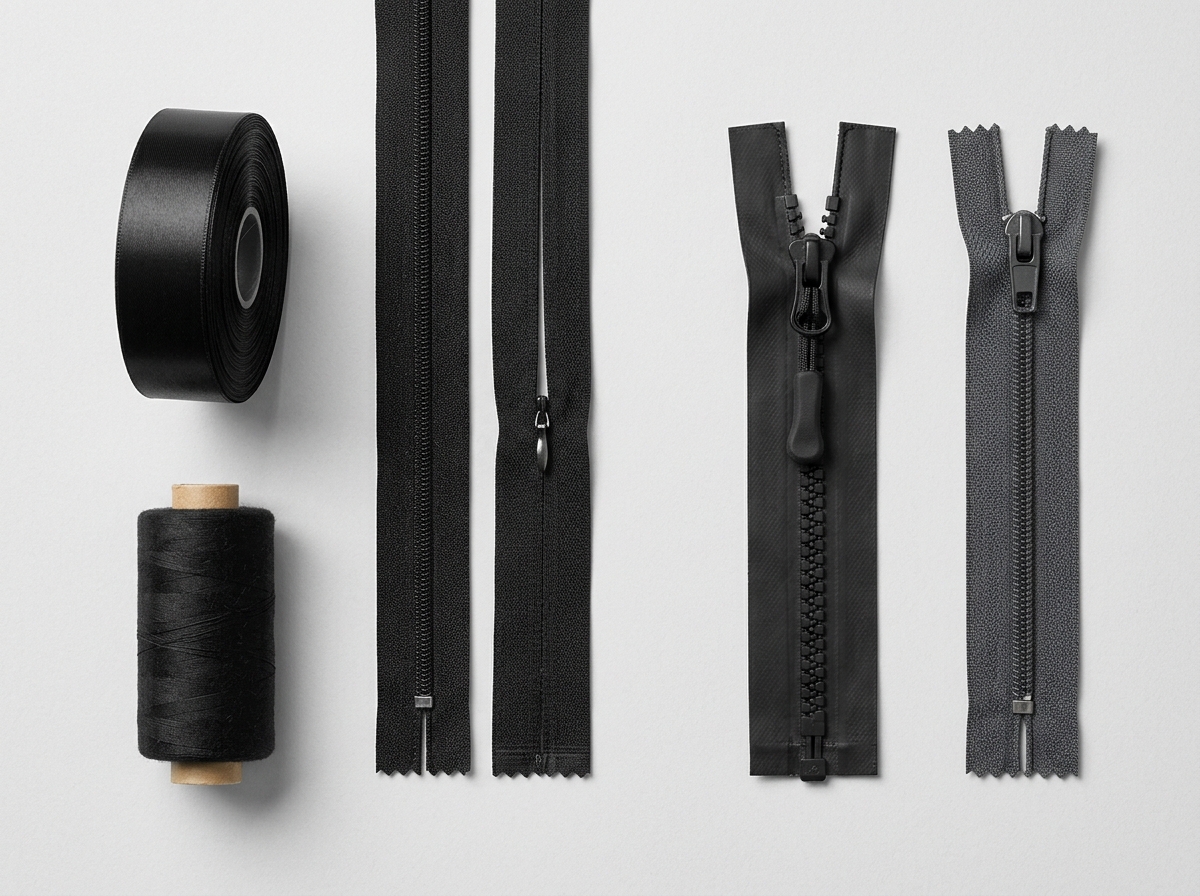 Waterproof zipper buying checklist for wholesale and OEM orders
A good sourcing checklist prevents most field failures before production starts.
| Checklist item | Acceptable target | Risk if ignored |
|---|---|---|
| Sample approval | Approved on actual bag fabric | Color or stiffness mismatch |
| MOQ | Aligned with forecast volume | Inventory overhang or stockout |
| Lead time | Matched to production schedule | Line stoppage or delayed delivery |
| Packing spec | Anti-kink, labeled, moisture-safe | Chain damage and sorting waste |
In B2B bag sourcing, the zipper is not a standalone purchase; it is part of a trim package that also includes thread, lining, labels, and packaging. That is why buyers often source from category-based suppliers rather than single-SKU merchants. If your product line includes complementary items, such as scissors for sampling and cutting, the procurement workflow becomes easier to standardize across development, sampling, and mass production.
Common mistakes when choosing a waterproof backpack zipper
Most zipper problems come from mismatching performance claims to real conditions.
- Buying for “waterproof” marketing without checking test data
- Choosing a stiff zipper for a bag that opens and closes many times daily
- Ignoring seam sealing around the zipper area
- Matching zipper color late in the development cycle
- Skipping sample testing on the actual bag fabric
Another common issue is expecting one zipper style to work for every bag category. A sleek travel tote and a technical hiking pack do not impose the same loads, so the best zipper choice will differ. In practical sourcing, a supplier that understands broad accessory ecosystems can help you align the zipper with the rest of the product line instead of treating it as an isolated part.
How to test waterproof zippers before mass production
Testing the zipper on the final bag build is the fastest way to reduce complaint risk.
Start with basic hand checks: open and close the zipper repeatedly, inspect alignment, and compress the closed zipper under the same loading pattern the end user will create. Then move to water exposure tests that reflect your product claim. For example, a light-splash commuter bag should not be tested the same way as a trekking pack that may face long rain exposure.
A practical test sequence is:
- Visual inspection of tape, chain, and slider finish
- Manual pull and snag test across the full length
- Water exposure on the assembled bag panel
- Load test with the bag packed to normal capacity
- Repeat-cycle check after wet and dry conditions
If you need a formal framework, pairing textile water-resistance tests with seam and tensile methods helps create a more defensible quality standard. That matters in wholesale trade, where product returns and replacement costs can quickly outweigh small savings on zipper unit price.
When a travel bag should use a waterproof zipper instead of a standard zipper
A travel bag should use a waterproof zipper when moisture risk is more important than ultra-soft opening feel.
Examples include weekend duffels, cabin bags, toiletry compartments, camera bags, and commuter backpacks used in wet climates. In these cases, the zipper protects contents from splash, condensation, and light rain. But if the bag is designed for fashion-first use, a standard zipper with better drape may be more appropriate. The right answer depends on product positioning, not on a single universal rule.
For travel goods, buyers also need to think about accessory consistency. If the brand uses decorative trims, branded labels, or soft packaging, the zipper finish should visually fit the rest of the product line. This is where a supplier with both hardware and trim categories can simplify coordination across lace, ribbon, and sewn components.
FAQ about waterproof zipper selection
What is the best waterproof zipper for a hiking backpack?
The best option is usually a laminated or sealed construction when rain protection is a top priority, especially for exposed external compartments.
Are waterproof zippers fully submersible?
No. Most bag zippers are designed to resist splash and rain, not long-term underwater use unless the manufacturer explicitly certifies that condition.
Do waterproof zippers feel stiffer than regular zippers?
Yes, often they do, because the coating or laminate increases drag and reduces softness at the start of the pull.
Should travel bags always use waterproof zippers?
No. Travel bags need a balance of water protection, appearance, and ease of use, so a standard or water-resistant zipper may be enough in many cases.
What should wholesale buyers request from the supplier?
Ask for sample approval, test method details, MOQ, lead time, color options, and packaging specifications before confirming bulk production.
How do I compare two waterproof zipper samples?
Compare them on real bag fabric, then check smoothness, alignment, water resistance, and repeated opening performance under the same conditions.
What is the biggest sourcing mistake?
The biggest mistake is selecting the zipper before defining the bag’s exposure level, because that often leads to either overengineering or poor protection.

Post time: Jul-10-2026