- Most thread breakage starts with machine setup, not with the thread alone.
- Polyester sewing thread is strong, but it still fails when needle heat, abrasion, or tension are out of range.
- Needle size, stitch density, and fabric type should be matched before changing thread brands.
- Wholesale buyers should evaluate packaging, cone winding, MOQ, and lot consistency, not only price.
How to prevent thread breakage when using polyester sewing thread is a practical question with a technical answer: the best results come from controlling tension, reducing friction, and selecting the right needle-thread-fabric combination. In industrial sewing, stitch quality is often measured against standards such as ISO 4915:1991 for stitch classification, while machine performance and thread behavior are influenced by needle geometry and fabric thickness. For buyers, especially those sourcing polyester sewing thread for wholesale, the goal is not just to avoid breakage today, but to reduce downtime, rework, and inconsistent seam quality across batches.
Why polyester sewing thread breaks in real sewing production
Thread breakage is usually the result of excess stress at one weak point in the sewing system. Polyester thread has good tensile strength, abrasion resistance, and low moisture absorption, which is why it is widely used for garments, repair work, and general-purpose stitching. But even strong sewing thread can fail when it is forced through a poorly tuned machine path or paired with the wrong needle.
The U.S. Occupational Safety and Health Administration notes that industrial sewing machines can create puncture and entanglement hazards, which is one reason operators must keep guards, posture, and handling under control during setup and feeding. See OSHA sewing machine guidance. In practice, the same conditions that create safety risks also create thread damage: high friction, repeated impact, and poor control of the thread path.
Common failure points in the thread path
| Failure point | What it does | Typical symptom | Practical fix |
|---|---|---|---|
| Tension discs | Overloads the thread | Breaks at start of seam | Lower top tension gradually |
| Needle eye | Adds friction and heat | Fraying before snap | Change needle size or type |
| Bobbin area | Creates inconsistent pull | Intermittent breakage | Clean lint and recheck winding |
| Thread guides | Sharp edges abrade thread | Dust, fuzz, unraveling | Inspect for burrs |
| Spool stand | Misfeeds the cone | Sudden snags | Align cone and unwind direction |
Thread path friction is one of the most underestimated causes of breakage. A thread may be perfectly usable on one machine and fail on another simply because a guide is worn, a spool is mounted incorrectly, or the take-up lever is pulling too aggressively. For high-volume sewing, that means prevention starts with inspection, not replacement.
How to stop thread breakage from incorrect tension and needle setup
Incorrect tension and the wrong needle are the two most common causes of avoidable thread failure. When top tension is too high, polyester sewing thread is pulled beyond its stable working range, especially during thick seams or dense topstitching. When the needle is too small, the thread is forced through a hole that is not large enough for smooth passage, which increases heat and abrasion.
Needle selection should follow the fabric and thread weight, not habit. A light woven garment may sew cleanly with a finer needle, while denim, canvas, or multi-layer seams need a larger eye and stronger needle point. Textile testing and inspection practices often reference dimensional and mechanical consistency standards; for example, ASTM D2256 is used for yarn tensile properties, which helps buyers understand how strength is measured before a thread enters production.
| Fabric scenario | Needle guidance | Thread behavior target | Risk if mismatched |
|---|---|---|---|
| Light woven fabric | Smaller needle, fine point | Clean penetration | Skipped stitches, fray |
| Medium garment fabric | Standard universal or ball point | Stable stitch balance | Looping or snapping |
| Thick seam or denim | Larger needle eye | Lower friction load | Heat buildup, breakage |
| Elastic or knit fabric | Ball point | Reduced fiber damage | Snagging, seam damage |
A simple tension reset often solves what looks like a thread defect. Start with the presser foot raised, rethread the machine completely, and reduce upper tension in small steps until the seam forms evenly. If the machine is over-tightened, even premium polyester sewing thread can fail within a few stitches, especially near dense crossings or backtacks.
Polyester sewing thread specifications that affect breakage
Thread construction matters because strength, elongation, and surface finish change how the thread behaves under load. Not all polyester sewing thread is the same. Spun polyester, filament polyester, and core-spun constructions each react differently to abrasion, seam appearance, and needle heat. For wholesale buyers, those differences affect return rates and sewing consistency more than the fiber label alone.
For machine sewing, buyers often evaluate ticket size, twist level, ply count, and finish. These are not abstract details; they determine whether the thread feeds smoothly through the machine. A thread with a rough finish can generate more friction, while an under-twisted line may split at the eye or during repeated flexing. If you source sewing thread for garment factories, ask for lot consistency, cone density, and winding uniformity, not only color options.
| Thread type | Main advantage | Main risk | Best use case |
|---|---|---|---|
| Spun polyester | Soft hand, versatile | More hairiness | General garment sewing |
| Filament polyester | Higher smoothness | Visible seam shine | High-speed machine sewing |
| Core-spun polyester | Balance of strength and sewability | Higher cost | Demanding apparel seams |
One sourcing lesson is consistent across factories and home sewing rooms: the cheapest thread is expensive if it breaks repeatedly. For wholesale procurement, the hidden cost is not only thread waste, but operator time, skipped stitches, seam repair, and customer complaints. That is why many buyers prefer suppliers that can offer stable cones, controlled winding, and packaging suitable for both bulk storage and resale.
Machine settings that reduce polyester sewing thread breakage
Machine setup is often more important than thread brand. A well-matched needle, a clean path, and moderate tension can make ordinary polyester sewing thread perform better than premium thread used on a neglected machine. This is especially true in small workshops, sample rooms, and home sewing setups where equipment maintenance is inconsistent.
According to NIST guidance on measurement uncertainty, even small process variations can affect repeatability. In sewing, the equivalent is visible in seam quality: one machine may sew smoothly while another with the same settings breaks thread because the guide, bobbin case, or tension spring is out of condition.
- Raise the presser foot before rethreading to release tension discs.
- Replace the needle if it is bent, dull, or used for too long.
- Check the bobbin winding for even layering and correct density.
- Inspect every guide, hook, and plate for burrs or sharp edges.
- Reduce top tension gradually and test on the actual fabric stack.
These five steps solve most recurring breakage cases without changing suppliers. If the problem remains after setup correction, then the issue is likely thread size, fabric mismatch, or machine wear rather than a simple operator error.
Wholesale buying guide for polyester sewing thread and sewing thread
Wholesale buyers should judge polyester sewing thread by consistency, not just by price per cone. In B2B sourcing, the important questions are whether the thread runs smoothly at production speed, whether colors stay consistent across lots, and whether packaging survives export handling. For New Swell’s audience, these questions matter for apparel factories, wedding supply businesses, and DIY resellers alike.
Use this checklist before placing a bulk order for polyester sewing thread.
- Confirm the ticket size and intended fabric weight.
- Request cone weight, winding direction, and carton quantity.
- Ask for color continuity across production lots.
- Check whether the supplier supports sample testing before MOQ.
- Verify lead time, packing method, and export labeling.
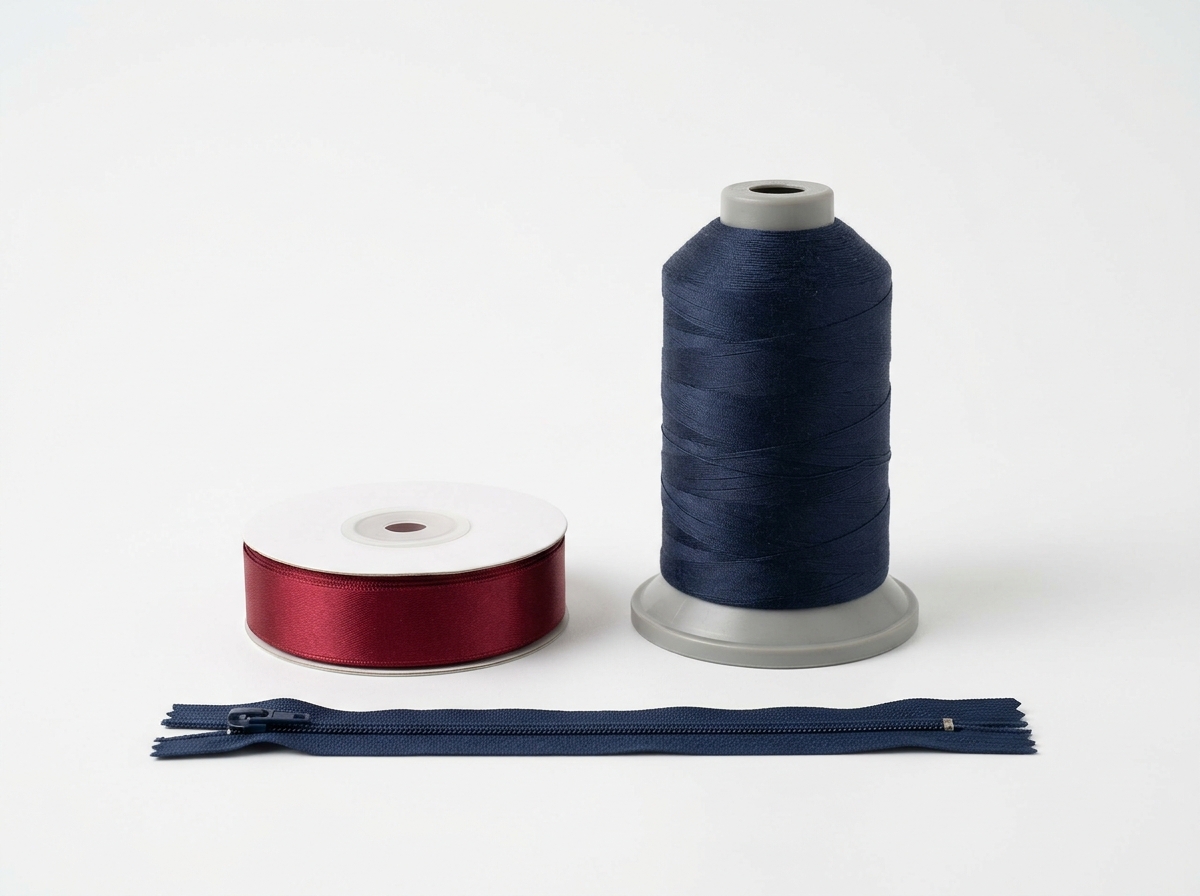
MOQ and sample policy often matter as much as thread quality. A supplier that can ship a test carton quickly may save more time than one offering a slightly lower unit price but unstable batch quality. If you are building a broader sourcing basket, it can also help to compare related categories such as ribbons for packaging and decoration, zippers for apparel closures, lace for dress and wedding trimming, and sewing accessories for workshop support.
Supplier comparison table for bulk buyers
| Buying factor | Low-control supplier | Better wholesale supplier | Why it matters |
|---|---|---|---|
| Lot consistency | Variable | Stable across cartons | Less shade and performance drift |
| MOQ flexibility | Rigid | Sample-ready options | Easier testing before scale-up |
| Packaging quality | Basic wrap | Export-safe cartons | Lower damage during shipping |
| Technical support | Limited | Needle and tension advice | Fewer production stoppages |
How fabric choice changes thread breakage risk
Fabric structure can turn a good thread into a weak one if the seam load is too high. Polyester sewing thread performs differently on woven cotton, knitwear, synthetic blends, denim, and layered decorative textiles. The more textured or dense the fabric, the more friction and deflection the thread experiences at the needle and loop formation stage.
For example, knit fabrics generally need more elasticity in the seam system than tightly woven fabrics. If the needle point damages the yarn structure, the resulting rough path increases stress on the thread. The same principle applies in wedding garments and decorative apparel, where multiple layers, lace trims, and lining fabrics create extra drag.
| Fabric type | Breakage risk | Reason | Best prevention method |
|---|---|---|---|
| Light woven cotton | Low to medium | Moderate friction | Balanced tension |
| Stretch knit | Medium | Needle-to-fiber damage | Ball point needle |
| Denim | Medium to high | Thickness and heat | Larger needle, slower speed |
| Lace and trims | High | Open structure, snagging | Lower pressure, careful guide check |
When seams include trims or decorative layers, the sewing line should be tested before full production. This is especially relevant for wedding and women’s apparel where seam appearance is visible and repairs are costly.
Quality control methods to prevent recurring breakage
Preventing breakage at scale requires a simple quality-control routine. Factories that test only after complaints usually lose more time than those that test before production starts. A practical QC routine can be done with short seam trials, inspection of thread path wear, and lot-by-lot comparison under the same machine settings.
Use a repeatable test piece with the actual fabric stack, then record whether the thread breaks at start-up, mid-seam, or backtack. That detail tells you where the stress is concentrated. If breakage happens at the start, tension or threading is likely the issue. If it happens at the seam crossing, the needle or fabric thickness is more likely responsible.
- Run a short sample seam on actual production fabric.
- Note whether failure occurs at the first stitch or later in the run.
- Check thread fray under magnification before replacing the cone.
- Compare needles from two machines to isolate wear problems.
- Keep a lot reference for thread, needle, and fabric combination.
That record becomes valuable when sourcing bulk polyester sewing thread from multiple shipments. It helps the buyer distinguish a thread issue from a machine issue and gives the supplier objective feedback rather than vague complaints.
Practical buying and sewing scenarios for polyester sewing thread
The best prevention strategy depends on the user scenario. A home sewer, a garment workshop, and a wholesale buyer do not need the same level of control, but they do need the same fundamentals: correct needle, clean path, reasonable tension, and consistent thread quality.
For home sewing, the most common fixes are rethreading, needle replacement, and tension reduction. For garment factories, the bigger gains come from machine maintenance, operator training, and batch consistency. For wholesale procurement, the priority is supplier reliability, sample approval, and packaging that keeps the cones clean and undamaged in transit.
| Scenario | Main risk | Best prevention focus | Buyer priority |
|---|---|---|---|
| Home sewing | Setup error | Needle and tension | Ease of use |
| Garment workshop | Wear and inconsistency | Machine maintenance | Repeatability |
| Wholesale resale | Lot variation and packaging damage | Supplier QC | Stable delivery |
In every scenario, polyester sewing thread performs best when it is treated as part of a system. Thread alone does not determine seam quality; the machine, fabric, operator, and logistics all influence the final result.
Frequently asked questions about thread breakage and polyester sewing thread
Why does my polyester sewing thread keep breaking at the needle?
Breakage at the needle usually means friction, the wrong needle size, or incorrect threading. Recheck the needle eye, rethread with the presser foot raised, and make sure the thread passes cleanly through every guide.
Is polyester sewing thread stronger than cotton thread?
Polyester sewing thread is generally preferred for strength, abrasion resistance, and lower moisture absorption. It is widely used in garment sewing because it performs well under repeated movement and washing.
What needle size works best for polyester sewing thread?
The best needle size depends on thread weight and fabric thickness. A finer fabric needs a smaller needle, while thicker seams need a larger eye to reduce heat and abrasion.
Can tension alone cause thread breakage?
Yes, excessive tension can absolutely cause breakage. If the top tension is too high, the thread is pulled too tightly through the machine and may snap during stitching.
How do I know if the problem is the thread or the machine?
If one thread fails across multiple machines, the thread may be at fault; if multiple threads fail on one machine, the machine is the likely problem. That is why cross-machine testing is useful.
What should wholesale buyers check before ordering sewing thread in bulk?
Wholesale buyers should check consistency, packaging, MOQ, sample availability, and lead time. These factors often determine real production value more than unit price alone.
Is polyester sewing thread suitable for wedding and DIY products?
Yes, polyester sewing thread is suitable for many wedding, DIY, and apparel uses when matched correctly to fabric and needle. It is especially useful where durability and color consistency matter.

Post time: Jul-25-2026