- Waterproof jacket zipper performance depends on tape coating, seal integrity, and the jacket’s seam construction, not just the zipper itself.
- In cold-weather outerwear, waterproof zippers reduce convective heat loss and help insulation stay effective by limiting moisture exposure.
- Buying decisions for wholesale outerwear should balance weather rating, hand feel, color matching, lead time, and packaging requirements.
- Testing against recognized standards matters: water resistance, abrasion, and corrosion resistance are all relevant to long-term use.
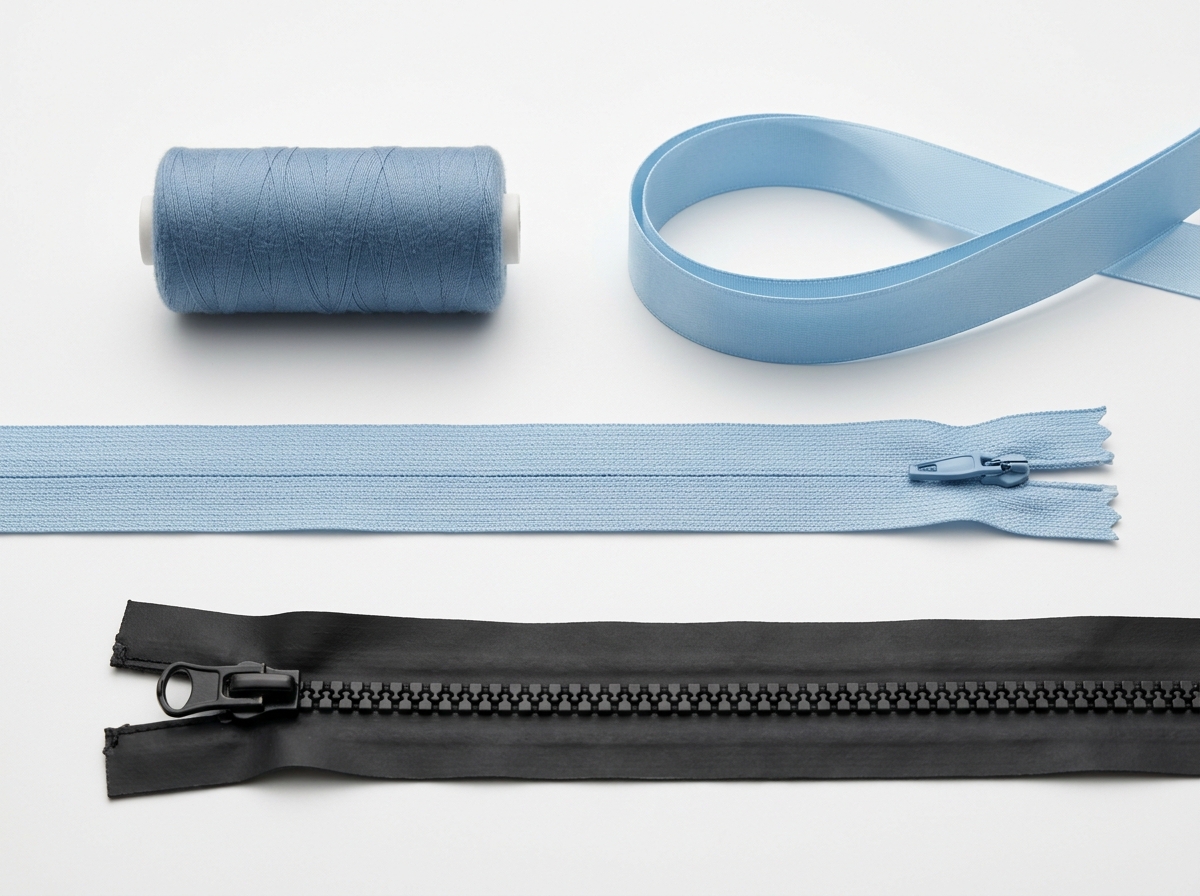
For cold-weather outerwear, a waterproof jacket zipper is not a minor trim detail but a functional barrier that affects comfort, breathability, and durability. In outerwear testing, zipper and closure performance is commonly evaluated alongside fabric water resistance, because a shell that is water-resistant at 10,000 mm hydrostatic pressure can still leak at the opening if the closure is weak, according to ISO 811. For brands, wholesalers, and garment factories, the real challenge is choosing a waterproof zipper that matches the garment’s target use, from urban winter jackets to alpine shells and workwear. If you are sourcing related garment trims, a broad sewing accessories catalog, a dedicated zipper category, and adjacent trim options such as ribbon, lace, and sewing thread can help maintain color, packaging, and procurement consistency across collections.
Why a Waterproof Jacket Zipper Matters in Cold-Weather Outdoor Apparel
A waterproof jacket zipper improves thermal comfort because it protects the garment’s weakest opening from rain, sleet, wet snow, and wind-driven moisture. When the center front closure leaks, moisture can wet the base layer, flatten insulation loft, and create a cold bridge that users feel immediately. This is why outdoor brands often specify a waterproof zipper for hard-shell jackets, insulated ski jackets, fishing gear, and travel shells where exposure is frequent and unpredictable.
The zipper also influences mobility and usability. A cold-weather outerwear zipper must open smoothly with gloves, resist icing, and keep alignment after repeated flexing. In consumer use, these small details matter more than most buyers expect, because the closure is touched many times per day while the rest of the garment may remain visually unchanged.
| Outerwear use case | Typical zipper requirement | Functional priority | Buyer risk if underestimated |
|---|---|---|---|
| Urban winter jacket | Water-repellent or waterproof front zipper | Comfort and appearance | Leakage at chest opening |
| Outdoor shell | Fully waterproof zipper with seal tape | Rain and snow protection | Internal wet-out and heat loss |
| Ski or snow sports jacket | Glove-friendly puller, low icing risk | Ease of use in sub-zero conditions | Hard-to-operate closure in cold weather |
| Workwear parka | Durable waterproof zipper with abrasion resistance | Longevity | Early wear at the slider path |
How a Waterproof Zipper Works: Structure, Materials, and Sealing Logic
A waterproof zipper works by combining geometry and materials that block direct water pathways. The closure usually uses a coated tape, a tightly controlled element profile, and a sealing method that prevents droplets from migrating through the zipper chain. Unlike decorative zippers, a true waterproof zipper must perform as part of a system, not as a standalone component.
There are three common design approaches. First, a polyurethane-coated zipper uses a film or coating on the tape surface to reduce permeability. Second, laminated or bonded constructions hide the zipper and cover the opening line. Third, sealed coil or molded systems use tight interlocking elements with an additional barrier layer. The best choice depends on garment design, cost target, and how much stiffness the pattern can tolerate.
| Construction type | Main advantage | Main trade-off | Typical use |
|---|---|---|---|
| PU-coated waterproof zipper | Strong water barrier | Less flexible than standard coil | Shell jackets, rainwear |
| Bonded or laminated closure | Clean exterior look | More demanding sewing process | Technical outerwear |
| Sealed coil style | Good balance of flexibility and protection | May need precise stitching and tape control | Winter sports apparel |
The material system matters because cold weather changes how a zipper behaves. At low temperatures, stiff coatings can feel less supple, and repeated folding can create stress at the tape edge. That is why buyers should ask for cold-condition use data, not just catalog descriptions. For outdoor garments, product development teams often pair zipper selection with seam-sealing decisions and shell fabric specs so the whole closure zone performs consistently.
Waterproof Zipper Testing and Standards Buyers Should Know
Waterproof claims should be verified with test methods, not marketing language. The most relevant tests for jacket closures include water penetration resistance, abrasion resistance, corrosion resistance, and dimensional stability after repeated cycles. A zipper can look clean at sampling stage and still fail after exposure to moisture, salt, or repeated bending.
For textiles, hydrostatic resistance is commonly measured under ISO 811, which is widely used to assess how much water pressure a fabric can withstand before penetration. For abrasion of textile surfaces, ASTM D4966 is a common reference for the Martindale method. For chamber-based corrosion exposure, many buyers look to ASTM B117 salt spray exposure when corrosion-sensitive metal parts are involved. For broader product-usage context in occupational and outdoor environments, U.S. agencies such as the National Institute of Standards and Technology publish measurement and reference guidance that helps manufacturers build more repeatable quality systems.
| Test area | Reference | What it tells you | Why it matters for jackets |
|---|---|---|---|
| Water penetration resistance | ISO 811 | Resistance to water pressure | Shows whether shell and closure stay dry under pressure |
| Abrasion resistance | ASTM D4966 | Surface wear behavior | Predicts wear at the zipper tape and slider zone |
| Salt spray exposure | ASTM B117 | Corrosion exposure response | Useful for metal sliders and pulls used in harsh climates |
For procurement teams, the practical takeaway is simple: ask for test reports, not only sample photos. If the zipper will be used in a ski jacket, mountain shell, or wet urban commute coat, a supplier should be able to provide water-resistance evidence, cycle data, and material declarations. Buyers sourcing at scale should also confirm whether the zipper color fastness, coating thickness, and pull strength are consistent across production lots.
Choosing the Right Waterproof Jacket Zipper for Wholesale Orders
The right waterproof jacket zipper depends on the balance between weather protection, garment style, and production economics. A highly sealed zipper may be ideal for a technical shell, but too stiff for a fashion-forward winter coat. A smoother, lighter option may suit a city jacket, yet underperform in hard rain or snow.
Wholesale buyers should define the use case first. That means clarifying whether the jacket is for heavy rain, damp cold, powder snow, or occasional weather resistance. It also means setting expectations for MOQ, color matching, packing format, and sampling lead time. In apparel sourcing, these details often determine whether a product launches on schedule or gets delayed in development.
- Define the weather exposure level: light mist, sustained rain, wet snow, or all-day outdoor use.
- Match the closure type to the shell fabric: woven, laminated, insulated, or stretch outerwear.
- Request a zipper sample in the final garment color, not just a catalog swatch.
- Confirm the puller shape, glove usability, and slider smoothness in cold conditions.
- Ask for production consistency data across lots, especially on coating and tape bonding.
- Verify packaging and labeling requirements for wholesale and export channels.
| Buying factor | What to specify | Why it affects outcome | Typical wholesale consequence |
|---|---|---|---|
| MOQ | Color and size per order | Impacts inventory risk | Too high MOQ can delay collection launch |
| Lead time | Sample and bulk schedule | Controls garment development timing | Late delivery can stall production |
| Color matching | Fabric, zipper tape, puller finish | Impacts visual coherence | Mismatched trim weakens premium perception |
| Packing | Bulk pack or retail pack | Affects labor and logistics | Poor packing increases handling cost |
For a supplier like New Swell, the strongest fit is usually not a single zipper SKU but a coordinated trim package. That matters because outerwear buyers often need compatible accessories across the same program. A jacket line may require the main waterproof zipper, a smaller pocket closure, matching elastic or decorative elements, and repair-ready sewing supplies. In a combined sourcing workflow, the order often moves more efficiently when the supplier can support multiple trim categories under one procurement umbrella.
Cold-Weather Performance: What Users Actually Feel
A waterproof zipper affects how warm a jacket feels because it reduces localized cold spots at the center front. When wind hits an unprotected closure, the wearer notices draft first near the chest and chin. That draft can reduce perceived comfort even when insulation in the body panels is adequate.
Users also feel the difference when moisture accumulates around the zipper. A non-waterproof closure can absorb water, gain stiffness, and become harder to open after repeated exposure. In freezing weather, that extra moisture can contribute to icing. A well-designed waterproof zipper minimizes those problems by keeping the closure path drier and more stable.
The effect is not only thermal. Waterproof zipper systems also change the garment’s visual language. Technical jackets often use a clean, sealed front to communicate protection and performance. Fashion outerwear may use a less rigid waterproof solution when the goal is weather resistance without a fully technical look. This is why the zipper choice should always reflect the product’s position in the market, not just its weather requirement.
Common Mistakes When Sourcing Waterproof Zippers
Many sourcing problems come from treating all waterproof zippers as interchangeable. They are not. The same nominal zipper size can behave very differently depending on coating, slider geometry, and tape compatibility.
- Choosing a zipper only by appearance instead of testing its actual water resistance.
- Ignoring how stiffness affects sewing, turning, and wearer comfort.
- Overlooking the need for puller usability with gloves or wet hands.
- Matching the zipper to the garment color too late in development.
- Failing to confirm lot-to-lot consistency before bulk production.
Another common mistake is expecting the zipper alone to solve all moisture issues. In reality, the whole garment system matters. The shell fabric, seam tape, pattern design, and closure placement all shape performance. A waterproof zipper can improve protection, but it cannot compensate for poor seam construction or a weak hood design.
How Waterproof Jacket Zippers Fit Into a Broader Outdoor Apparel Sourcing Strategy
A waterproof jacket zipper should be evaluated as part of a complete trim and manufacturing strategy. Outerwear programs often involve multiple consumables and components, so buyers benefit from suppliers that can coordinate across categories. In that context, a trim partner that also supports sewing thread, lace, and other accessory categories can help standardize packaging, color management, and replenishment planning across seasons.
For wholesale buyers, the best sourcing outcome is a zipper specification that aligns with the jacket’s target user, price point, and compliance requirements. If the garment is meant for light winter commuting, a balanced waterproof or water-resistant zipper may be sufficient. If it is meant for alpine or high-moisture use, the closure system should be selected with test evidence, not assumptions.
In practical terms, the purchasing checklist should include sample approval, material confirmation, cycle performance, water resistance evidence, and production lead time. Once those are clear, the zipper becomes less of a risk item and more of a predictable part of the product architecture.
FAQ About Waterproof Jacket Zippers
What is the main benefit of a waterproof jacket zipper?
The main benefit is reduced water and wind ingress at the jacket opening, which improves warmth, comfort, and weather protection in cold conditions.
Is a waterproof zipper the same as a water-resistant zipper?
No. A waterproof zipper is designed for stronger sealing, while a water-resistant zipper offers a lower level of protection and may be enough for light exposure.
Do waterproof zippers make jackets less breathable?
They can reduce airflow at the closure line, but the overall effect depends on the jacket design, fabric membrane, and venting strategy.
What should wholesale buyers ask suppliers before ordering?
Buyers should ask for test reports, MOQ, color matching options, sample lead time, puller style, and bulk packing details.
Can waterproof zippers be used on fashion jackets?
Yes. Many fashion jackets use waterproof or water-resistant zippers when the brand wants a clean look with practical weather protection.
Which standards are useful for evaluating outerwear performance?
Common references include ISO 811 for water penetration resistance, ASTM D4966 for abrasion, and ASTM B117 for salt spray exposure.
What is the biggest sourcing mistake with waterproof zippers?
The biggest mistake is buying by appearance only and skipping sample testing under real garment conditions.

Post time: Jul-13-2026