- Waterproof waxed thread is most valuable where seam abrasion, moisture, and repeated flexing are common.
- Thread strength, wax finish, and needle compatibility matter more than color alone in leather applications.
- For wholesale buyers, MOQ, spool length, shade consistency, and packaging stability are key procurement filters.
- Performance should be judged by seam reliability, stitch appearance, and field wear, not only tensile strength.
- Leather goods makers often pair waxed thread with other sewing accessories and finishing tools for a more efficient workflow.
Waterproof waxed thread is a practical upgrade for leather goods because leather seams face repeated bending, friction, and exposure to moisture; in many construction workflows, seam quality is the first point of failure, especially on bags, shoes, belts, and small goods. In textile and leather testing, water resistance, seam slippage, and abrasion are commonly evaluated under standardized methods such as ASTM D751 for coated materials and ISO 13935-2 for seam tensile properties, while dimensional and sewing-process consistency is often discussed alongside ISO 4915 stitch classification. For buyers comparing sewing thread, the best choice is not just the strongest thread, but the one that matches leather thickness, hand-stitching method, and end-use stress.
Why waterproof waxed thread matters for leather goods durability and strength
Waterproof waxed thread improves leather seam durability because it reduces friction during stitching and helps protect the stitch line from moisture and wear. When a seam is pulled, rubbed, or exposed to humidity, the waxed coating can help stabilize fibers and make the thread feed more smoothly through dense leather layers. That matters in products like satchels, watch straps, knife sheaths, horse tack, and premium wallets, where a rough or dry thread can create uneven tension and premature wear.
Leather itself is strong, but seams are a system, not a single material. The thread, needle hole size, stitch spacing, edge finishing, and adhesive or reinforcement method all influence final strength. A common mistake is choosing thread only by appearance. In reality, a thicker thread may look premium but can overfill the needle hole and weaken the leather edge if paired with the wrong needle or stitch density.
| Leather Product | Typical Stress Type | Why Waterproof Waxed Thread Helps | Priority Procurement Check |
|---|---|---|---|
| Wallets | Flexing and edge wear | Cleaner hand stitching and better seam control | Fine diameter and color consistency |
| Belts | Repeated bending and abrasion | Reduced friction at stitch holes | High abrasion resistance |
| Bags | Load pull and weather exposure | Moisture protection at the seam line | Tensile strength and spool length |
| Boots | Flex, sweat, and outdoor moisture | Improved seam stability in humid use | Water resistance and uniform coating |
Waterproof waxed thread, waxed thread, and leather thread: what buyers should compare
Waterproof waxed thread is usually selected when the buyer wants both stitchability and moisture resistance, while standard waxed thread is often chosen for general hand sewing and decorative leatherwork. Leather thread is a broader buying term that can include waxed polyester, bonded nylon, linen, and specialty cords. The right choice depends on whether the product is decorative, structural, or exposed to weather.
For wholesale procurement, the most useful comparison is not the product name but the functional profile. Thread should be judged by filament composition, coating stability, colorfastness, and how it behaves under tension. Buyers sourcing from a thread category page should ask for specification sheets, sample swatches, and package details before placing a bulk order.
| Thread Type | Typical Use | Strength Profile | Water Resistance | Best For |
|---|---|---|---|---|
| Waterproof waxed thread | Hand-stitched leather goods | High, with stable feeding | Higher than untreated thread | Wallets, bags, boots |
| Standard waxed thread | General craft stitching | Medium to high | Moderate | DIY leather projects |
| Bonded nylon leather thread | Machine and heavy-duty use | High tensile performance | Good, depending on finish | Automotive, saddlery, outdoor goods |
| Linen leather thread | Traditional hand stitching | Moderate | Lower unless treated | Heritage and artisanal goods |
The practical takeaway is simple: if the leather item must survive sweat, rain, shipping humidity, or repeated flexing, waterproof waxed thread usually offers better seam stability than untreated options. If the item is purely decorative or low-stress, a lighter waxed thread may be enough.
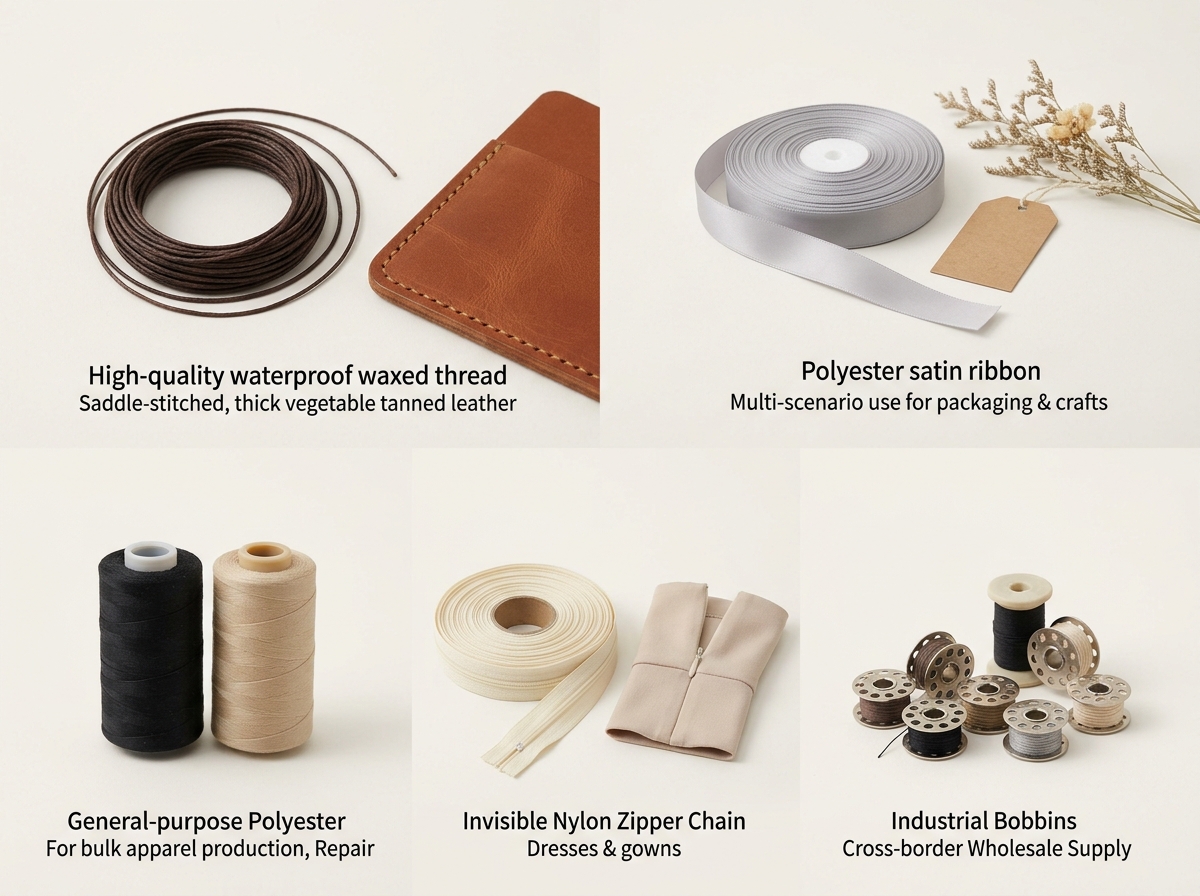
How waxed thread improves seam formation in leather stitching
Waxed thread improves seam formation because the coating changes how the thread passes through each hole and how the stitches lock under tension. In hand saddle stitching, for example, the thread faces repeated abrasion against leather fibers and needle holes. A consistent wax layer can reduce drag, limit fraying, and help the stitch tighten more evenly.
That is important because leather seams fail differently from woven fabric seams. Instead of thread breakage alone, failure can begin with hole elongation, edge tearing, or stitch migration. Better thread behavior can reduce these risks, especially when the product experiences load concentration at corners, straps, or fold points.
- Choose thread thickness based on leather thickness and seam visibility.
- Match needle size to thread diameter to avoid oversized holes.
- Keep stitch length consistent to distribute load evenly.
- Test a sample seam for pull, flex, and water exposure before bulk production.
For small leather goods, even a visually minor change in thread behavior can affect the final product. A smoother feed often means fewer skipped motions, more regular stitch tension, and less rework during production.
Technical benchmarks that buyers can use when evaluating leather thread
Thread selection becomes easier when buyers evaluate measurable properties instead of relying on color or hand feel alone. Tensile strength, abrasion resistance, coating uniformity, and package stability are the metrics that matter most in leather goods production. Standardized testing helps buyers compare suppliers more objectively.
For example, tensile testing of thread and seam systems is often aligned with textile test methods, while water resistance and material behavior are commonly checked with recognized standards. Leather goods buyers can also use internal shop tests such as stitch pull, edge flex, and soak-dry cycling to confirm whether the thread matches the product category.
| Evaluation Metric | Why It Matters | Typical Buyer Test | Reference Standard |
|---|---|---|---|
| Tensile strength | Shows load-bearing capability | Pull test on stitched sample | ISO 13935-2 |
| Stitch type | Determines seam behavior | Construction audit | ISO 4915 |
| Water resistance | Protects seam line from moisture | Wet-hold and dry cycle | ASTM D751 |
| Dimensional consistency | Helps production repeatability | Spool and length inspection | Supplier specification sheet |
In premium leather products, the goal is not to maximize one metric at the expense of others. The best waterproof waxed thread is the one that gives stable seam performance, clean visual appearance, and predictable mass-production behavior.
Wholesale sourcing checklist for waterproof waxed thread
Wholesale buyers should treat waterproof waxed thread as a controlled procurement item, not a generic craft supply. Small differences in coating, twist, and packaging can affect both manufacturing efficiency and customer satisfaction.
Before placing a bulk order, buyers should confirm the exact use case: hand stitching, repair kits, fashion leather goods, or heavy-duty outdoor items. Then they should request practical details such as cone or spool length, color code matching, sample availability, and carton packing method. If the thread is for export, packaging durability matters because humidity and compression during transit can change the product’s usability.
- Confirm fiber type, coating type, and wax behavior.
- Ask for sample lengths and color swatches before bulk approval.
- Check minimum order quantity, carton size, and lead time.
- Verify whether the thread is optimized for hand sewing or machine sewing.
- Request product photos only after confirming spec consistency, not before.
For many buyers, the most valuable supplier relationship is one that can provide repeatable lots, stable color, and predictable packaging. That is especially important for DIY tools and leather repair kits, where end users expect convenience and uniformity.
Where waterproof waxed thread fits in real leather goods workflows
Waterproof waxed thread fits best in workflows where a maker wants strong seams and controlled stitch appearance without moving to fully industrial sewing systems. It is especially useful for small batches, custom goods, prototyping, and artisan repair work.
In a workshop setting, this thread can improve hand-stitch pacing because it reduces snagging and helps maintain smoother thread flow through dense or layered leather. That does not eliminate the need for skill, but it makes consistent results easier to achieve, particularly for less experienced stitchers.
In production terms, waxed thread can also support cleaner final inspection. When stitch spacing is uniform and the thread coats the hole walls more evenly, the seam often looks more finished with less post-processing. That can matter in bridal leather accessories, luxury small goods, and gift items where visual presentation directly affects purchase intent.
For buyers who also source decorative trim, pairing leather-thread purchases with lace and trim categories can streamline broader accessory sourcing across leather, apparel, and craft programs.
Common mistakes when choosing waxed thread for leather
The most common mistake is overestimating thread thickness and underestimating hole geometry. A thread that looks durable may actually reduce seam quality if it is too large for the leather, needle, or stitch density.
Another mistake is assuming all waxed thread behaves the same in humid conditions. Some coatings feel sticky, some are too dry, and some can vary by dye lot. In leather production, that inconsistency can create friction issues, poor stitch pull, or messy appearance on the finished edge.
- Do not choose by color alone.
- Do not ignore needle size and stitch density.
- Do not skip sample stitching on the actual leather substrate.
- Do not assume waterproof means fully submersible.
For high-value products, a small test run is usually cheaper than reworking a full batch. A 20-piece pilot sample can reveal whether the thread suits the leather thickness, seam path, and end-user environment.
Practical comparison: when to use waterproof waxed thread versus alternatives
Waterproof waxed thread is the better choice when seam exposure, hand-stitch quality, and retail appearance all matter at once. It is less necessary when the product is hidden, heavily machine sewn, or structurally reinforced by other materials.
| Use Case | Best Thread Choice | Reason | Risk If Wrong Choice |
|---|---|---|---|
| Luxury wallet stitching | Waterproof waxed thread | Visible seam and abrasion control | Fraying or uneven finish |
| Outdoor bag repair | Waterproof waxed thread | Moisture exposure and flexing | Early seam wear |
| Heavy machine-sewn panel | Bonded nylon leather thread | Higher machine compatibility | Poor feed if hand-threaded wax is too heavy |
| Decorative craft piece | Standard waxed thread | Simpler and often lower cost | Over-specification and higher cost |
For wholesale buyers, the sourcing logic is straightforward: choose the least complex thread that still meets the product’s stress profile. Over-specifying thread can increase cost without meaningful performance gain.
How to build a reliable procurement spec for leather thread
A reliable procurement spec should describe more than thread color and diameter. It should define intended use, leather thickness, stitching method, desired finish, and package format. That gives suppliers enough context to recommend the right product and reduces sample iterations.
A good spec sheet usually includes product name, fiber type, wax type, diameter range, spool length, color references, target use, carton quantity, and acceptable variation. If the thread is for export orders, also include labeling language and barcode or retail packaging requirements.
- State whether the application is fashion, repair, DIY, or heavy-duty.
- List leather thickness in millimeters.
- Specify whether the stitch is hand-sewn or machine-sewn.
- Define the packaging format and carton loading target.
- Request a pilot sample before confirming mass production.
This level of detail helps suppliers align with your product standards and improves order repeatability, especially for wholesale sewing accessories used across multiple SKUs.
FAQ
Is waterproof waxed thread better than standard waxed thread for leather goods?
Waterproof waxed thread is usually better when the leather item will face moisture, flexing, or outdoor use. Standard waxed thread can still work for lighter craft projects or decorative seams.
Can waterproof waxed thread be used for machine sewing?
It can be used in some machine processes, but compatibility depends on the machine, needle system, and coating level. Many leather makers still prefer it for hand stitching.
What leather products benefit most from waxed thread?
Wallets, belts, boots, bags, straps, and small repair projects benefit the most because they combine visible seams with repeated wear.
How do I test leather thread before a bulk order?
Test stitch pull, flex resistance, seam appearance, and wet-dry behavior on the exact leather substrate you plan to use. A small pilot sample is usually enough to reveal problems.
Does waxed thread make leather seams fully waterproof?
No. It improves water resistance at the seam line, but full waterproofing depends on the leather finish, seam construction, adhesives, and product design.
What should wholesale buyers ask suppliers before purchasing?
Ask for fiber composition, wax type, diameter, color consistency, MOQ, sample availability, spool length, carton details, and lead time.
Why do some leather seams fail even when the thread is strong?
Because seam failure is often caused by hole enlargement, poor stitch density, edge tearing, or wrong needle sizing rather than thread breakage alone.

Post time: Aug-09-2026