- Metal zippers are chosen for durability, premium appearance, and higher perceived garment value.
- Export buyers should verify specifications such as tape width, tooth size, finish, and salt-spray resistance before bulk placement.
- Reliable sourcing is not only about unit price; it also depends on MOQ, sample lead time, packing format, and shade consistency.
- For fashion exporters, a supplier with multiple trim categories can reduce procurement complexity and shipping fragmentation.
- Technical references such as ISO 811 and ASTM B117 help buyers frame quality checks more objectively.
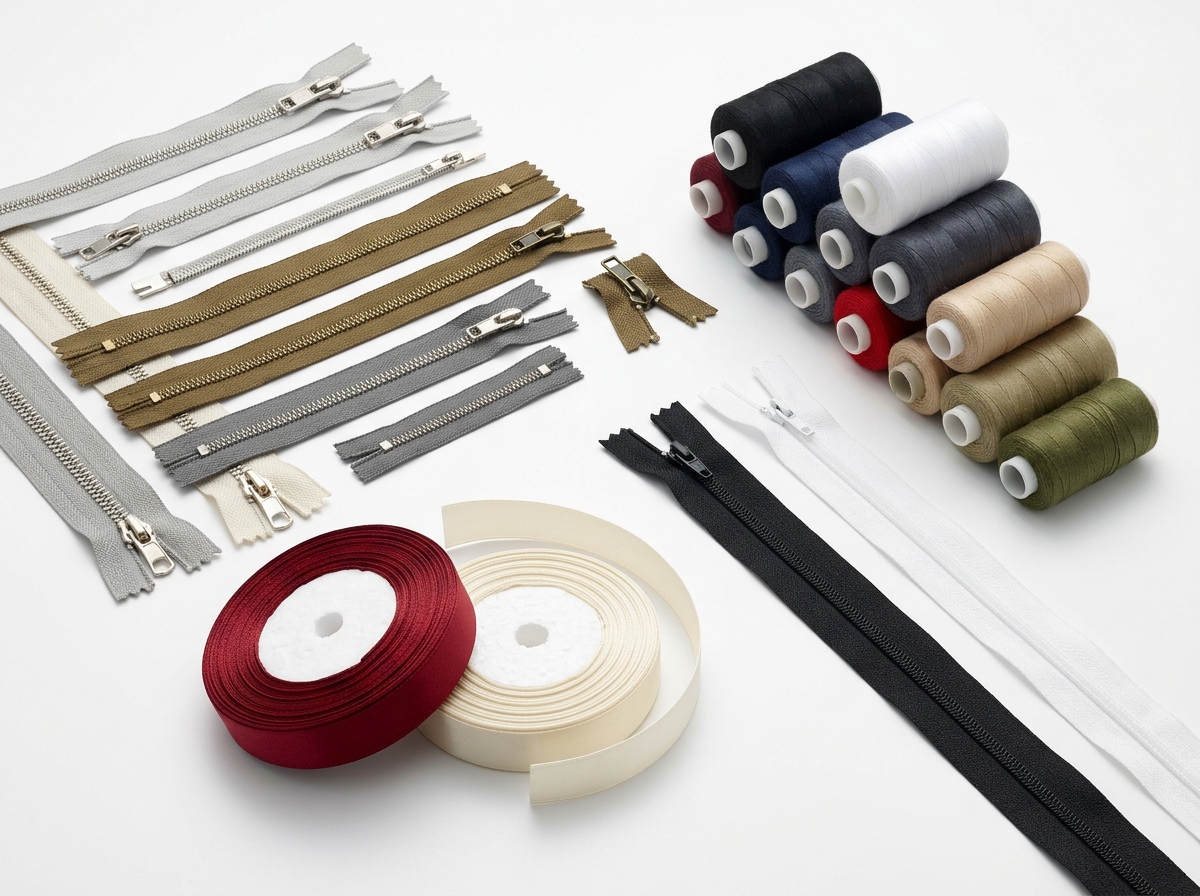
China metal zipper factory sourcingmetal zipper manufacturer should ask for verified process controls, not just catalog photos. For broader trim programs, many export teams also consolidate orders through zipper assortments, lace collections, and sewing thread options to reduce vendor fragmentation and improve shipment efficiency.
What a China metal zipper factory should deliver for fashion export businesses
A good factory should deliver more than a decorative closure; it should deliver predictable performance in production and in wear.
For export apparel, the best metal zipper supplier is one that can maintain tooth uniformity, stable plating, and smooth slider action across large lots. Buyers sourcing for skirts, jeans, jackets, and dresses usually need more than a single size. They need a program that covers multiple lengths, puller styles, finish colors, and packing methods. That is why a supplier with a wider trim portfolio often performs better in wholesale purchasing than a single-item vendor.
| Buying criterion | Why it matters | Typical buyer check | Useful numeric reference |
|---|---|---|---|
| Tooth alignment | Prevents snagging and visible defects | Manual sliding test | 100 percent sample pull test in pilot lots |
| Corrosion resistance | Important for export storage and humid climates | Salt-spray exposure | ASTM B117 test framework, often 24 to 96 hours for screening |
| Fabric compatibility | Needed for dress, denim, bag, and jacket use | Needle and seam simulation | Match size to garment thickness and stress point |
| Dimensional consistency | Reduces sewing line rework | Random lot inspection | Use AQL sampling with buyer-defined tolerance limits |
For metal zippers, the key issue is consistency, not just specification on paper. Export buyers often overlook this and focus only on color or length. In reality, a zipper that looks identical can still behave differently if plating, polish, or slider tension varies. That is why the factory’s QC system matters as much as the product itself.
Metal zipper manufacturer quality control and testing standards
Quality control is the most practical way to separate a serious metal zipper manufacturer from a trading-only offer.
International buyers often ask how to evaluate zipper durability in a way that is less subjective than a visual inspection. The answer is to combine workmanship checks with recognized test methods. For example, corrosion screening can be aligned with ASTM B117, which is widely used for salt-spray exposure testing. For textile compatibility and water resistance planning, ISO 811 provides a standard method for hydrostatic pressure resistance in textile fabrics, which helps buyers understand the surrounding garment system even if the zipper itself is not the only controlled part.
In zipper procurement, the most common factory-side checkpoints include slider insertion force, chain smoothness, plating integrity, and stop-end security. These checks are especially important for fashion export items because returns often arise from small functional defects that were not visible during initial inspection.
| Test area | What is checked | Common method | Why export buyers care |
|---|---|---|---|
| Pull cycle durability | Repeated opening and closing | Machine cycling | Predicts everyday wear performance |
| Corrosion screening | Plating and metal surface stability | Salt spray | Supports humid-market shipping |
| Slider retention | Whether the slider stays stable under use | Manual and mechanical checks | Reduces field failures |
| Dimensional control | Length, chain width, and stop position | Gauge measurement | Improves sewing-line consistency |
As a practical benchmark, buyers should request test reports or in-house QC records rather than relying on visual samples alone. In many export programs, the most useful documents are not certificates in isolation but inspection records tied to the exact production lot. That is how a buyer proves the supplier can repeat quality at scale.
How fashion export businesses should choose the right garment zipper specification
The correct garment zipper specification depends on fabric weight, product category, and end-use stress.
A dress zipper is not chosen the same way as a denim zipper. Lightweight woven dresses usually need a cleaner appearance, lower profile insertion, and smoother sewing behavior. Heavier jackets or denim garments need stronger teeth, better load handling, and greater abrasion resistance. For that reason, export buyers should treat zipper selection as an engineering decision, not an aesthetic afterthought.
| Garment type | Recommended zipper behavior | Primary risk if wrong | Buyer note |
|---|---|---|---|
| Dress | Smooth, discreet, low bulk | Visible puckering | Prioritize appearance and ease of insertion |
| Jacket | Stronger chain and slider stability | Opening under load | Check tensile behavior and stop strength |
| Denim | Durable teeth and reinforced tape | Fast wear and abrasion loss | Match to heavy-stress seams |
| Bag | Secure closure and cycling endurance | Functional failure | Test frequent open-close use |
In export sourcing, buyers should also define zipper details in writing: length, tape width, tooth profile, finish color, slider type, and packing quantity. This prevents misunderstandings during repeat orders, especially when multiple factories quote similar-looking products.
When procurement is linked to broader trim sourcing, many buyers reduce errors by ordering complementary categories from the same supplier, such as polyester ribbon for packaging or sewing kits for retail bundles. That can simplify freight planning and improve catalog coherence for importers.
Why wholesale sourcing from one trim supplier can improve export operations
Consolidating trims with one wholesale supplier usually improves purchasing efficiency and reduces administrative friction.
Fashion exporters often manage zippers, thread, lace, ribbon, and accessories across separate vendors. That creates extra sampling rounds, different minimum order quantities, and more shipment documents. A broader supplier model is especially useful for buyers who want to package an entire trim program around one purchase cycle. It is also helpful for brands that need consistency across product categories and color stories.
In wholesale practice, the main advantages of a multi-category supplier are not abstract. They include fewer communication gaps, lower freight fragmentation, easier color matching, and simpler reordering. For buyers who work with seasonal collections, this can shorten the time between design approval and production readiness.
- Lower coordination cost across multiple trim categories.
- Better chance of matching color and finish across related items.
- More efficient sampling when trims are approved together.
- Reduced risk of split shipments and inconsistent packing formats.
For export businesses, these efficiencies matter because trim procurement is often hidden cost. A small per-unit saving can be offset by delays, inspection rework, or mismatched replenishment. Therefore, sourcing from a supplier with both zipper and accessory capabilities can improve total landed efficiency even when the quoted unit price is not the lowest.
 What to ask before placing a bulk order with a China metal zipper factory
The best bulk order decisions come from asking operational questions before price negotiation.
Buyers should ask about MOQ, lead time, sampling cost, color-matching method, packing format, and defect handling policy. These details matter because export buyers usually need predictability more than one-time savings. If the supplier cannot explain how it handles shade variation or size consistency, the risk grows quickly once production scales.
- Ask for a sample set that reflects actual bulk production, not only display pieces.
- Confirm whether colors are matched by Pantone reference, physical swatch, or internal standard.
- Request the exact packing quantity per bag, box, or carton.
- Define inspection rules for tooth alignment, finish, and slider performance.
- Clarify reorder continuity for the same finish and size.
A strong supplier should also describe how it handles changeovers between styles. For example, switching from a polished brass look to a matte antique finish usually requires different process settings and additional QC attention. That is why export teams should review production capacity, not only product pages.
Metal zipper sourcing risks in fashion export and how to reduce them
The biggest sourcing risks are inconsistency, delayed sampling, and specification drift.
These risks are common because zipper products look standardized, which can make buyers underestimate the importance of production control. In reality, small differences in plating thickness, tape strength, or slider fit can create uneven performance after washing, sewing, or repeated use. For export shipments, that translates into customer complaints and avoidable chargebacks.
One useful way to reduce risk is to apply a simple supplier audit sequence. First, check whether the factory can explain its material and inspection process in plain terms. Second, confirm whether the supplier records lot-level QC results. Third, verify that sample and bulk production are linked by the same specification sheet. This reduces the chance that approved samples and final goods diverge.
| Risk | Typical cause | Prevention step | Impact if ignored |
|---|---|---|---|
| Color mismatch | Loose shade control | Use physical approval swatches | Visible garment inconsistency |
| Functional failure | Poor slider or tooth fit | Cycle and pull testing | Returns and rework |
| Packaging damage | Weak packing method | Confirm carton and inner pack format | Transit defects |
| Specification drift | Unclear order sheet | Lock written technical details | Repeat order disputes |
From an export perspective, these controls are more valuable than promotional claims. Buyers need a factory that can repeat the same result across seasons, not just impress once with a polished sample.
How metal zippers fit into a broader export trim strategy
Metal zippers are most effective when they are part of a larger trim strategy.
Fashion importers and exporters rarely buy zippers alone. They often need matching trims such as ribbons, lace, sewing thread, and repair tools for production support, packaging, or retail bundles. That is why a trim supplier with a broader catalog can be useful for sourcing teams that want to simplify vendor management. For example, pairing zipper procurement with lace trims or DIY tools can help product teams keep design language aligned across a collection.
This broader approach is especially relevant for wedding, womenswear, and DIY markets. Wedding buyers often need decorative consistency across garments and packaging. Womenswear buyers often need discreet closure systems and refined finishes. DIY and craft buyers often prioritize pack variety and usability. In each case, the zipper is only one part of the purchasing decision.
A supplier that understands these use cases can better support export programs because it can speak the buyer’s language: assortment, packing, replenishment, and color continuity. That is usually more valuable than a narrow product pitch.
FAQ about China metal zipper factory sourcing
1. What makes a China metal zipper factory suitable for export buyers?
A suitable factory offers stable quality, clear specifications, sample support, and export-ready packing. It should also be able to explain QC methods and lot consistency.
2. How do I compare a metal zipper manufacturer beyond price?
Compare specification control, corrosion resistance, slider performance, packing format, and repeat-order reliability. Price alone does not show operational risk.
3. What should I ask for in a bulk garment zipper order?
Ask for length, finish, tape width, slider type, MOQ, sample lead time, and inspection standards. Written specifications prevent misunderstandings later.
4. Are metal zippers better than plastic zippers for fashion exports?
Not always. Metal zippers are usually preferred for durability and a premium look, while other zipper types may be better for lightweight or invisible applications.
5. Why is salt-spray testing important for zippers?
It helps buyers evaluate how the metal surface and plating behave under corrosion stress. ASTM B117 is a widely used reference method for this purpose.
6. What standards are useful when reviewing textile and trim quality?
Buyers often reference ISO 811 for fabric water-resistance testing and use ASTM methods for corrosion screening. These help define objective quality checks.
7. Can one supplier handle zippers, lace, ribbon, and sewing accessories together?
Yes, and many export buyers prefer that structure because it simplifies sampling, shipping, and reordering across related trim categories.

Post time: Sep-17-2026