- Metal zippers are best for premium outerwear when appearance, durability, and brand positioning matter more than minimum cost.
- Supplier selection should focus on sample approval, MOQ, lead time, color consistency, and test data, not only unit price.
- Outerwear buyers should verify zipper performance with standardized testing, including corrosion, tensile, and repeated opening-and-closing cycles.
- For B2B sourcing, the right outerwear zipper is a specification decision: size, tape, slider, finish, and application environment must all align.
Metal zipper procurement for premium outerwear is a specification-driven buying process, not a simple accessory purchase. In apparel quality management, even a small mismatch in zipper gauge, plating, or slider stability can affect garment fit, appearance, and returns. ISO 9001:2015 remains the most widely recognized quality management benchmark for supplier control, and ISO guidance on quality management is especially relevant when sourcing bulk hardware across multiple production lots. For outerwear programs that must balance durability and premium finish, buyers should also compare the zipper against recognized test methods such as ASTM E8/E8M for tensile testing of metal components and NIST resources for measurement traceability. On a sourcing level, the most efficient path is usually to evaluate the zipper alongside other trim decisions, such as zipper categories, sewing thread options, and sewing accessories, because procurement quality is driven by the full trim system, not one component alone.
Metal zipper procurement for premium outerwear: what buyers actually need
The first procurement mistake is treating every metal zipper as interchangeable.
Premium outerwear buyers usually need a specific performance and aesthetic outcome: a jacket zipper that looks rigid and refined, opens smoothly under glove use, and survives repeated wear in cold, wet, or abrasive environments. That requirement changes the sourcing brief. A metal zipper supplier should be able to quote by size, tape type, tooth alloy, finish, slider style, top-stop structure, and packaging method. For bulk programs, a good supplier also clarifies where the zipper will be used: center front, pocket, chest detail, detachable hood panel, or decorative accent.
The outerwear category often demands a heavier visual profile than dress or casual apparel. That means the buyer must assess both functional and brand-facing attributes. The zipper is visible hardware, so color harmony, surface uniformity, and pull-tab shape become part of the garment’s premium language. In practice, a metal zipper can elevate the perceived value of a coat or workwear piece, but only if the plating tone stays consistent across production lots.
Metal zipper vs outerwear zipper: choosing the right construction
The right outerwear zipper depends on the garment’s weather exposure, movement level, and design intent.
For many outerwear buyers, the word outerwear zipper is broader than metal zipper. It can include coil, molded plastic, waterproof, and decorative constructions. Metal zippers are favored when the design brief emphasizes a crisp look and durable hardware feel. Coil zippers often win when flexibility and lightweight performance are more important. Waterproof zippers are typically selected when weather sealing is a priority.
| Zipper type | Typical strength profile | Visual effect | Best use in outerwear |
|---|---|---|---|
| Metal zipper | High perceived robustness | Premium, structured | Leather jackets, fashion coats, workwear accents |
| Coil zipper | Flexible and light | Smoother, less industrial | Lightweight shells, packable garments |
| Molded plastic zipper | Good general durability | Sporty, practical | Casual jackets, kidswear, utility wear |
| Waterproof zipper | Weather-focused performance | Technical | Rainwear, ski jackets, performance shells |
Buyers should remember that “best” is context-specific. If the garment is a premium city coat, the metal zipper may be the right choice because the hardware becomes part of the styling. If the garment is a technical shell, the same metal zipper may be the wrong choice because it can add weight and reduce flexibility.
Key specifications a metal zipper supplier should confirm
Specification clarity is the fastest way to reduce sampling delays and production defects.
In bulk sourcing, a metal zipper supplier should provide a complete technical sheet. At minimum, that sheet should identify the zipper size, tape width, tooth type, slider model, finish, and intended application. For outerwear programs, suppliers should also confirm whether the zipper meets the expected color fastness, corrosion resistance, and cycle durability of the end use.
| Specification | What buyers should ask | Why it matters |
|---|---|---|
| Zipper size | Is it size 3, 5, 8, or 10? | Controls appearance, strength, and compatibility with garment weight |
| Tooth material | Is it brass, aluminum, or another alloy? | Affects corrosion behavior, color, and tactile feel |
| Slider type | Auto-lock, pin-lock, reversible? | Impacts closure security and user experience |
| Tape material | Polyester, cotton blend, or custom? | Affects sewability, shrinkage risk, and color matching |
| Finish | Antique brass, nickel, black nickel? | Determines fashion alignment and plating durability |
For premium outerwear, the buyer should also define acceptable tolerances for color difference and dimensional stability in the purchase order. Even if the supplier does not publish a full laboratory report, requesting a pre-production approval sample and a sealed reference sample helps reduce dispute risk later.
Quality tests that matter in premium outerwear sourcing
Testing is the only reliable way to separate marketing claims from production reality.
A metal zipper should be tested under the same stress conditions it will face in the final garment. For outerwear, that means repeated opening-and-closing cycles, pull-force checks, corrosion exposure, and laundering or dry-cleaning compatibility where relevant. If the garment will be sold into wet or coastal markets, salt corrosion resistance becomes especially important. ASTM B117, the standard practice for operating salt spray apparatus, is widely referenced for accelerated corrosion screening and is published by ASTM International.
Mechanical testing should be paired with real-use garment checks. A zipper that performs well on a bench test can still fail if it twists under a curved seam, clashes with thick facings, or misaligns with stiff shell fabric. A practical approval process therefore includes both component testing and garment simulation.
| Test item | Common benchmark source | What it reveals |
|---|---|---|
| Salt spray resistance | ASTM B117 | Corrosion risk on plating and sliders |
| Dimensional traceability | NIST metrology guidance | Measurement consistency across lots |
| Quality management system | ISO 9001:2015 | Supplier control and process discipline |
| Tensile performance | ASTM E8/E8M | Mechanical behavior of metal components |
One useful sourcing rule is simple: if the supplier cannot explain how they test the zipper, the buyer should not assume the zipper is stable enough for premium outerwear. According to ASTM B117, salt spray testing is conducted in a controlled fog environment, which makes it a useful screening method rather than a direct real-world guarantee. That distinction matters because premium outerwear buyers need evidence, not assumptions.
How to evaluate a metal zipper supplier for bulk outerwear orders
The best metal zipper supplier is the one that can repeat quality, not just quote a low price.
Supplier evaluation should start with manufacturing capability and then move to business terms. For wholesale outerwear programs, buyers should ask for factory capacity, sampling lead time, standard MOQ, available finishes, packaging options, and the supplier’s defect handling process. A supplier that supports custom pullers, private labeling, and color matching is often more useful than one that only stocks generic hardware.
When sourcing from a wholesale trim supplier, buyers should also check whether the vendor can support adjacent trim categories. This matters because outerwear sourcing is usually multi-component. If one partner can coordinate zippers, thread, and packaging trims, the buyer reduces administrative overhead and improves lot matching.
In practice, a trustworthy supplier should answer five questions quickly: Can they supply the same zipper again next season? Can they match finishes within tolerance? Can they pack by size and color? Can they handle rush replenishment? Can they provide stable lead times across peak season?
- Request a technical specification sheet before asking for price.
- Approve a physical sample under real garment lighting.
- Verify package labeling, carton count, and lot traceability.
- Test opening and closing after stitching into the target fabric.
- Confirm replacement and claims procedures in writing.
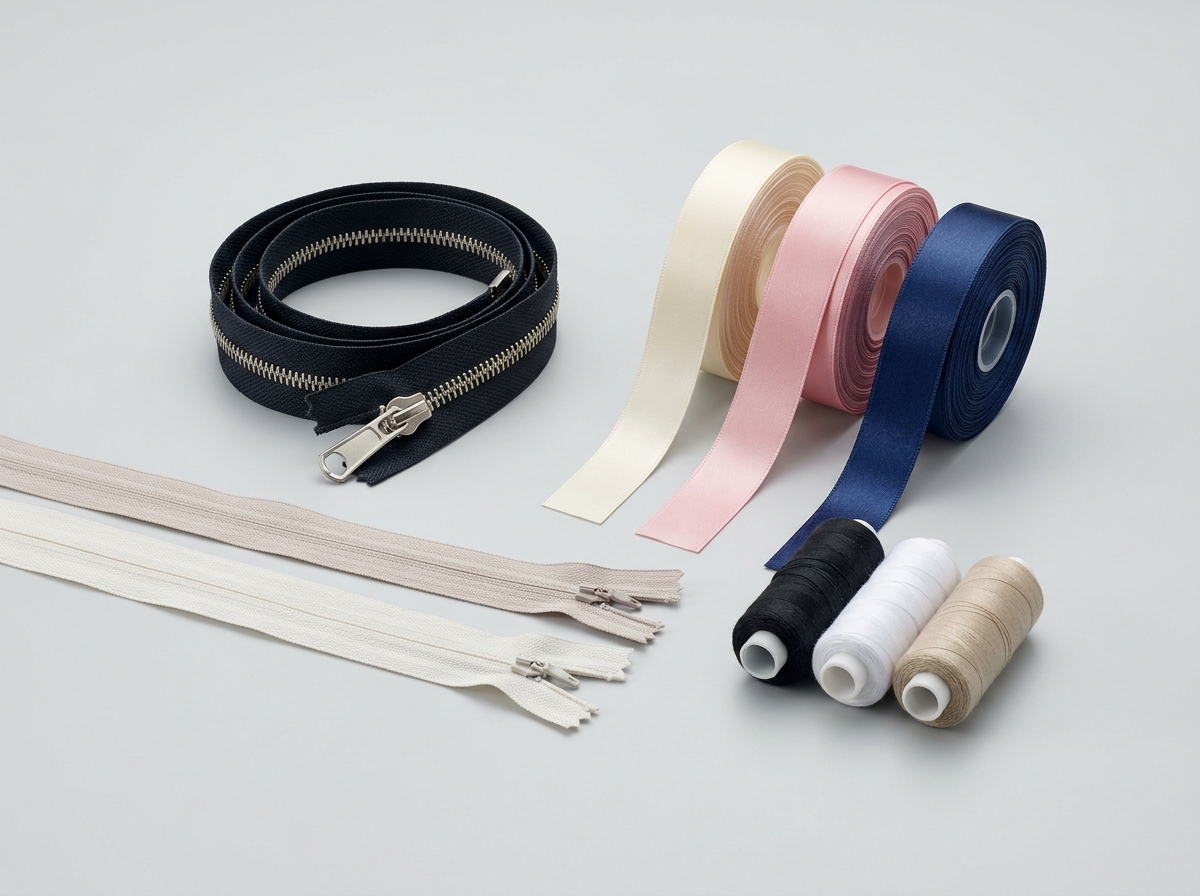
MOQ, sampling, packaging, and lead time in metal zipper procurement
Commercial terms are often the difference between an easy season and a production bottleneck.
For premium outerwear, MOQ should be considered together with design complexity. A standard metal zipper in an existing finish may be easy to source at a lower MOQ, while a custom-plated or custom-puller order usually requires a larger commitment. Sampling lead time is equally important because one extra sampling round can delay the garment line.
| Procurement item | Buyer question | Practical impact |
|---|---|---|
| MOQ | What is the minimum order per size and finish? | Affects inventory risk and color continuity |
| Sampling | How many days for sample approval? | Controls development calendar |
| Packaging | Individual, bulk, or sewn-ready? | Influences factory efficiency and damage rate |
| Lead time | Can production be repeated within season? | Determines replenishment reliability |
Packaging deserves more attention than many buyers give it. Metal zipper teeth can be scratched during transit, and improper bagging can create plating wear before the product even reaches the sewing line. For export programs, buyers should also specify carton labeling, inner pack quantity, and moisture protection.
If the outerwear collection includes multiple trim families, it may be efficient to consolidate buying through related product pages such as zipper wholesale options, polyester sewing thread, and sewing supplies. Consolidation can simplify purchase orders, but only if each item still has its own approval standard.
Material and finish choices that affect outerwear performance
Finish selection influences both aesthetics and field durability.
Metal zipper finishes are not just decorative. Nickel, antique brass, gunmetal, and black nickel each behave differently under abrasion, washing, and exposure to sweat or moisture. In premium outerwear, the finish must match the garment’s design language while maintaining acceptable wear resistance.
For example, a matte black finish can support a modern technical look, but it may show edge wear faster on high-contact zones. Antique brass often suits heritage or rugged styling, while nickel finishes create a brighter, cleaner look. The right choice depends on both market positioning and environmental exposure.
| Finish | Style effect | Risk to monitor | Typical outerwear fit |
|---|---|---|---|
| Nickel | Bright and polished | Fingerprints and glare | Urban coats, premium basics |
| Antique brass | Vintage and rugged | Color variation | Heritage jackets, denim outerwear |
| Gunmetal | Neutral and understated | Surface abrasion | Technical and menswear pieces |
| Black nickel | Modern and premium | Visible wear on edges | Fashion-forward outerwear |
Buyers should not select finish by appearance alone. A finish that looks excellent in a showroom can be less durable on a high-friction front closure. That is why the procurement brief should include both visual approval and wear testing.
When metal zipper is the wrong choice
The most expensive mistake is specifying the wrong zipper for the wrong garment.
A metal zipper is not ideal for every outerwear style. If the garment needs extreme flexibility, light weight, or concealed closure lines, a coil or invisible construction may work better. If the product is a rain shell, weather-sealed performance usually matters more than a premium metallic look. If the design uses thin fabrics, a heavy zipper can distort the front panel and affect drape.
Procurement should therefore begin with function, not habit. The question is not whether metal zippers are “better” in general. The real question is whether they are better for this exact garment, this exact target market, and this exact cost structure.
- Choose metal zippers when visual presence and robust feel support the product story.
- Choose coil zippers when flexibility and lightness matter more.
- Choose waterproof zippers when weather protection is a product promise.
- Always test the zipper in the final garment construction before mass purchase.
Practical sourcing workflow for premium outerwear manufacturers
A structured workflow reduces rejects and protects launch dates.
The most reliable sourcing sequence is brief, sample, test, approve, and repeat. Start by defining the garment use case, then request 2 to 3 candidate zipper specifications from the supplier. Next, review the physical sample under production lighting, test the zipper on a sewn panel, and verify packaging and label accuracy. After that, lock the approval sample and place the bulk order with an agreed inspection standard.
This approach works especially well for overseas bulk orders because it reduces communication gaps. It also gives the manufacturer enough evidence to defend quality decisions if a customer later questions trim appearance or function.
| Stage | Buyer action | Output |
|---|---|---|
| Brief | Define garment type, fabric weight, and finish target | Clear specification |
| Sampling | Compare 2 to 3 zipper options | Preferred sample |
| Testing | Check function on sewn panel | Approved performance |
| Bulk order | Confirm MOQ, lead time, packaging | Production release |
If the buyer also sources related embellishment and trim items for the same collection, it may be efficient to coordinate with pages such as lace products and ribbon products for style-aligned packaging and presentation trims. That does not replace zipper qualification, but it can improve overall collection consistency.
FAQ
What is the best metal zipper for premium outerwear?
The best metal zipper is the one that matches the garment’s weight, use environment, and design language. For premium coats and jackets, buyers often choose size 5, 8, or 10 depending on the visual and functional load.
How do I choose a metal zipper supplier?
Choose a metal zipper supplier based on sample quality, repeatability, MOQ, lead time, finish consistency, and the supplier’s ability to support bulk production with traceable lots.
Is a metal zipper better than a coil zipper for outerwear?
Not always. Metal zippers are usually better for a premium look and structured feel, while coil zippers are often better for flexibility and lighter garments.
What tests should I ask for before bulk buying?
Ask for corrosion screening, opening-and-closing durability, sewn-panel fit checks, and any relevant quality management documentation. For corrosion screening, ASTM B117 is a common reference method.
What information should be in a zipper spec sheet?
The spec sheet should include size, tooth material, slider type, tape material, finish, and packaging requirements. If possible, request a reference sample and production tolerance notes.
How can I reduce defects in bulk zipper orders?
Reduce defects by approving samples in real fabric, confirming lot traceability, inspecting packaging, and aligning the zipper specification with the garment’s actual use conditions.
Can I source zippers together with other sewing accessories?
Yes. Many wholesale buyers consolidate trims such as zippers, thread, and sewing accessories to simplify procurement, but each item still needs its own specification and approval process.

Post time: Aug-13-2026