- Polyester sewing thread is the default industrial choice for apparel, weddingwear, and general textile assembly.
- OEM sewing thread sourcing should define count, ply, color, lubrication, cone size, and packaging before sampling.
- Quality control is best measured with tensile strength, elongation, twist consistency, and seam performance, not appearance alone.
- Wholesale buyers should compare MOQ, lead time, shade tolerance, and carton format early to avoid production delays.
- For brands selling into dress, bridal, and DIY channels, custom sewing thread works best when matched to fabric weight and machine speed.
OEM polyester sewing thread is a high-volume procurement category in apparel and textile supply chains, and the choice is rarely about thread alone; it is about seam quality, machine stability, and consistent bulk delivery. For context, standard tensile testing for textile yarns is commonly referenced through ASTM D2256, while sewing machine and stitch-related terminology is organized in ISO 4915:1991. In factory settings, a well-matched polyester sewing thread can help reduce seam breakage during high-speed stitching, especially when production lines run at thousands of stitches per minute. For wholesale buyers, the real decision is not only polyester sewing thread versus other fibers, but whether the supplier can support custom sewing thread specs, stable dye lots, and export-ready packaging across repeat orders.
Why OEM polyester sewing thread matters for apparel and textile brands
The core reason brands choose OEM polyester sewing thread is that it balances performance, cost, and sourcing flexibility better than many alternatives. Polyester has strong resistance to moisture, many chemicals, and everyday abrasion, which makes it suitable for garment seams that must survive repeated wear and washing. In bridal wear, women’s apparel, and DIY textile lines, that durability matters because a broken seam is not just a defect; it is a return, a complaint, or a lost wholesale account.
For buyers searching for polyester sewing thread wholesale, the key procurement question is whether the thread performs consistently across different fabrics and sewing conditions. Polyester thread is widely used in woven cotton, blended textiles, synthetic fabrics, linings, and decorative sewing because it offers dependable seam formation under standard industrial operating ranges. For textile brands building private label assortments, custom sewing thread specifications can also support stronger product differentiation through color matching, package design, and cone formats for specific markets.
From a technical standpoint, quality sewing thread is judged by measurable properties such as linear density, breaking force, elongation, twist direction, and lubrication. The lab-side framework for tensile testing is widely aligned with ASTM D2256, while seam strength and thread behavior in a sewn assembly must be interpreted in the context of the full fabric system, not a stand-alone thread sample. That is why sourcing decisions should include fabric type, needle system, stitch type, and machine speed.
| Buying factor | Why it matters | Typical sourcing target |
|---|---|---|
| Thread count / ticket size | Matches stitch appearance and seam strength to fabric weight | Selected by fabric GSM and stitch type |
| Ply and twist | Influences strength, smooth feeding, and seam bulk | 2-ply or 3-ply depending on use |
| Color matching | Impacts brand consistency and garment finish | Lab dips or bulk shade approval |
| Cone weight | Controls production changeover frequency | Common bulk formats for factory use |
| Packaging | Affects warehouse efficiency and export handling | Carton packs with stable labeling |
How to choose the right custom sewing thread specification
The best custom sewing thread spec starts with the garment, not the supplier catalog. A bridal dress thread should be evaluated differently from a workwear seam thread or a DIY sewing kit thread because fabric thickness, seam visibility, and finishing expectations are not the same. In practice, an OEM buyer should define four variables first: fabric type, sewing machine type, target seam appearance, and washing or performance requirements.
Thread size is one of the most important choices because it affects both appearance and seam reliability. A finer thread produces a cleaner look on lightweight dresses and linings, while a stronger, thicker thread is often better for denim, bags, or home textile seams. Brands ordering polyester sewing thread wholesale should also specify whether the thread needs to be left-twist or right-twist compatible with the machine and intended stitch formation.
Another important factor is lubrication. Many industrial threads are lubricated to improve feeding and reduce friction at high speed. That matters when factories push productivity and run multiple shifts. According to NIST SI Units guidance, measurement discipline is essential in technical procurement, and the same logic applies to textile sourcing: if the thread is not quantified clearly, supplier comparisons become unreliable. Buyers should ask for documented test methods, not just marketing descriptions.
| Specification item | What to request | Why it matters in production |
|---|---|---|
| Linear density | Thread count or ticket number | Controls seam bulk and needle-hole behavior |
| Breaking force | Test report with method | Supports seam strength evaluation |
| Elongation | Percent at break | Affects stretch and seam recovery |
| Color fastness | Wash and rub performance data | Reduces shade complaints after sale |
| Package size | Cone weight and carton count | Optimizes warehouse and line feeding |
For textile brands that want private label differentiation, custom sewing thread can also include branded labels, barcode formats, and export carton language. This is especially useful for wholesale suppliers serving women’s fashion, bridal boutiques, and DIY channels where presentation is part of perceived value. In other words, the thread may be industrial, but the commercial buying decision is often retail-facing.
Polyester sewing thread performance in apparel, wedding, and DIY use cases
Polyester sewing thread performs well across three high-demand purchasing scenarios: apparel production, wedding garments, and DIY textiles. In apparel, it is valued for general seam reliability and wide compatibility with woven and knit constructions. In wedding and formalwear, the priority shifts toward appearance, softness, and color matching, especially on light-colored fabrics and layered garments. In DIY kits, buyers care more about usability, small-pack convenience, and beginner-friendly handling.
For wedding applications, fine thread finish and shade control matter because seams may be visible in close-up photography and under event lighting. For women’s fashion, the thread must support clean hems, side seams, facings, and decorative stitching without puckering. For DIY programs, the thread often needs to be easy to use in home machines and with moderate package sizes that fit consumer workflows.
Manufacturing speed is another practical variable. Industrial sewing machines can operate at very high stitch rates, and thread quality becomes more important as speed increases. While exact line speed depends on fabric, seam type, and machine setup, high-speed stitching demands consistent lubrication and low-friction feeding. Buyers often discover that a cheaper thread costs more in rework, needle heat, or downtime if it creates repeated breakage.
| Use case | Priority | Thread selection focus | Buyer outcome |
|---|---|---|---|
| Apparel factory | Seam durability | Strength, feeding stability, bulk supply | Less downtime and fewer seam defects |
| Weddingwear | Appearance | Fine finish, shade accuracy, soft hand feel | Cleaner visible seams |
| DIY kit | Ease of use | Small pack sizes, clear labeling, universal compatibility | Lower consumer friction |
| Repair market | Versatility | General-purpose color range and packaging | Broad retail acceptance |
When comparing polyester sewing thread to cotton thread, polyester usually offers better abrasion resistance and dimensional stability, while cotton can still be preferred for certain natural-fiber aesthetics or traditional finishing preferences. For most export-oriented garment brands, however, polyester remains the practical default because it is easier to standardize across multiple production sites.
OEM and wholesale sourcing checklist for custom sewing thread
OEM sourcing fails most often when the commercial brief is vague. The strongest wholesale programs define technical, packing, and quality items in one document before sampling. That document should include thread type, target fabric, intended machine, color references, cone weight, carton count, label language, barcode needs, and acceptable tolerance limits for shade and diameter.
A good sourcing checklist also includes production economics. For wholesale buyers, the real cost is not only unit price but also sample rounds, lead time, carton damage, and the risk of mixed dye lots. New Swell’s broader accessories catalog shows why bundle-based procurement works well in this category: when sewing thread is ordered alongside zippers, lace, or other sewing accessories, buyers can simplify export consolidation and reduce purchasing fragmentation. For related sourcing categories, buyers often cross-check sewing thread, zippers, lace, and ribbons to align complete trim programs.
MOQ and sampling terms should be clarified early. In wholesale textile trims, a sample may represent only a small fraction of the eventual purchase order, but it determines whether the line will scale. Buyers should ask for pre-production approval on color, winding quality, and label format before committing to bulk manufacturing. In export contexts, that single step can save weeks.
- Confirm fabric use, machine type, and seam type before discussing price.
- Approve color reference, shade tolerance, and packaging artwork.
- Request test reports for breaking force and elongation.
- Check cone weight, carton loading, and pallet stability for export.
- Lock MOQ, sampling cost, and lead time in writing.
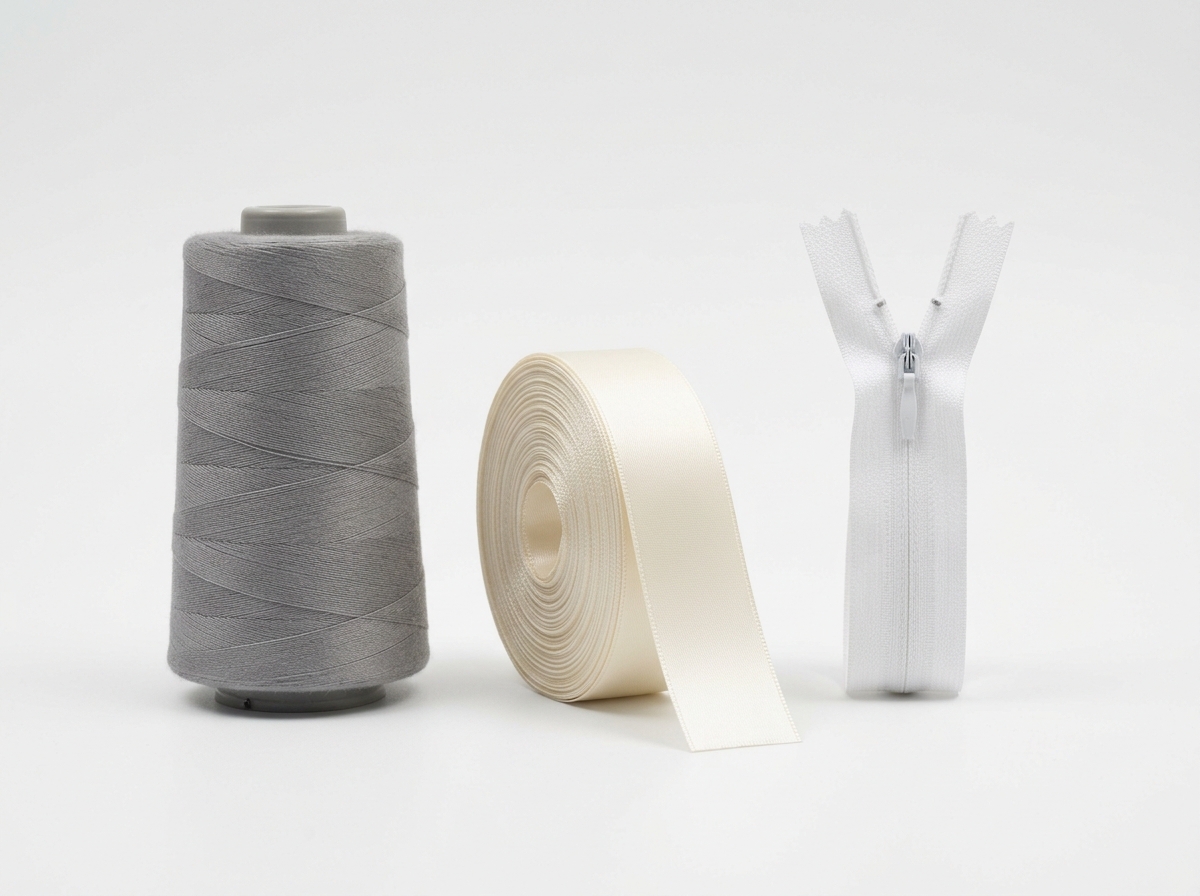 Quality control metrics for polyester sewing thread wholesale
Quality control is strongest when it is measured at both the fiber and seam levels. A thread can look fine on a sample cone and still fail on the sewing line if twist inconsistency or surface friction is off. That is why professional buyers ask for measurable QC rather than visual approval alone.
Common laboratory and production checks include breaking force, elongation, twist consistency, yarn evenness, colorfastness, and package winding quality. For compliance-oriented buyers, the logic of testing is consistent with ISO and ASTM methods, even if the exact fabric application varies. The buyer should care less about a single pass/fail claim and more about whether the supplier can reproduce the same result across dye lots.
In production, operators also watch for practical symptoms: skipped stitches, thread nests, irregular seam tension, and excessive lint. These are often early signals that the thread-fabric-machine combination is misaligned. When that happens, replacing the thread may fix the problem faster than changing the machine setup.
| QC metric | What it reveals | Typical buyer action |
|---|---|---|
| Breaking force | Strength under tension | Compare against target use case |
| Elongation | Stretch and recovery behavior | Match to knit or woven fabric |
| Twist consistency | Feeding and seam stability | Reject unstable lots |
| Colorfastness | Visual durability after use | Require wash or rub testing |
| Winding quality | Machine feeding performance | Inspect for tangling and slubs |
For a standardized process, many buyers use a three-step approval chain: lab sample, pilot run, and bulk inspection. That workflow reduces disputes because performance is tested in the same environment where the thread will actually be used. It also helps procurement teams make better calls when ordering multiple colors across seasonal collections.
Material comparison: polyester sewing thread versus other thread types
Polyester is often the best all-around option, but it is not the only option. The right choice depends on whether the buyer values durability, appearance, heat behavior, or material feel. Cotton thread can provide a more natural look, but it generally does not match polyester in abrasion resistance. Nylon thread may offer strong elasticity and toughness, but it is not always the best fit for apparel aesthetics or wide consumer acceptance.
For buyers in wedding and women’s apparel, polyester is attractive because it supports clean seams without the premium cost of specialty fibers. For industrial or outdoor applications, another thread type might be better depending on abrasion and stretch targets. That is why custom sewing thread should always be matched to fabric and end use, not ordered by habit.
| Thread type | Main strength | Main limitation | Best fit |
|---|---|---|---|
| Polyester | Durability and broad compatibility | Not the softest natural look | Apparel, bridal, wholesale sewing |
| Cotton | Natural appearance | Lower abrasion resistance | Traditional finishing and natural-fiber garments |
| Nylon | High toughness and elasticity | May be less preferred for standard apparel sourcing | Technical seams and specialty uses |
| Core-spun blends | Balanced hand feel and strength | More complex procurement | Premium garments and performance wear |
The commercial implication is simple: if your brand needs one thread category that can cover multiple product lines, polyester sewing thread is usually the most practical starting point. If your portfolio is highly specialized, then a second material may be justified for niche aesthetics or performance.
How brands reduce cost and risk in OEM sewing thread programs
Cost control in sewing thread sourcing comes from process control, not just negotiation. Brands that document specs well tend to get fewer rejections, fewer shade disputes, and fewer emergency replacements. That matters because thread is a consumable, but production interruptions are expensive.
One of the most effective cost levers is standardization. If a brand can reduce the number of thread counts, color codes, and package styles, procurement becomes easier and inventory turns faster. Another lever is carton optimization. Proper packing reduces damage during transit and helps maintain cone shape and labeling integrity.
According to the U.S. Census Bureau’s trade data portal, textile and apparel trade remains a high-volume global category, which helps explain why wholesale suppliers focus on repeatable SKU structures and export-ready documentation. For buyers, the lesson is to build procurement systems that support repeat orders instead of one-off purchases. The more repeatable the spec, the easier it is to scale across factories and seasons.
- Use one master spec sheet per thread family.
- Approve colors against physical standards, not only digital screens.
- Consolidate packaging rules across markets.
- Test thread on the actual machine and fabric, not just in a lab.
- Keep backup colors for fast replenishment.
For brands working with women’s apparel, bridal trims, or DIY retail kits, the best supplier relationship is usually a repeatable one. A supplier who can maintain dye lot discipline, export cartons, and clear documentation is more valuable than one who only quotes a lower unit price.
FAQ about OEM polyester sewing thread
What is the main benefit of OEM polyester sewing thread?
The main benefit is consistent performance at scale, especially for apparel and textile brands that need dependable seam strength, color matching, and bulk supply. Polyester sewing thread is widely used because it is practical for industrial sewing and export procurement.
How do I choose the right polyester sewing thread for dresses?
Choose the thread by fabric weight, seam visibility, and sewing machine setup. Lightweight dresses usually need finer thread and better shade matching, while heavier fabrics may require stronger counts and more abrasion resistance.
What should I include in a custom sewing thread spec sheet?
Include thread count, ply, twist, color reference, cone weight, packaging format, MOQ, lead time, and acceptance criteria for breaking force and elongation. Clear specs reduce sampling rounds and production disputes.
Is polyester sewing thread suitable for wedding garments?
Yes. Polyester sewing thread is suitable for many wedding garments because it offers a good balance of appearance, durability, and color consistency. It is especially useful when the seam must remain stable through handling and wear.
How do wholesale buyers check sewing thread quality?
They check breaking force, elongation, twist consistency, winding quality, and colorfastness. The best approach is to test the thread on the exact fabric and machine that will be used in production.
What is the difference between wholesale and OEM sewing thread ordering?
Wholesale usually means buying standard SKUs in bulk, while OEM ordering means creating a thread specification, packaging, or branding plan for a particular market or customer. OEM offers more control, but it also requires clearer approvals.
Why do brands order sewing thread together with other trims?
Brands often bundle sewing thread with zippers, lace, and ribbons to simplify purchasing, reduce freight complexity, and align all trims for one production line. That approach is common in apparel, wedding, and DIY supply chains.
For apparel and textile brands, OEM polyester sewing thread is not just a basic consumable; it is a production control item that affects seam quality, line speed, and customer satisfaction. If you want reliable wholesale supply, the safest path is to define the fabric, machine, test method, and packaging requirements first, then buy against a repeatable specification. That is what turns custom sewing thread from a generic commodity into a dependable part of your sourcing system.

Post time: Aug-27-2026