- Polyester sewing thread should be selected by use case, not only by price per cone.
- Bulk sewing thread orders need validation for strength, colorfastness, package size, and machine compatibility.
- Sampling, labelling, and carton planning matter as much as the thread specification itself.
- For B2B buyers, the lowest unit price is often more expensive after waste, rework, and delayed production.
- Clear supplier communication on MOQ, shade, and delivery terms reduces purchase risk.
Polyester sewing thread is a universal consumable in apparel, home sewing, and repair workflows, but bulk purchasing still demands precision: industrial sewing quality is commonly benchmarked against seam performance and dimensional control standards such as ISO 4915 for stitch types and ISO 4916 for seam classification, while fabric test methods like ASTM D3786 help evaluate related textile strength behavior. In practice, buyers who order polyester sewing thread for dress production, wedding finishing, or DIY kits should compare ticket size, cone length, color matching, and application temperature tolerance instead of relying on a catalog photo alone; that is especially important when working with a sewing accessories catalog that combines multiple consumable categories.
Why Polyester Sewing Thread Bulk Orders Fail: The Most Common Procurement Mistakes
The most expensive mistake is assuming one polyester sewing thread specification fits every fabric and machine.
Bulk buyers often choose a thread by color or price, then discover that the thread does not behave correctly on different fabrics, presser-foot pressures, or needle sizes. In garment sewing, a thread that looks acceptable in a swatch may still cause skipped stitches, puckering, or excessive lint during high-speed production. A better purchasing process starts with the fabric, the seam type, and the final use environment.
Another common issue is ignoring the difference between normal sewing thread and other related items in a supplier catalog. Polyester thread is a universal consumable, but it should not be selected the same way as decorative trim or closure hardware. For example, a factory sourcing thread for skirts may also need a compatible zipper supplier for coordinated garment production, while bridal workshops may need a matching lace collection for edge finishing and decorative work.
Polyester Sewing Thread Specifications Buyers Should Check Before Bulk Ordering
Thread construction and measurable performance are the first things to verify.
Polyester sewing thread is usually judged by filament structure, twist balance, tensile performance, and package consistency. In industrial sewing, thread size is commonly identified by ticket or tex systems, and the choice should match seam load and fabric density. For example, fine apparel seams need a different setup than utility stitching on tote bags or DIY kits. If the thread is too thick, it can distort the seam; if it is too light, it may fail under abrasion.
Buyers should also confirm spool format and winding quality. A cone that looks uniform on the outside can still have uneven tension inside the package, which creates thread breaks during fast sewing. In bulk buying, that kind of inconsistency becomes a production issue, not a cosmetic one.
| Procurement check | What to verify | Why it matters | Typical impact |
|---|---|---|---|
| Thread size | Tex, ticket, or denier match to fabric | Controls seam appearance and load | Lower rework risk |
| Package format | Cone weight, winding density, core type | Supports machine feeding stability | Fewer breaks at speed |
| Color consistency | Lab dip, shade lot, lightbox review | Prevents visible variation across rolls | Better batch uniformity |
| Strength target | Tensile and elongation tests | Helps match seam stress | Reduced seam failure |
For buyers who need standard alignment, textile test methods often reference a 50 mm gauge length in tensile testing, which is widely used in industry practice for evaluating yarn and thread behavior under controlled conditions. That type of detail matters because a supplier that can describe its own test method clearly is usually easier to audit and repeat.
How to Match Bulk Sewing Thread to Wedding, Dress, and DIY Use Cases
Application context should drive the purchasing decision.
For wedding garments, seam visibility and color harmony matter more than raw tensile strength alone. A pale polyester sewing thread must blend with satin, tulle, lace, or organza without creating harsh reflections. For dress production, especially in women’s fashion, the thread must support clean topstitching, consistent seam lines, and stable feeding through lightweight or medium-weight fabrics. For DIY kits, the priority shifts toward ease of use, simple packaging, and fewer thread breaks for beginners.
That is why many B2B buyers source from a supplier that offers both thread and adjacent category support. A wedding kit seller may combine thread with polyester ribbon options for packaging and decorative finishing, while a craft distributor may pair bulk thread with DIY tools to build a complete starter set. In these bundles, the thread is not a standalone item; it is part of a use-case system.
| Use case | Recommended buying focus | Common risk | Supplier question |
|---|---|---|---|
| Wedding dresses | Shade match, fine finish, low lint | Visible seam mismatch | Can you provide shade lots? |
| Women’s apparel | Machine compatibility, seam durability | Puckering or skipped stitches | Which needle and stitch types fit? |
| DIY kits | Ease of use, small pack options | Beginner frustration | Do you offer mixed-color sets? |
| Repair and retail | Versatile stock and quick restock | Overstock on slow shades | What is your MOQ per color? |
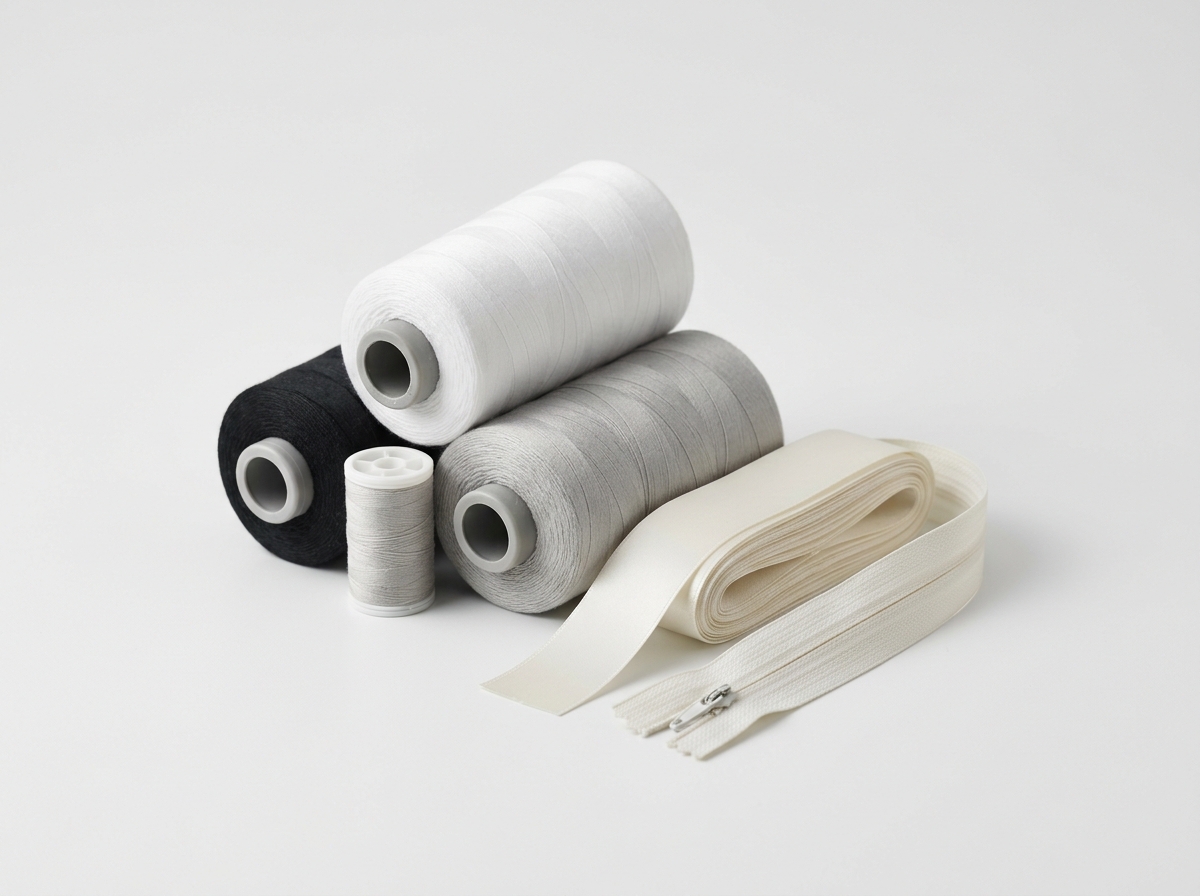 What a Reliable Thread Supplier Should Provide in Bulk
A reliable supplier gives buyers proof, not just price.
In wholesale procurement, the right thread supplier should be able to confirm product specs, sample policy, carton details, and production lead time in writing. That includes cone weight, yardage or meter length, color code, carton packing count, and whether the shade is consistent across a single lot or multiple replenishment lots. If the supplier cannot define the ordering unit clearly, the buyer inherits unnecessary ambiguity.
It is also important to ask for samples before scaling up. A bulk sewing thread order should be tested on the exact machine, needle, and fabric that will be used in production. Sewing line testing usually exposes problems that do not appear in hand stitching. Even a small change in lubrication, winding, or twist can change the way the thread behaves at 3,000 to 5,000 stitches per minute in common industrial applications.
For buyers building long-term sourcing plans, it is useful to keep a backup source for related accessories from the same directory structure. For example, if your production uses decorative finishes, the same sourcing workflow can include Swell Industry home page for broader catalog navigation and repeat procurement planning across multiple accessory categories.
- Ask for a physical sample before any repeat order.
- Confirm whether the quote is per cone, per carton, or per mixed pack.
- Record shade codes and lot numbers for replenishment control.
- Test on the final machine, not just on a demo machine.
- Verify whether packaging suits export handling and warehouse stacking.
Thread Quality Control: Tests That Matter Before You Place a Large Order
Quality control should focus on repeatability, not only appearance.
Polyester sewing thread needs enough strength to survive feeding, needle penetration, and seam abrasion, but it also needs stable elongation so stitches do not snap under load. Buyers often ask for tensile data, but the more useful question is whether the supplier can explain how the data was obtained. A quote without a test method is less useful than a slightly less glamorous specification with clear QC documentation.
According to the ASTM textile test framework, many yarn and thread assessments rely on controlled specimen preparation and repeatable machine conditions, which is why supplier claims should be tied to test records rather than general language. If the supplier can describe test samples, environmental conditioning, and acceptance limits, the risk of surprises falls significantly.
| QC item | What to ask | Why it matters | Buyer action |
|---|---|---|---|
| Tensile test | Method, sample count, pass limit | Checks break resistance | Request test report |
| Shade check | Standard light source and lot code | Prevents batch variation | Approve master sample |
| Package uniformity | Net weight and winding tension | Supports smooth feeding | Inspect random cones |
| Seam trial | Real fabric and actual stitch type | Reveals production issues | Run pilot sewing test |
In practical sourcing terms, the buyer’s own pilot run is the most useful quality test. A 10-cone lab sample that sews beautifully on a sample board is not enough if the full production run uses a different fabric blend, needle point, or seam density.
Pricing, MOQ, and Packaging: The Bulk Sewing Thread Economics Buyers Miss
The cheapest quoted price can become the most expensive landed cost.
When comparing bulk sewing thread offers, buyers should include carton efficiency, freight weight, inventory turnover, and defect cost. A low unit price is less meaningful if the cone size is inconvenient for the machine or if the MOQ forces excess stock. Export buyers should also calculate how many cones fit in a carton and whether the packaging protects the thread during long-distance shipping.
Polyester thread is often purchased as a replenishment item, so the actual cost of a bad order includes production stops, machine rethreading, shade sorting, and complaint handling. In a factory environment, even short interruptions can compound quickly across multiple lines. That is why the lowest offer is not necessarily the best buy.
For wedding, apparel, and DIY channels, packaging can also become a sales factor. A retail-ready mixed set may command better sell-through than a large unlabelled cone. But for factory use, plain export cartons with clear batch labels are usually more efficient.
| Cost factor | What it affects | Common mistake | Better practice |
|---|---|---|---|
| Unit price | Quoted purchase cost | Comparing quotes without packaging | Compare delivered cost |
| MOQ | Inventory commitment | Ordering too much of one shade | Use shade history data |
| Carton design | Transit damage and warehouse handling | Ignoring carton compression strength | Request export packaging spec |
| Changeover time | Factory productivity | Buying mixed lots with poor labeling | Use clear lot identification |
For many wholesale buyers, a better sourcing structure is to split the order into core colors, fast-moving shades, and test quantities for new styles. That approach reduces dead stock while keeping production flexible.
How to Build a Safer Polyester Sewing Thread Buying Checklist
A short checklist prevents the most expensive mistakes.
Start with the end product: garment type, fabric weight, seam visibility, and machine speed. Then verify thread construction, cone format, shade code, and sample compatibility. Finally, confirm commercial terms such as MOQ, lead time, carton size, and re-order consistency. The buyer who controls these variables usually gets better results than the buyer who only negotiates unit price.
- Identify the fabric, stitch type, and end-use environment.
- Request thread specs, shade codes, and package dimensions.
- Test on the final machine with the exact needle and fabric.
- Compare the sample against master shade standards under controlled lighting.
- Confirm MOQ, lead time, and replenishment lot consistency.
- Document the approved cone, carton label, and batch number for reorders.
In a curated wholesale catalog, buyers should also think beyond thread. A complete purchasing plan may include accessories such as sewing kit options for end users, especially when the order is intended for retail resale, travel packs, or beginner DIY programs.
Common Mistakes to Avoid When Ordering Bulk Sewing Thread
The fastest way to lose money is to skip a pilot test.
One frequent mistake is approving a large order based on a single color card. Another is failing to verify whether the thread works at the same speed and tension as the real production line. Buyers also underestimate the importance of labeling, which becomes critical when multiple shades arrive in a mixed carton. Finally, some procurement teams overlook after-sales support, such as lot traceability and replacement policy for defective cones.
- Do not buy only by appearance or catalog image.
- Do not assume the same color name means the same shade across suppliers.
- Do not skip sewing trials on actual production equipment.
- Do not ignore carton labels, lot numbers, and reorder records.
- Do not treat all polyester sewing thread as interchangeable across fabric types.
When these mistakes are avoided, bulk sewing thread procurement becomes much more predictable. That predictability is especially valuable for exporters and private-label buyers who need stable repeat orders and fewer claims from downstream customers.
FAQ: Polyester Sewing Thread Bulk Ordering
What is the most important thing to check before buying polyester sewing thread in bulk?
The most important check is machine-and-fabric compatibility, because the correct thread size and construction depend on the final seam, not just the price or color.
Should I request samples before placing a large order?
Yes. A pilot sample lets you test stitch formation, shade match, and feeding behavior on the exact machine used in production.
How do I compare two bulk sewing thread quotes fairly?
Compare delivered cost, MOQ, carton size, shade consistency, and replenishment reliability instead of looking only at the cone price.
Why does shade consistency matter so much in apparel and wedding sewing?
Because visible seams, decorative edges, and pale fabrics make small color differences easy to see, especially under retail lighting or photography.
What packaging details should a thread supplier confirm?
Ask for cone weight, carton count, outer carton dimensions, label format, and whether the shade is traceable by lot number.
Can polyester sewing thread be used for both garments and DIY kits?
Yes, but the ideal ticket size, pack format, and shade assortment will differ depending on whether the buyer is serving factories, retailers, or beginner users.
What is the best way to reduce waste in bulk thread purchasing?
Buy core colors in larger quantities, test new shades in smaller batches, and keep reorder records tied to approved samples and lot codes.

Post time: Aug-21-2026