- Private label sewing accessories should be sourced by end use, not by catalog name alone.
- Bulk buyers need written controls for color, dimensions, packaging, and replenishment lead time.
- Samples, test methods, and approval records reduce risk more than price-only negotiations.
- Wedding, women’s apparel, and DIY are the most practical demand clusters for this category.
- A supplier page structure that separates ribbons, zippers, threads, lace, and tools improves sourcing clarity.
Private label sewing accessories are easiest to buy correctly when you define the product by application, material, and commercial terms at the same time. In apparel supply chains, a tolerance of only 1.5 mm on zipper coil alignment or a shade mismatch across ribbon lots can create avoidable rejects, rework, and customer complaints. Standards matter here: zipper testing can be aligned to ASTM D2061, while thread strength and elongation are commonly evaluated using methods such as ASTM D2256/D2256M. For buyers who source wholesale accessories for dress, wedding, and DIY programs, the smartest checklist blends technical control with procurement discipline and clear supplier communication.
What Private Label Sewing Accessories Really Include
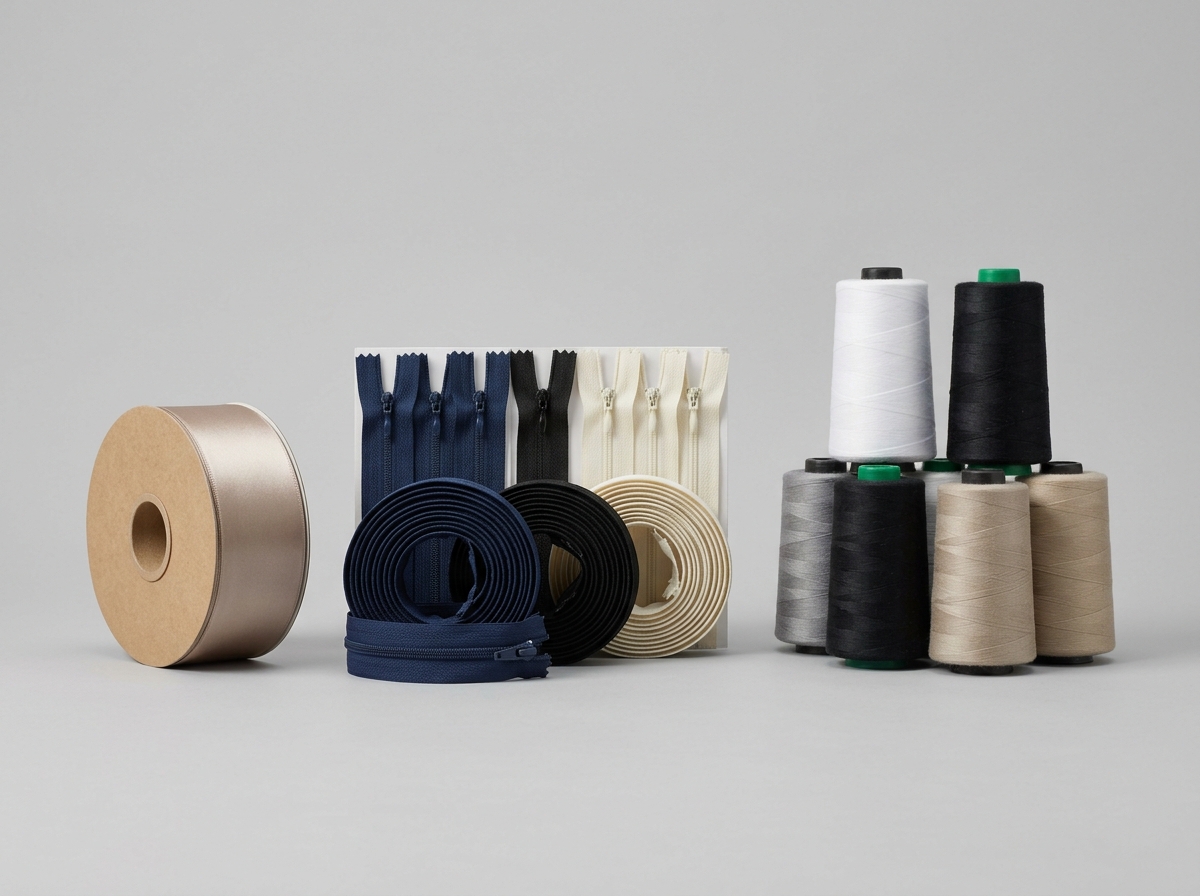
Private label sewing accessories cover more than trim; they are a mixed category of consumables, decorative components, and handcraft tools. In practice, this includes ribbons, zippers, sewing thread, lace, and sewing tools used in garment production, gifting, bridal styling, and DIY retail. Because these items differ in failure mode, the buying checklist should also differ by SKU family.
For example, polyester ribbon is typically judged by width stability, edge finish, and color repeatability, while invisible nylon zippers are judged by smooth pull, concealed appearance, and seam compatibility. Sewing thread is usually evaluated by count, twist, breaking strength, and dye consistency. Lace needs hand-feel, pattern repeat, and elasticity checks when used in bridal or women’s apparel. A buyer who uses one generic checklist for all of them will usually miss at least one expensive detail.
Step-by-Step Buying Checklist for OEM Accessories
A good OEM accessories checklist starts with the end product and works backward to the supplier. If the accessory will be sewn into a dress, displayed in wedding decor, or sold as a DIY kit, the acceptable specification is not the same. That is why buyers should separate decorative requirements, functional requirements, and commercial requirements before asking for a quotation.
- Define the use case. Bridal trim, women’s apparel, and home sewing kits need different finishes, colors, and pack formats.
- Lock the specification. Write width, length, material, color code, and packing unit in one approval sheet.
- Request a pre-production sample. Compare hand-feel, color, and stitching behavior before bulk approval.
- Confirm testing methods. Ask which standards or internal methods are used for strength, dimensional stability, and function.
- Agree on commercial terms. MOQ, carton quantity, label format, and lead time should be confirmed in writing.
For standardized accessories, this stepwise method reduces the risk of supplier-side interpretation. It also helps keep private label sewing accessories consistent across repeated orders, which matters more than a one-time low unit price.
Material and Performance Checks That Matter in Bulk Orders
Material choice is the fastest way to predict whether an accessory will perform in real use. Polyester is popular because it offers good abrasion resistance and low moisture uptake, which makes it practical for ribbons, thread, and many lace constructions. Nylon is often preferred for zippers because of flexibility and recovery. Cotton blends can improve hand-feel, but they may change shrinkage behavior after washing if the buyer does not define finishing requirements.
| Accessory | Common material | What buyers should check | Typical risk if ignored |
|---|---|---|---|
| Ribbon | Polyester | Width, edge sealing, dye lot | Color mismatch and fraying |
| Invisible zipper | Nylon coil, polyester tape | Pull smoothness, concealment, length | Seam distortion and visible closure |
| Sewing thread | Polyester | Breaking strength, twist, cone winding | Thread breakage and machine downtime |
| Lace | Polyester, cotton blend, elastic fiber | Pattern repeat, softness, elasticity | Poor drape or uneven edge finish |
When buyers compare options, they should ask for lot-based samples instead of one perfect showroom sample. In real purchasing, consistency across production lots is often more important than a single visually impressive piece.
How to Compare Wholesale Suppliers Without Overpaying
Wholesale supplier comparison should focus on repeatability, documentation, and shipping reliability rather than quote alone. A lower price can be offset by rework, shorter shelf life of inventory, or poor packing protection. The best comparison method is to score each garment accessories supplier across the same five variables: product accuracy, sample turnaround, MOQ flexibility, package customization, and after-sales response.
| Supplier factor | Good benchmark | Why it matters | Buyer action |
|---|---|---|---|
| Sample lead time | 3 to 10 days | Shows responsiveness | Request dated sample tracking |
| MOQ clarity | Specified by SKU and color | Prevents hidden cost surprises | Ask for MOQ by item family |
| Packing detail | Inner pack, carton count, barcode | Supports retail and warehouse handling | Approve label proof before production |
| Color control | Lab dip or approved swatch | Limits lot variation | Keep a sealed master sample |
For private label sewing accessories, the right supplier is usually the one that can repeat the same result three times, not the one that can impress once. That is especially important in seasonal wedding programs and women’s apparel collections where replenishment speed matters.
 Quality Standards, Testing, and Acceptance Rules
Written acceptance rules are what turn a sourcing request into a controllable supply program. If you need measurable control, ask suppliers to reference recognized methods wherever possible. For textiles and sewing-related products, testing is commonly aligned with standards such as ISO 6330 for domestic washing and drying procedures, and dimensional or performance checks may be tied to product-specific internal specifications. For physical testing equipment and method consistency, NIST resources are useful when buyers want traceable measurement language in procurement documents.
Here is a practical acceptance framework many B2B buyers use for private label sewing accessories:
- Appearance: no visible stains, holes, broken stitches, or dye clouding under normal inspection light.
- Dimensions: width, length, and repeat pattern must stay within the approved tolerance sheet.
- Function: zipper opening, thread winding, or lace elasticity must work across random carton samples.
- Packaging: labels, barcodes, and master carton marks must match the purchase order.
- Traceability: every bulk lot should be linked to a production date and sample approval record.
These rules are especially valuable when you source large-volume wholesale accessories for retail resale or apparel manufacturing, because the cost of one failed lot can be far greater than the original savings from a loose specification.
Private Label Packaging, MOQ, and Lead Time Planning
Packaging is part of product quality, not an afterthought. In private label programs, the pack format influences perceived value, warehouse efficiency, and shipping damage. A ribbon sold for gifting may need a decorative sleeve, while thread for garment factories may only require industrial packing. DIY kits often need retail-ready hang tags, multilingual instructions, and barcode labeling.
When negotiating MOQ, buyers should separate three things: product MOQ, packaging MOQ, and printing MOQ. This distinction prevents confusion when the base product is available in low quantity but custom packaging requires a larger run. For seasonal categories such as wedding lace and decorative trim, planning should also account for replenishment lead time before peak demand.
| Commercial term | Buyer question | Why it affects cost | Risk if unclear |
|---|---|---|---|
| Product MOQ | How many units per SKU? | Controls production setup cost | Unexpected minimum order size |
| Packaging MOQ | How many custom packs? | Affects printing economics | Mismatch between product and pack |
| Lead time | How many days to ship? | Supports inventory planning | Stockouts in peak season |
| Sample charge | Is it refundable? | Changes true sourcing cost | Hidden procurement expense |
In short, private label sewing accessories should be bought as a supply program with packaging, not just as loose goods.
Where Private Label Sewing Accessories Sell Best
The best-selling scenarios are wedding, womenswear, and DIY because each creates recurring demand for different accessory families. Wedding buyers often want lace, ribbon, and decorative trims with stronger visual appeal. Womenswear buyers prioritize invisible zippers, lace trims, and thread consistency. DIY buyers usually value starter kits, scissors, hooks, needles, and simple refill items with easy packaging.
For this reason, product planning should map each SKU to one primary scenario and one backup scenario. A polyester ribbon can serve gift wrapping and wedding decor. Invisible zippers can serve dresses and skirts. Sewing thread can support both garment factories and home repair users. This scenario-first approach improves keyword targeting and also makes sourcing discussions faster.
It also explains why a directory structure with separate category pages works better than forcing every buyer onto one generic page. When a buyer can move from lace products to decorative ribbon or DIY tools, the research path feels natural and purchase intent becomes clearer.
Common Buying Mistakes and How to Avoid Them
Most sourcing problems come from unclear specifications, not from the products themselves. Buyers often make the same errors when purchasing private label sewing accessories in bulk.
- Buying by photo only: a visual match does not guarantee the same width, hand-feel, or colorfastness.
- Ignoring lot variation: the first sample may not reflect production consistency.
- Mixing uses in one order: wedding, fashion, and DIY products should not always share the same spec.
- Skipping packaging proof: label errors can damage retail readiness even when the product itself is fine.
- Neglecting post-shipment checks: incoming inspection catches issues before they spread through inventory.
Buyers who avoid these five mistakes usually reduce return rates and improve replenishment accuracy, especially in fast-moving wholesale accessory programs.
Buying Checklist Table for Private Label Sewing Accessories
This checklist is the practical tool that turns sourcing intent into a controlled order. Use it before confirming any private label sewing accessories purchase.
| Checklist item | Pass criteria | Documents needed | Decision impact |
|---|---|---|---|
| Product fit | Matches end use | Use-case brief | Prevents wrong SKU selection |
| Material | Approved fiber content | Spec sheet | Controls performance expectations |
| Color | Master sample match | Swatch or lab dip | Reduces shade disputes |
| Packaging | Retail or bulk format confirmed | Artwork proof | Supports warehouse and resale |
| MOQ | Fits buying plan | Quotation | Controls inventory exposure |
| Lead time | Matches launch date | Shipping schedule | Avoids stockout risk |
One of the most useful internal checks is whether each line item can be reordered without reinterpretation. If the answer is no, the spec is not yet strong enough for bulk procurement.
How to Build a Better Private Label Program with One Supplier
A stable supplier relationship is often more valuable than a one-off bargain. When a garment accessories supplier understands your color system, packaging rules, and seasonal calendar, reorder speed improves and quality disputes fall. For repeat buyers, this is where private label value is created: not in the first shipment, but in the second and third replenishment.
That is why many importers prefer suppliers that can cover ribbons, zippers, thread, lace, and tools in one coordinated catalog. A broader product structure reduces procurement complexity and makes cross-selling easier for retailers. It also helps the buyer maintain a consistent brand presentation across multiple accessory categories.
If you are building a wholesale assortment, start with three anchor groups: functional essentials, decorative trims, and DIY tools. Then define the spec, approve the sample, and place the first order only after packaging and lead time are confirmed.
FAQ
What should be included in a private label sewing accessories checklist?
It should include product fit, material, dimensions, color approval, packaging, MOQ, sample review, lead time, and traceability. For bulk buying, these items matter more than price alone.
How do I choose an OEM accessories supplier?
Choose a supplier that can prove repeatability, provide samples quickly, and document specifications clearly. Ask for production records, carton details, and a written approval process.
What are the most important quality checks for sewing accessories?
The most important checks are appearance, size, function, and packaging accuracy. For zippers and thread, you should also define test methods before production.
Why are wedding and women’s apparel important scenarios?
They drive demand for lace, ribbon, invisible zippers, and decorative trims. These segments also require stronger visual consistency and better packaging.
How do I reduce risk when ordering wholesale accessories in bulk?
Use approved samples, written tolerances, lot traceability, and packaging proofs. Incoming inspection after shipment is also important.
Can one supplier cover ribbons, lace, zippers, and tools?
Yes, and that often improves procurement efficiency. A supplier with a broader catalog can support mixed orders for apparel, gift packaging, and DIY retail.
What is the best way to start private label sewing accessories sourcing?
Start with one scenario, such as wedding, womenswear, or DIY, then build a narrow SKU list. Approve the sample set before moving to bulk production.

Post time: Aug-20-2026