- Total cost matters more than unit price when shipping, wastage, and delays are included.
- Specification control reduces hidden losses in color mismatch, sewing failure, and customer returns.
- Category planning across ribbon, zippers, thread, and lace improves replenishment and stock turnover.
- Supplier evaluation should include MOQ, sample lead time, packaging, and consistency, not only price.
- Standardization helps B2B buyers avoid repeated ordering mistakes and fragmented inventory.
For wholesale buyers of sewing materials, hidden cost control starts with procurement discipline, not negotiation theater. The sewing accessories category is a good example: it combines consumables, decorative trims, and handcraft tools, so each SKU has different replenishment behavior and different failure costs. In textile quality control, measurement and process variation are not abstract concerns; ISO 2859-1 uses an acceptance quality limit framework for sampling plans, while ISO 12947-2 defines the Martindale abrasion test method for textile durability evaluation. For procurement teams, these standards translate into fewer surprises, more stable supplier performance, and better margin protection across wedding, women’s wear, and DIY programs.
Why hidden costs appear in sewing materials procurement
Hidden costs appear when purchasing decisions ignore the full downstream impact of a low quote. A ribbon order may look inexpensive until the shade differs across rolls, the spool size creates waste, or the packaging damages resale presentation. A zipper batch may meet the price target but fail in puller finish, length consistency, or smoothness, creating garment rework. A thread order can also become expensive if it causes more needle breakage, seam defects, or higher rejection rates during production. In wholesale buying, every one of those issues turns into labor, delay, and reputation loss.
The most common hidden costs in sewing materials procurement are easy to miss because they sit outside the invoice. They include sampling labor, communication loops, rush freight, line stoppage, overstock write-offs, and customer claims. For export-oriented buyers, these costs multiply when color standards, packing details, and product descriptions are not fully locked before shipment. A reliable sewing materials supplier should therefore be judged on consistency and process control, not just quoted price.
| Hidden cost driver | Typical business impact | Procurement control point |
|---|---|---|
| Color variation | Rework, returns, and unusable stock | Lab dip approval, shade reference, lot control |
| Spec mismatch | Assembly failure or poor fit | Detailed technical sheet and sample confirmation |
| Poor packaging | Damage, deformation, retail downgrade | Packing spec and carton test |
| Late delivery | Rush shipping and production delay | Lead time agreement and buffer stock |
| Fragmented SKUs | Inventory complexity and dead stock | SKU rationalization and demand grouping |
How a procurement strategy lowers total cost
A strong procurement strategy lowers total cost by controlling variation at the source. Buyers who split orders across too many suppliers often get attractive pricing but weaker consistency, which raises inspection time and replenishment risk. Buyers who consolidate wisely can negotiate better packaging, more stable dye lots, and smoother production planning. This is especially relevant for standardized products such as polyester ribbon, polyester sewing thread, invisible nylon zippers, and decorative lace, where repeat orders are common and specification drift is expensive.
In practical terms, the best strategy is to classify spending by usage pattern. High-repeat consumables need reliability and predictable lead time. Decorative items need color continuity and packaging presentation. Tools need durability and ergonomic consistency. For example, a polyester sewing thread collection is often purchased for broad garment, home sewing, and repair applications, so even a small defect rate can affect many different workflows. Meanwhile, a lace category carries more style sensitivity, making shade and pattern consistency more important than commodity pricing alone.
| Procurement model | Unit price focus | Total cost outcome | Best fit |
|---|---|---|---|
| Spot buying | High | Unstable; often higher hidden cost | One-off needs, urgent replacements |
| Supplier consolidation | Moderate | Lower inspection and logistics cost | Repeat wholesale programs |
| Standardized sourcing | Moderate to low | Best control of quality and lead time | Thread, ribbon, zipper, lace |
| Dual sourcing | Moderate | Risk reduced, but admin cost rises | Critical or seasonal programs |
 Which sewing materials create the biggest cost leaks
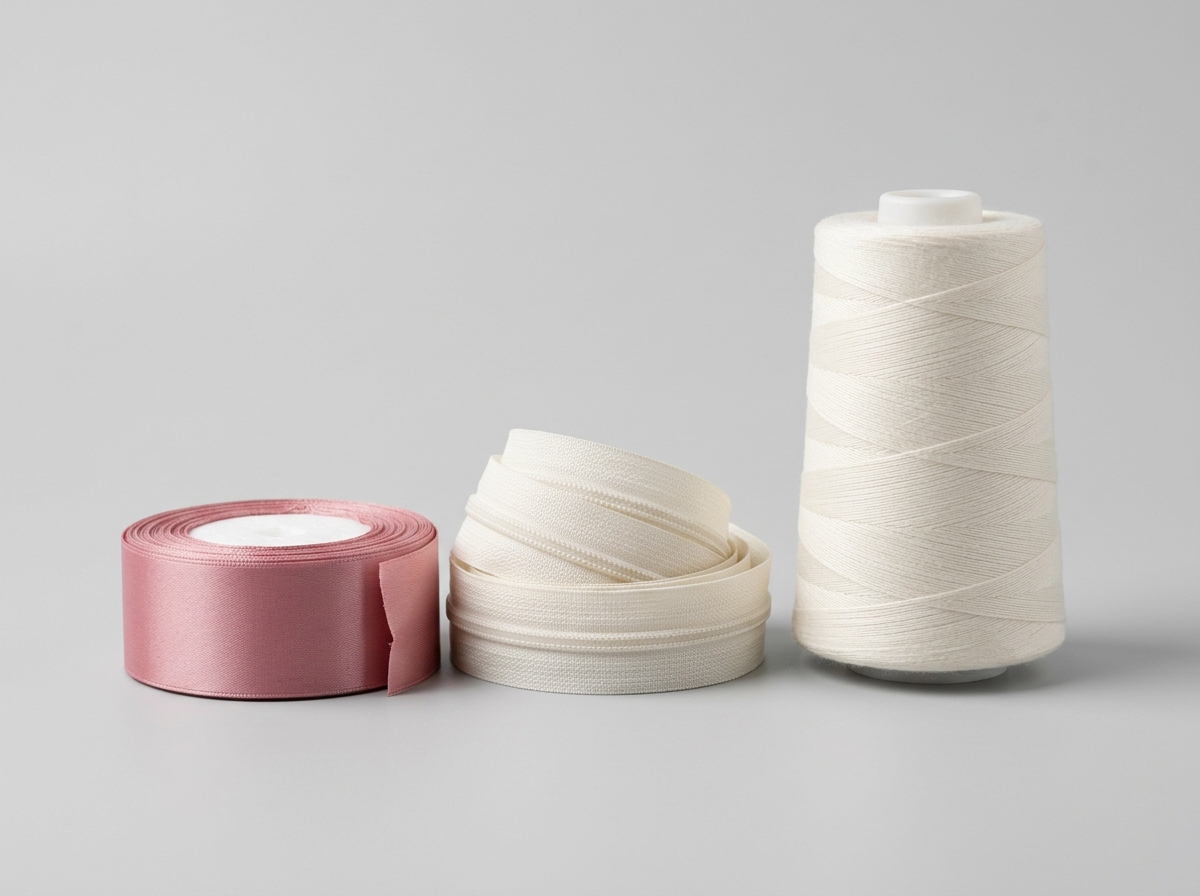
The biggest cost leaks usually come from high-frequency items, not the most expensive ones. Polyester ribbon, sewing thread, invisible zippers, and decorative lace are classic examples because they are ordered often, used across many product lines, and hard to manage when specifications are vague. A buyer may save a few cents per unit but lose far more through returns, line interruptions, or repacking.
For wedding and women’s wear, invisible zippers are a classic hidden-cost item because appearance and function must both be correct. A zipper used in a dress or gown has to blend with the fabric while opening smoothly. If the coil alignment, tape width, or color match is off, the garment may need alterations. For bulk buyers, a invisible zipper lineup is worth sourcing with tighter sample approval than a general-purpose accessory. For DIY and gifting, a polyester ribbon selection carries a different risk: presentation failure can matter as much as mechanical performance.
| Product type | Main hidden cost risk | Key spec to control | Buyer priority |
|---|---|---|---|
| Polyester ribbon | Shade variation and packaging loss | Width, color code, roll length | Color continuity |
| Invisible nylon zipper | Fit and appearance failure | Length, tape width, slider type | Sample approval |
| Polyester sewing thread | Breakage and sewing defects | Count, twist, tensile consistency | Production stability |
| Decorative lace | Style mismatch and dead stock | Pattern, width, stretch, finish | Market alignment |
What standards and numbers matter in procurement decisions
Measured standards matter because they reduce ambiguity during purchasing and inspection. Textile buyers often use test methods to verify whether a material is fit for production before the bulk order is released. For durability testing, ISO 12947-2 describes the Martindale method, which is widely used to assess abrasion resistance under controlled rub conditions. For quality sampling, ISO 2859-1 provides acceptance sampling procedures that help buyers decide whether a shipment batch meets agreed quality levels.
Numbers also matter in the purchasing spec sheet. A sewing operation may require thread package consistency, zipper length tolerance, or ribbon width consistency. Even when the exact tolerance depends on the product, the buyer should insist that the supplier state measurable parameters on the quotation and sample sheet. That is especially important for export orders where repeatability drives margin. The procurement team should document material, size, finish, pack quantity, carton configuration, color reference, and any test requirement before approval.
In quality management terms, the hidden cost of vague specs is uncertainty. A supplier who can quote a clear measurement framework lowers the need for back-and-forth, shortens sample cycles, and reduces claims later. That is why professional wholesale buyers prefer a laces catalog or a product-family directory over single-item browsing: it makes spec comparison easier and supports more disciplined sourcing decisions.
| Standard or control item | What it helps buyer verify | Procurement benefit |
|---|---|---|
| ISO 2859-1 | Acceptance sampling logic | Clear lot decision rules |
| ISO 12947-2 | Textile abrasion resistance | Better durability screening |
| Supplier measurement sheet | Width, length, finish, color code | Fewer spec disputes |
| Sample approval record | Pre-bulk reference control | Lower rework and claim risk |
How to choose a sewing materials supplier for wholesale orders
The right supplier lowers hidden cost by making repeat buying predictable. Wholesale buyers should evaluate the supplier’s ability to hold color consistency, manage MOQ, offer samples, and pack products in a way that supports resale or production use. For standard categories such as ribbon, thread, lace, and zippers, a supplier that can keep specifications stable across replenishment cycles is often more valuable than one that simply quotes the lowest initial price.
Supplier selection should also reflect category behavior. Decorative items often need better visual control, while consumables need tighter batch stability. A DIY crafts catalog is useful for handcraft buyers because it groups tools and accessories into a practical purchasing structure, which helps reduce overbuying. A buyer serving weddings or women’s wear may instead prioritize a supplier’s ability to manage style depth, especially in lace and trim assortments.
- Request a sample before bulk purchase.
- Confirm MOQ, color range, and pack size in writing.
- Ask for a repeat-order sample reference or previous lot standard.
- Verify lead time for both stock and custom packing.
- Check whether the supplier can combine related SKUs in one shipment.
How to build a buying program for wedding, women’s wear, and DIY demand
A good buying program matches product logic to the end market. Wedding sourcing is presentation-led, so lace, ribbon, and decorative trims need tighter visual approval and more attention to packaging. Women’s wear sourcing emphasizes fit, finish, and functional concealment, which makes invisible zippers and stable thread quality more important. DIY sourcing is broader and often more price-sensitive, but it still suffers when pack sizes are awkward or when related items are sold separately without a kit logic.
One practical approach is to map procurement by use case instead of by raw material. A wedding buyer may need coordinated ribbon and lace in the same color family. A women’s wear buyer may need zippers and thread matched to garment production schedules. A DIY retailer may need mixed kits with scissors, needles, thread, and accessories. This kind of category planning reduces the chance of buying too many slow movers while running out of high-frequency essentials. It also makes it easier to align with a sewing tools selection when building bundled offers or replenishment packs.
| End market | Highest priority | Common procurement mistake | Better buying rule |
|---|---|---|---|
| Wedding | Visual consistency | Mixing shades or finishes | Approve one master sample |
| Women’s wear | Fit and concealment | Choosing a zipper by price only | Confirm garment application first |
| DIY | Bundle practicality | Fragmented accessory buying | Group by use scenario |
| Repair and home sewing | Availability and convenience | Overstocking niche trims | Prioritize universal consumables |
What metrics should a buyer track to expose hidden costs
The best procurement teams track metrics that reveal cost leakage before it becomes visible in profit and loss statements. Unit price alone does not show whether a supplier is actually economical. A complete dashboard should include sample pass rate, on-time delivery, defect claims, average replenishment cycle, and emergency freight frequency. Those numbers tell the real story of sourcing performance.
For example, if thread claims are low but urgent orders are frequent, the purchasing team may still be losing money through poor planning. If ribbon quality is acceptable but packaging damage is high, the loss may sit in warehousing rather than production. If lace orders are visually correct but slow to restock, the hidden cost may be missed sales. Better procurement means making these leaks measurable.
- Sample approval rate by SKU family.
- On-time shipment rate by supplier and season.
- Claim rate by batch and product type.
- Emergency freight count per quarter.
- Inventory turnover by ribbon, thread, zipper, and lace category.
Practical procurement checklist for sewing materials buyers
A disciplined checklist prevents most avoidable hidden costs. Buyers should document every critical variable before bulk approval, especially when sourcing from multiple regions or preparing export orders. The checklist does not need to be complicated, but it does need to be consistent.
- Define the end use: wedding, women’s wear, DIY, repair, or packaging.
- Lock the product family: ribbon, zipper, thread, lace, or tool.
- Approve the sample against color, size, finish, and packaging.
- Confirm MOQ, lead time, and replenishment schedule.
- Set acceptance rules using measurable references and inspection criteria.
- Record the approved batch for repeat orders.
- Review the supplier after each cycle for claims and delay patterns.
When this process is followed, the buyer can reduce the chance that a low quote turns into a costly problem. That is the core logic of better sewing materials procurement: fewer surprises, fewer reorders, and fewer losses hidden inside normal operations. For wholesale buyers working with a sewing materials supplier, the real win is not simply buying cheaper. It is buying with enough structure that every repeat order becomes easier, safer, and more profitable.
FAQ
What are the biggest hidden costs in sewing materials procurement?
The biggest hidden costs are color mismatch, spec errors, rush shipping, production rework, and overstock. These costs often exceed the savings from a lower unit price.
How does a procurement strategy reduce cost for sewing materials?
A procurement strategy reduces cost by standardizing specs, consolidating repeat orders, controlling MOQ, and reducing inspection and replacement cycles.
Why are ribbon, thread, and zippers especially sensitive to hidden costs?
They are high-frequency items, so small quality problems repeat often and create large cumulative losses in labor, delay, and claims.
What should I ask a sewing materials supplier before bulk order?
Ask for sample approval, MOQ, lead time, color reference, packing details, and repeat-order consistency for the same SKU.
Which standards are useful for textile procurement quality control?
Common references include ISO 2859-1 for sampling and ISO 12947-2 for abrasion testing.
How can I lower hidden cost in wedding and women’s wear sourcing?
Use master samples, tighter color approval, and application-based buying so ribbon, lace, and invisible zippers match the final garment or decoration purpose.
Is it better to buy sewing accessories as one category or item by item?
For wholesale programs, a category approach is usually better because it improves forecasting, bundling, and replenishment control across related SKUs.

Post time: Aug-25-2026