- Polyester thread is usually the most practical choice for denim, canvas, workwear, and other heavy fabric projects.
- Thread selection should be based on fabric weight, seam type, needle size, and required abrasion resistance.
- Industrial buyers should verify tensile strength, elongation, colorfastness, and spool format before bulk ordering.
- For wholesale sourcing, consistency in twist, lubrication, shade, and package size matters as much as raw strength.
- Matching thread and needle correctly reduces skipped stitches, heat buildup, and seam failure.
Polyester sewing thread is the workhorse of heavy-duty stitching, especially when the seam must resist friction, washing, and repeated bending. For denim and other dense textiles, the practical goal is not just to make a seam hold, but to make it hold after real use. Textile testing standards such as ISO 13934-1 for tensile testing and ASTM D1683 for seam strength help buyers evaluate performance in a consistent way. In factory purchasing, that means checking thread data, not guessing from appearance. If you source sewing thread for production, sewing accessories for workflow support, or scissors for cutting preparation, the same rule applies: choose the tool or consumable that matches the fabric stress, not the cheapest option.
Why polyester sewing thread is the standard choice for heavy fabric projects
Polyester sewing thread is favored for heavy fabrics because it balances strength, flexibility, and abrasion resistance better than many general-purpose alternatives. Denim, twill, canvas, and coated fabrics place more load on the seam than lightweight woven goods, so the thread must survive both tension and friction.
Industrial sewing buyers often compare cotton, polyester, and nylon, but the decision usually comes down to the seam environment. Cotton can be pleasant to sew and presses well, yet polyester generally performs better in wash durability and moisture exposure. Nylon can be very strong, but it is less common for everyday garment seams because heat and surface feel may be less forgiving. For bulk apparel production, polyester is often the most balanced choice.
| Thread type | Typical strength profile | Best use case | Main limitation |
|---|---|---|---|
| Polyester | High tensile strength, good abrasion resistance | Denim, workwear, bags, uniforms | Less natural feel than cotton |
| Cotton | Moderate strength, good sewability | Quilting, heritage garments, light tailoring | Lower wet strength and abrasion resistance |
| Nylon | Very high strength, good elasticity | Luggage, technical seams, upholstery | Heat sensitivity and less garment-standard usage |
For denim, the best thread choice also depends on whether you need a visible topstitch or a hidden structural seam. Topstitching often uses a slightly heavier ticket size to create a strong decorative line, while internal seams may use a lighter size to improve stitch balance and reduce bulk.
How to choose heavy duty sewing thread by fabric weight and seam stress
The right heavy duty sewing thread depends on how much load the seam must carry and how often the garment will flex or rub. Denim hems, crotch seams, bag edges, and jacket seams do not fail in the same way, so they should not all use the same thread size.
A practical rule is to start with the fabric weight, then map the seam’s function. A decorative topstitch on 12 oz denim may need a different setup than an internal overlocked seam on the same fabric. In factory sampling, the thread should be tested with the intended needle and stitch density before bulk production begins.
| Fabric / project | Recommended thread intent | Typical needle range | Buyer priority |
|---|---|---|---|
| Light denim shirts | Standard polyester thread | 90/14 to 100/16 | Smooth stitch formation |
| Jeans and jackets | Heavy duty sewing thread | 100/16 to 110/18 | Seam strength and abrasion resistance |
| Canvas bags | Industrial sewing thread | 110/18 to 120/19 | Low breakage and tension stability |
| Upholstery and workwear | High-tenacity polyester | 110/18 to 125/20 | Flex fatigue resistance |
In denim production, seam performance is not just a visual issue. The thread must withstand repeated bending at stress points such as pockets, belt loops, and crotch seams. If the wrong thread is used, the seam may pass a quick appearance check but fail in wear, laundering, or finishing.
Industrial sewing thread specs that buyers should check before wholesale ordering
Wholesale buyers should compare measurable thread properties instead of relying on product names alone. A supplier may call a line “heavy duty sewing thread,” but the practical value comes from the underlying data: ticket size, filament construction, lubrication, twist consistency, breaking force, and package format.
For industrial procurement, thread data sheets are useful because they reduce ambiguity. The important numbers vary by manufacturer, but the buyer should ask for the same set of specifications every time.
| Specification | Why it matters | What to ask the supplier |
|---|---|---|
| Ticket size | Controls stitch bulk and seam appearance | Available sizes for denim and heavy fabric |
| Breaking strength | Measures load before failure | Test method and unit used |
| Elongation | Affects seam flexibility and recovery | Percent elongation at break |
| Lubrication level | Helps reduce heat and needle friction | Whether thread is lubricated for industrial sewing |
| Color consistency | Critical for garment shade matching | Shade tolerance and lot control |
Seam testing standards help make these comparisons more objective. For example, ISO 105-C06 is widely used for color fastness to domestic and commercial laundering, and ASTM D5035 provides a strip test method for textile breaking force and elongation. Together, these standards help a buyer understand whether the thread will remain visually stable and mechanically reliable after repeated use.
In real purchasing, this matters because heavy fabrics are often sold into demanding end uses. Denim brands care about seam appearance after washing. Workwear buyers care about durability in abrasion-heavy environments. Bag makers care about stitching that does not cut itself under load. The thread specification should reflect that end use.
Denim stitching, seam performance, and why needle-thread matching matters
Needle-thread matching is one of the fastest ways to improve sewing quality on denim and heavy fabrics. Even a strong polyester thread can underperform if the needle eye, point type, and stitch tension are not matched to the fabric.
Denim is a dense woven structure, often with twill ridges and uneven surface friction. That means the needle must create a clean hole without excessive heat or fiber damage. A thread that is too thick for the needle can fuzz, overheat, or shred. A thread that is too light may form a weak seam or a poor visual line.
From a production standpoint, the most common problems are skipped stitches, thread breakage, seam puckering, and needle heating. These issues are often blamed on the machine, but the root cause is frequently a mismatch between thread size, needle size, and fabric density. The fix is usually a systematic sample test, not a larger tension knob.
- Test the exact fabric stack, including pocket layers and seam allowances.
- Use the planned needle system and thread ticket size during sampling.
- Check stitch balance after washing and pressing, not only on the raw seam.
- Inspect topstitch lines under strong light for shade variation and twist irregularity.
For factories producing denim shorts, jackets, or workwear, a stable industrial thread setup can reduce rework and downtime. In practice, the savings come from fewer broken threads, fewer machine stops, and less second-pass repair.
Wholesale buying guide for polyester sewing thread suppliers
Wholesale sourcing should prioritize consistency, not just unit price. A low-cost cone is not economical if it causes higher needle breakage, slower operators, or shade complaints in a production batch.
For B2B buyers, the purchase decision is usually tied to MOQ, sample approval, delivery reliability, and packaging compatibility. If you are buying for garment factories, tailoring chains, or export projects, you should ask for thread samples in the exact color and cone size you plan to run. That is especially important for brands that need repeatable lots across seasons.
| Wholesale factor | Why it affects production | What to confirm before ordering |
|---|---|---|
| MOQ | Impacts cash flow and inventory risk | Minimum per color and per ticket size |
| Sample lead time | Controls approval speed | How quickly test cones can ship |
| Packing format | Must fit machine and storage workflow | Cone weight, carton count, and labeling |
| Shade consistency | Affects garment uniformity | Lot control and reorder matching |
| Delivery schedule | Impacts production planning | Normal production and transit timeline |
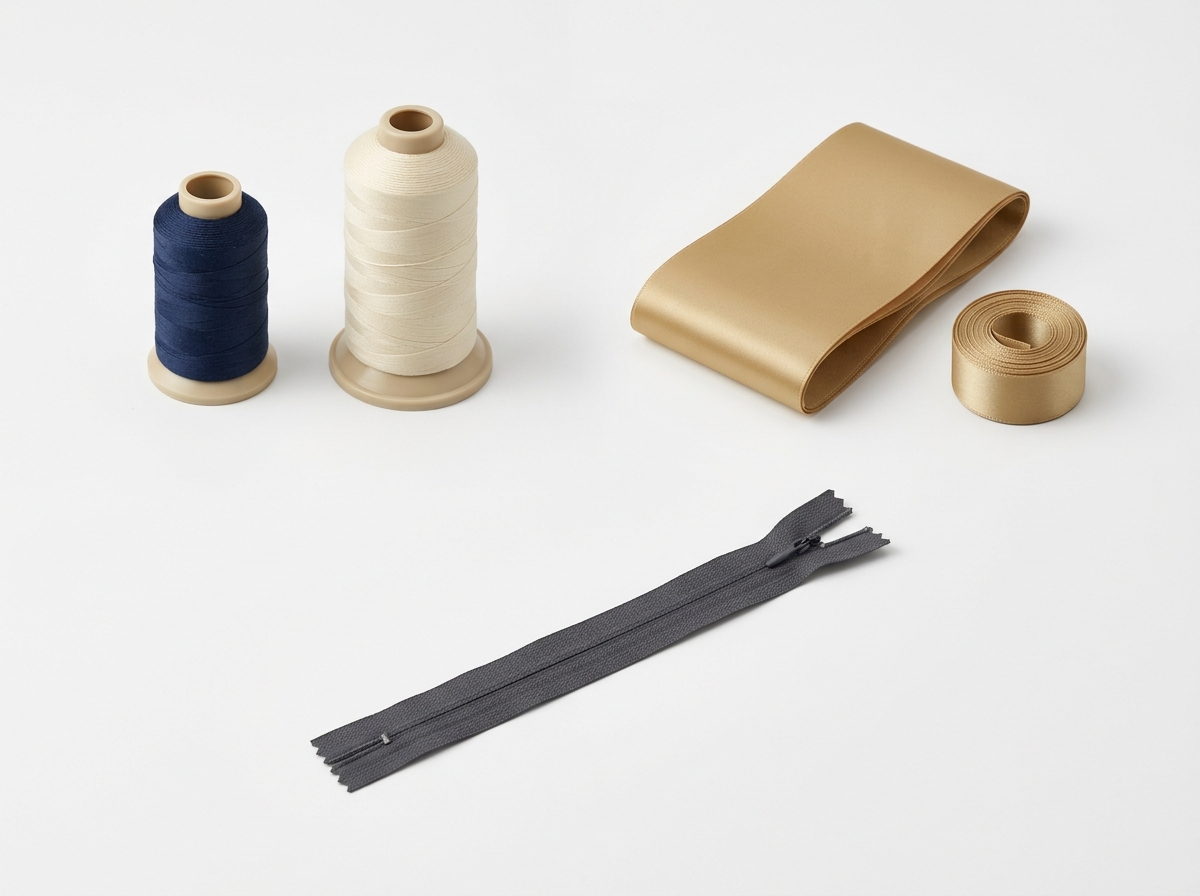
If your sourcing model includes broader trims and accessories, it is often efficient to consolidate orders across categories such as ribbon, lace, and zippers. That can simplify procurement for apparel, wedding, and DIY programs, especially when the same customer buys both consumables and finishing trims.
 Technical standards, test methods, and the numbers that actually matter
Thread quality is easiest to judge when you anchor it to test methods and measurable values. The most useful numbers are the ones that connect directly to seam durability and production stability.
In textile engineering, tensile and seam tests are often used together because a strong fiber does not always create a strong seam. Seam construction, needle damage, and fabric slippage all influence final performance. That is why technical buyers should ask for both thread and seam data.
| Test area | Relevant standard | What it tells the buyer | Why it matters for denim |
|---|---|---|---|
| Textile tensile strength | ISO 13934-1 | Breaking force and extension | Shows fabric load behavior under strain |
| Seam strength | ASTM D1683 | How the seam fails under pull | Helps predict real-world seam durability |
| Colorfastness to washing | ISO 105-C06 | Shade retention after laundering | Important for dyed thread in apparel |
When buyers talk about “industrial sewing thread,” they usually mean thread that can run repeatedly under machine tension without degrading stitch quality. In many production lines, this is more about stability than sheer strength. A thread that performs consistently over a long run is often more valuable than one with a higher label claim but poorer runability.
Common mistakes when selecting thread for heavy fabrics
The most expensive thread mistake is choosing by appearance instead of application. A thick-looking cone can still be wrong for your seam if its construction, lubrication, or size does not match the fabric.
- Buying one thread type for all heavy fabrics instead of separating denim, canvas, and upholstery use cases.
- Ignoring needle size, which can cause skipped stitches and breakage.
- Overlooking wash testing, especially for colored thread in garments.
- Not checking lot consistency for bulk reorder programs.
- Assuming stronger always means better, even when seam bulk becomes a problem.
Another frequent issue is underestimating seam geometry. Flat seams on jeans behave differently from corner reinforcements on bags or multi-layer cuffs on workwear. The correct thread is the one that survives the most stressed point in the product, not the easiest straight seam on the sample.
Which polyester sewing thread is best for denim, workwear, and bags?
The best thread is the one that fits the fabric’s stress profile and the production line’s equipment limits. For denim apparel, a balanced polyester thread with good abrasion resistance is usually the practical winner. For bags and upholstery, a higher-tenacity industrial sewing thread may be the better choice. For mixed garment programs, buyers often standardize one or two thread systems and then adjust ticket size by application.
That approach helps control procurement complexity. It also makes machine setting easier because operators deal with fewer variable combinations. For wholesale buyers, a simpler thread matrix can reduce training time, sampling delays, and stock fragmentation.
If you are building a sourcing package for apparel factories, wedding workwear, DIY makers, or repair channels, the thread decision should be integrated with the rest of the trim set. A buyer who is already sourcing sewing accessories often benefits from a compatible thread range that covers garment repair, assembly, and finishing in one procurement cycle.
FAQ
What is the best polyester sewing thread for denim?
The best polyester sewing thread for denim is usually a durable, low-breakage thread with enough body to hold a visible seam without creating excess bulk. The right size depends on whether the seam is decorative topstitching or structural construction.
Is heavy duty sewing thread always better for thick fabric?
No. Heavy duty sewing thread can be too bulky for some seams, which may increase puckering or cause needle problems. The best option is the thread that matches the fabric weight and seam function.
Why do industrial sewing thread suppliers ask about needle size?
Needle size affects friction, hole formation, and stitch consistency. A thread that is too large for the needle can fray or overheat, while a poor match can reduce seam quality.
Can polyester thread be used for both garments and bags?
Yes, but the ticket size and construction may need to change. Garments often need smoother stitch appearance, while bags usually need higher seam durability and abrasion resistance.
What should wholesale buyers request before placing a bulk order?
They should request samples, color references, ticket size data, packaging details, and the supplier’s standard lead time. For repeat orders, lot consistency is just as important as price.
How do I reduce thread breakage on denim machines?
Start by matching thread size to needle size, checking tension settings, and confirming that the thread is lubricated for industrial use. Then test the full seam stack, not only a single layer.
What standards help verify thread and seam quality?
Useful references include ISO 13934-1 for tensile testing, ASTM D1683 for seam strength, and ISO 105-C06 for wash fastness.

Post time: Sep-22-2026