- Garment trims are a system, not a single product category: ribbon, zippers, thread, lace, and tools each solve different sourcing problems.
- For bridal and womenswear, invisible nylon zippers and decorative lace dominate because they protect silhouette and finish quality.
- Bulk buyers should evaluate MOQ, sample approval, shade consistency, and packing format before negotiating unit price.
The right garment trims strategy in 2026 starts with technical fit, not catalog browsing. Textile performance standards such as ISO 105-C06 for wash fastness and ASTM D4964 for extensibility testing are useful reference points when you compare apparel trims for dresses, weddingwear, and DIY production. For buyers sourcing from a garment accessories manufacturer, the real goal is a stable supply of trims that keep appearance, function, and cost aligned across repeat orders.
What premium garment trims actually include in a wholesale buying program
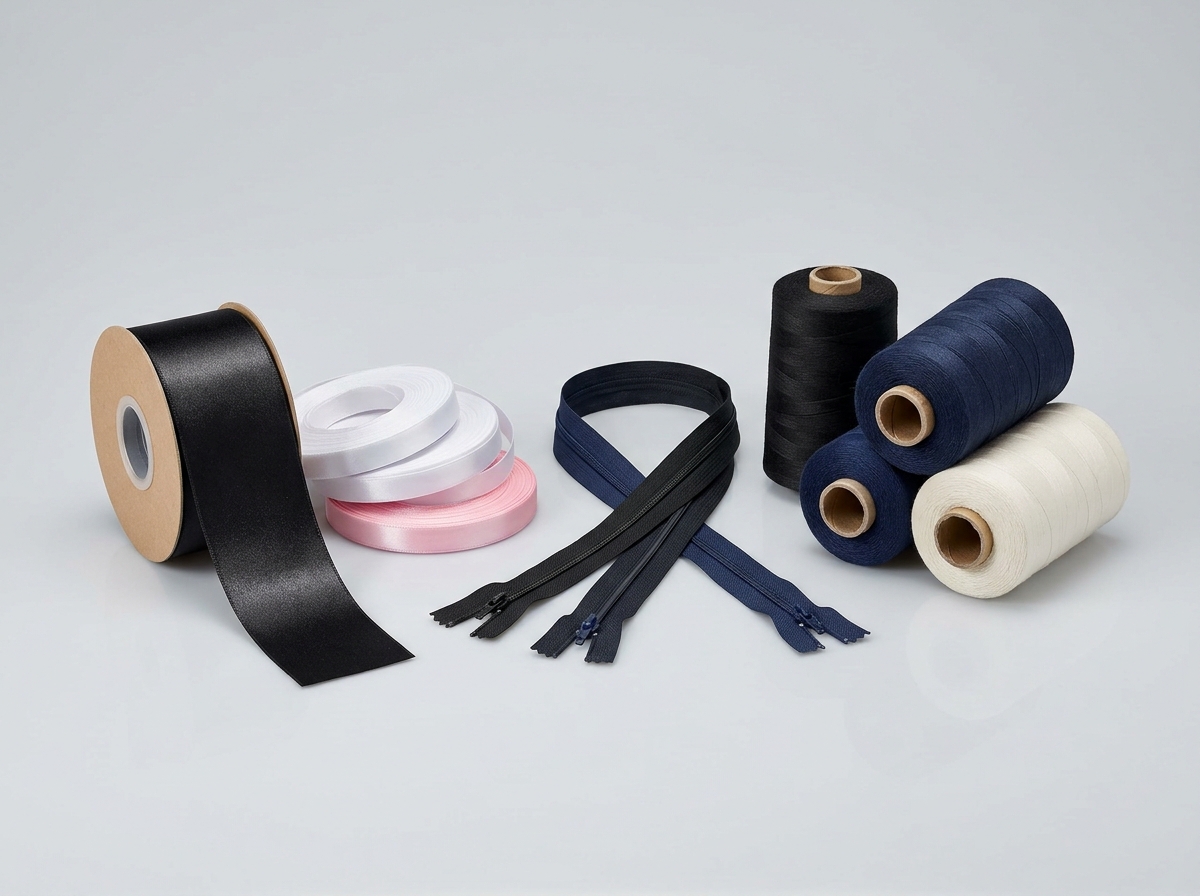
Premium garment trims cover both visible decoration and hidden functional components. In wholesale purchasing, that usually means ribbon, invisible zippers, sewing thread, lace, sewing kits, crochet tools, scissors, and other sewing accessories that support production, repair, and presentation.
In real sourcing workflows, this matters because one supplier often supports multiple use cases. A ribbon order may go to gift packaging, wedding decor, or apparel finishing. A lace order may serve bridal gowns, women’s tops, or home textile edging. The same buyer may also need thread and scissors in the same shipment to reduce vendor fragmentation.
For exporters, this mix creates a practical advantage: trim categories can be bundled into one procurement cycle, which reduces purchase admin and simplifies inspection. That is why a catalog-based supplier model often outperforms a single-SKU approach for overseas buyers.
| Trim category | Typical use case | Buyer priority | Common procurement risk |
|---|---|---|---|
| Polyester ribbon | Gift wrap, weddings, apparel decoration, crafts | Color, width, finish | Shade variation between lots |
| Invisible nylon zipper | Dresses, gowns, womenswear | Concealment, glide, length accuracy | Wave effect after sewing |
| Polyester sewing thread | Factory sewing, home sewing, repair | Strength, twist uniformity | Thread breakage under high speed |
| Lace | Bridal, fashion, home textiles | Hand feel, pattern clarity, edge finish | Pattern distortion after washing |
Garment trims material guide: polyester, nylon, and TC blends
Material choice is the fastest way to narrow the right apparel trims. Polyester is the workhorse for ribbon, thread, and many lace constructions because it is stable, economical, and easy to source in bulk.
Nylon is preferred when flexibility and soft movement matter, especially in invisible zippers and stretch-adjacent trim structures. TC blends, usually polyester-cotton combinations, are often selected when buyers want a more natural look with better wear resistance than pure cotton in edging applications.
For procurement teams, the key is to map fiber behavior to end use. A wedding dress trim is judged differently from a repair kit component. A decorative lace may prioritize hand feel and pattern definition, while a sewing thread must prioritize consistency under machine speed.
| Material | Strength profile | Appearance profile | Best-fit end use | Buyer note |
|---|---|---|---|---|
| Polyester | High dimensional stability | Bright, consistent dye uptake | Ribbon, thread, everyday lace | Best for bulk repeat orders |
| Nylon | Flexible, resilient | Smooth and discreet | Invisible zippers | Check zipper glide and tooth alignment |
| TC blend | Balanced durability | Natural-leaning hand feel | Edging, decorative borders | Good compromise for mixed-use buyers |
For decorative lace, buyers often compare polyester lace, wedding lace, eyelash lace, elastic lace, woven lace, and sewing lace within the same assortment. That mix is valuable because each SKU serves a distinct merchandising story. One line may focus on bridal finishing, another on women’s apparel, and another on home textile edging.
How to choose apparel trims for dresses, weddings, and DIY production
The best trim choice depends on use context more than on raw material name. Bridal buyers care about silhouette, drape, and visual purity. Womenswear buyers care about comfort, flexibility, and line cleanliness. DIY buyers care about ease of use, package completeness, and forgiving performance.
For weddingwear, lace and invisible zippers usually sit at the top of the spec list. Lace contributes visible surface value, while hidden zippers preserve a clean back closure. This is especially important for fitted gowns, bridesmaid dresses, and formalwear where the closure must disappear.
For DIY and craft channels, ribbon and sewing accessories matter because they support multiple projects without requiring industrial equipment. A wholesale box that includes thread, scissors, needles, and a sewing kit is more likely to convert than a single trim SKU when the buyer is a small studio or online reseller.
- Start with garment category: dress, bridal, fashion top, home textile, or craft.
- Decide whether the trim is functional, decorative, or both.
- Confirm width, length, color code, and packaging format before sampling.
- Test sewing behavior, hand feel, and visual consistency on real fabric.
- Approve bulk only after sample and production lot match.
One useful benchmark for quality expectations is textile dimensional stability testing under standardized conditions. ISO 5077 defines methods for determining dimensional change after washing and drying, which is relevant when you compare trims that must keep their shape after garment care cycles. That is especially important for lace and decorative edging that can buckle or distort after laundering.
 Garment accessories manufacturer criteria: what wholesale buyers should verify
A serious garment accessories manufacturer should be judged by process control, not just product variety. When sourcing apparel trims in bulk, buyers should verify sample approval flow, dye lot stability, packaging consistency, and lead-time transparency.
The most common wholesale pain points are not dramatic product failures. They are small inconsistencies that scale badly: a lace pattern that shifts slightly, a ribbon width that varies from lot to lot, or a zipper pull that does not match the dress design. Those issues create rework, delays, and customer complaints.
In apparel trim sourcing, MOQ and sampling matter because they determine how quickly the buyer can validate color, touch, and sewing performance. Even when the unit price is attractive, a poor sample process can erase margin through rejects and returns.
| Buying criterion | Why it matters | What to check | Typical acceptance focus |
|---|---|---|---|
| MOQ | Affects inventory risk | Minimum quantity per color/size | Fits forecast and reorder cycle |
| Sample lead time | Controls speed to market | Days from request to ship | Fast enough for seasonal launches |
| Color consistency | Reduces visual mismatch | Lab dip, shade card, lot sample | Same tone across repeat orders |
| Packing format | Protects trim condition | Roll length, reel type, carton spec | Low deformation and easy counting |
For buyers who need documented performance language, NIST SI Units is a useful reference for consistent measurement communication. Even simple items such as ribbon width, zipper length, and lace repeat dimensions benefit from clear metric notation in supplier documents, especially when orders move across borders and multiple inspection teams.
Material performance data that matters for trim sourcing
Quantifiable performance data is the best defense against expensive sourcing mistakes. In trims procurement, that means asking for measurable attributes rather than vague descriptions.
For thread, common commercial polyester sewing thread is often specified in ticket sizes and tested for tensile behavior and elongation. For zippers, buyers typically care about slider smoothness, tape stability, and tooth alignment rather than only visual appearance. For lace, the meaningful metrics are width, pattern repeat, edge definition, and post-wash dimensional retention.
Textile and apparel quality programs often reference standardized test methods rather than supplier claims. That makes your internal approval process easier to defend when you compare multiple vendors.
| Measured attribute | Why it matters | Reference source | Practical sourcing action |
|---|---|---|---|
| Wash fastness | Predicts color durability | ISO 105-C06 | Request wash-test results for dyed trims |
| Dimensional change | Shows shrinkage or distortion | ISO 5077 | Check after wash and dry cycles |
| Extensibility behavior | Important for stretch-adjacent trims | ASTM D4964 | Use for elastic or flexible trim evaluation |
| Metric unit control | Prevents order errors | NIST SI Units | Specify width, length, and tolerance in mm |
In production, many buyers work with practical tolerance bands even when they do not write a full engineering spec. A ribbon width might be managed at a nominal size with a small manufacturing tolerance, while a zipper length must align with garment pattern allowances. The more precise the garment, the more important the trim tolerance becomes.
How premium garment trims support wedding, women’s, and DIY markets
Market use case should determine trim assortment, not the other way around. Wedding buyers usually want elegant surface detail, subtle closure solutions, and consistent color storytelling across veil, gown, and table decor lines.
Women’s fashion buyers usually need trims that disappear into the garment or support a restrained decorative effect. That makes invisible zippers, refined lace, and clean ribbon finishes especially valuable. DIY buyers, by contrast, often prefer multipurpose kits and easy-to-use accessories that reduce setup time.
This is why a catalog strategy that groups trims by application can outperform a pure product list. It helps buyers visualize the final result, compare options faster, and place larger basket orders.
- Wedding sourcing: prioritize lace pattern clarity, soft hand feel, and elegant packaging.
- Women’s apparel sourcing: prioritize low-profile closures, comfort, and repeatable color matching.
- DIY sourcing: prioritize convenience, bundled tools, and broad project compatibility.
For a trim category mix built around export and wholesale, the most useful internal product navigation is often by use case. Buyers can move from ribbon to zipper to lace to tools without leaving the procurement context. For example, see ribbon wholesale options, zippers for apparel applications, lace assortments for dresses and weddings, and sewing accessories for bulk buyers.
Procurement checklist for apparel trims in 2026
A disciplined checklist reduces defects more effectively than price negotiation alone. Before confirming bulk apparel trims, buyers should validate the sample against the finished garment or intended craft project.
- Confirm fiber content and construction type.
- Check actual width, length, and repeat pattern against the quote.
- Review color under daylight and indoor lighting.
- Test sewing behavior on the intended fabric weight.
- Inspect packaging for deformation, dirt, or moisture exposure.
- Verify carton count, labeling, and reorder code structure.
- Approve lead time and buffer stock rules for repeat demand.
When buyers skip these steps, the failure mode is usually not catastrophic. It is cumulative. A small mismatch in lace tone, a slightly stiff zipper tape, or an underpacked carton can increase work at every downstream stage. Over a season, those frictions become real cost.
If you need standardized terminology for textile and sewing quality control, the ASTM textile standards collection is a practical reference point for suppliers and QA teams. It helps align language around test methods, material behavior, and repeatable evaluation.
Common mistakes when buying garment trims wholesale
The biggest sourcing mistakes come from treating trims as interchangeable commodities. They are not interchangeable once they enter real garments, especially in bridal and womenswear.
First, buyers often compare only unit price and ignore end-use performance. Second, they request samples without specifying fabric context, which makes sewing results misleading. Third, they fail to separate decorative trim criteria from functional trim criteria.
Another common issue is overbuying one standard and underbuying another. A supplier may have strong ribbon capacity but weak lace variety, or excellent zipper consistency but limited wedding-focused options. That is why a broad but organized trim supplier often works better than a narrow one for mixed-category sourcing.
- Do not approve lace by photo alone; check edge behavior and pattern repeat.
- Do not approve zippers without testing seam insertion and slider movement.
- Do not approve thread solely by color; test breakage and stitch appearance.
- Do not ignore packaging; crushed trims create unnecessary QC loss.
FAQ on garment trims, apparel trims, and wholesale sourcing
What are garment trims?
Garment trims are the visible and functional components used to finish, fasten, decorate, or support a garment. They include items such as ribbon, lace, zippers, thread, buttons, and sewing accessories.
What are the most important apparel trims for dresses?
For dresses, the most important apparel trims are usually invisible zippers, lace, and sewing thread because they affect closure quality, silhouette, and finish.
How do I choose a garment accessories manufacturer?
Choose a garment accessories manufacturer that can provide clear samples, consistent color control, stable lead times, and documented quality checks for each trim category.
Is polyester better than nylon for garment trims?
Polyester is usually better for stable, repeatable bulk items such as ribbon and thread, while nylon is often better for soft, flexible applications such as invisible zippers.
Why is lace important in wedding and women’s apparel?
Lace adds surface value, pattern detail, and premium appearance, which is why it remains important in bridalwear, formalwear, and feminine fashion lines.
What should I check before a bulk trim order?
Check MOQ, sample quality, width or length accuracy, color consistency, packaging format, and the expected lead time for repeat orders.
Why are sewing accessories often sold together?
Sewing accessories are often sold together because buyers want one shipment that supports production, repair, and DIY use without managing multiple suppliers.

Post time: Sep-14-2026