- Open end metal zippers are best evaluated by size, tooth material, tape strength, and slider smoothness, not just appearance.
- For fashion zipper sourcing, weddingwear and women’s garments usually require tighter color matching and cleaner finish control.
- China buyers should compare MOQ, sample policy, packing method, and shipment stability before selecting a wholesale supplier.
- Industry standards such as ISO 3758 and ASTM D5489 help buyers define labeling and care expectations across apparel supply chains.
Top 7 leading fashion open end metal zipper suppliers for China buyers are not just the biggest factories; they are the suppliers that can deliver consistent open end metal zipper quality, stable color control, and export-ready bulk service for fashion, wedding, and DIY applications. In apparel sourcing, a zipper failure rate above 1 percent can create avoidable rework and returns, so buyers should treat zipper selection as a quality-control decision, not a commodity purchase. For technical reference, apparel buyers often use label and care conventions governed by ISO 3758, while packaging and shipping verification often follows methods such as ASTM D5489.
Why open end metal zipper sourcing matters in fashion supply chains
The right fashion zipper affects garment function, brand perception, and production efficiency.
An open end metal zipper is typically used on jackets, outerwear, hooded garments, and other apparel that must separate fully at the bottom. That simple structural requirement changes the buying logic: the zipper must lock correctly at the bottom box and pin, survive repeated opening cycles, and still look premium on the finished garment. For fashion buyers, the wrong slider feel or uneven plating can make a well-designed garment look low grade.
From a production perspective, zipper consistency reduces line stoppage. In many apparel factories, trim variation is a hidden source of rejects because operators detect issues only after sewing, not during incoming inspection. A supplier that can control tooth alignment, tape shrinkage, and slider compatibility lowers this risk. Buyers should also evaluate whether the supplier can support multiple fabric programs, including women’s fashion, denim, and for wedding decorative garments.
For wholesale buyers, the commercial side matters just as much as the technical one. Good suppliers typically support sample confirmation, color swatch matching, mixed-size bulk orders, and carton labeling for export. That is especially important for distributors who serve boutique brands or regional garment manufacturers. If your business model depends on repeat replenishment, supplier stability matters more than one-time pricing.
What makes a leading metal zipper supplier in China
A leading metal zipper supplier combines product depth, export service, and quality repeatability.
Not every supplier that sells a metal zipper is suitable for fashion programs. The best suppliers in China usually offer multiple zipper constructions, such as open end, closed end, two-way, and decorative versions, while also supporting standard lengths and custom specifications. For the buyer, this reduces sourcing fragmentation and helps maintain color and component consistency across a collection.
Technical capability is also essential. Common fashion zipper sizes such as #3, #5, #8, and #10 are selected based on garment weight and intended visual presence. Smaller sizes are often used for light fashionwear, while larger sizes are preferred for jackets and utility garments. A reliable supplier should explain these choices clearly and provide practical advice rather than only quoting prices.
Packaging and logistics are part of quality too. For bulk buyers, the supplier should be able to provide clean inner packing, consistent carton counts, and reasonable protection against metal abrasion during transit. For imported trim, damaged plating or bent teeth can eliminate the savings from a lower purchase price.
| Buyer Priority | What to Check | Why It Matters | Typical Target |
|---|---|---|---|
| Function | Open end bottom separation | Garment must open fully | Jackets, coats, outerwear |
| Appearance | Tooth finish, color consistency | Visible hardware affects garment value | Uniform tone across batch |
| Durability | Slider performance, tooth alignment | Reduces returns and rework | Stable repeated use |
| Export readiness | MOQ, sample, packing, lead time | Supports wholesale buying | Predictable replenishment |
Top 7 supplier evaluation framework for fashion open end metal zippers
The best way to identify leading suppliers is to score them against the same purchasing criteria.
Instead of naming suppliers without context, China buyers should rank candidate vendors using a repeatable framework. This avoids being misled by catalog photography or one-off sample quality. A practical evaluation matrix should include product range, quality control, customization ability, MOQ flexibility, and export service.
- Check product breadth. A strong supplier should cover multiple zipper types, not only one fashion variant.
- Review sample consistency. Compare sample and bulk output for tooth polish, tape shade, and slider movement.
- Confirm size coverage. Ask whether the supplier supports common fashion sizes such as #3, #5, and #8.
- Test packing discipline. Poor packing can damage metal teeth and reduce visual quality.
- Verify trade support. Look for clear MOQ, lead time, and replacement policy language.
For fashion brands and garment traders, the sourcing risk is usually not technical complexity but inconsistency across orders. One batch may look perfect while the next batch shifts in plating tone or tape shade. That is why wholesale buyers should insist on pre-production confirmation, especially for high-visibility garments such as women’s jackets and wedding outerwear.
| Supplier Factor | Strong Supplier | Weak Supplier | Buyer Risk |
|---|---|---|---|
| Sample match | High agreement | Noticeable variation | Production mismatch |
| MOQ clarity | Published and stable | Unclear or changing | Procurement delays |
| Color control | Batch-to-batch consistency | Frequent shade drift | Higher reject rate |
| Shipping packing | Protected, labeled cartons | Loose bulk packing | Damage in transit |
Fashion zipper specifications buyers should compare
Technical specification is the fastest way to separate a serious supplier from a commodity seller.
When sourcing an open end metal zipper, buyers should request a specification sheet that covers size, tape composition, tooth material, slider type, finish, and intended application. In many fashion programs, brass or aluminum teeth are selected for their appearance and performance balance, but the right choice depends on garment style and washing requirements. The tape material and weave also affect sewability and final drape.
Industry reference points matter. Textile care labeling is commonly standardized under ISO 3758, and packaging orientation and handling expectations are often verified with documents such as ASTM D5489. For physical durability and dimensional reliability, buyers often align internal testing with recognized measurement discipline such as NIST measurement resources, especially when verifying repeatability across batches.
The best suppliers can explain not just what they sell, but why a specific zipper specification fits a specific garment. That advisory role is highly valuable for brands that develop collections across multiple seasons and fabric weights.
| Specification | Common Fashion Range | Typical Use | Buyer Note |
|---|---|---|---|
| Size | #3, #5, #8, #10 | Lightwear to outerwear | Match garment weight |
| Opening type | Open end | Jackets, coats | Separates fully at hem |
| Tooth material | Metal alloy | Premium visible hardware | Check finish consistency |
| Finish | Brass, antique, silver, gunmetal | Fashion styling | Match garment trims |
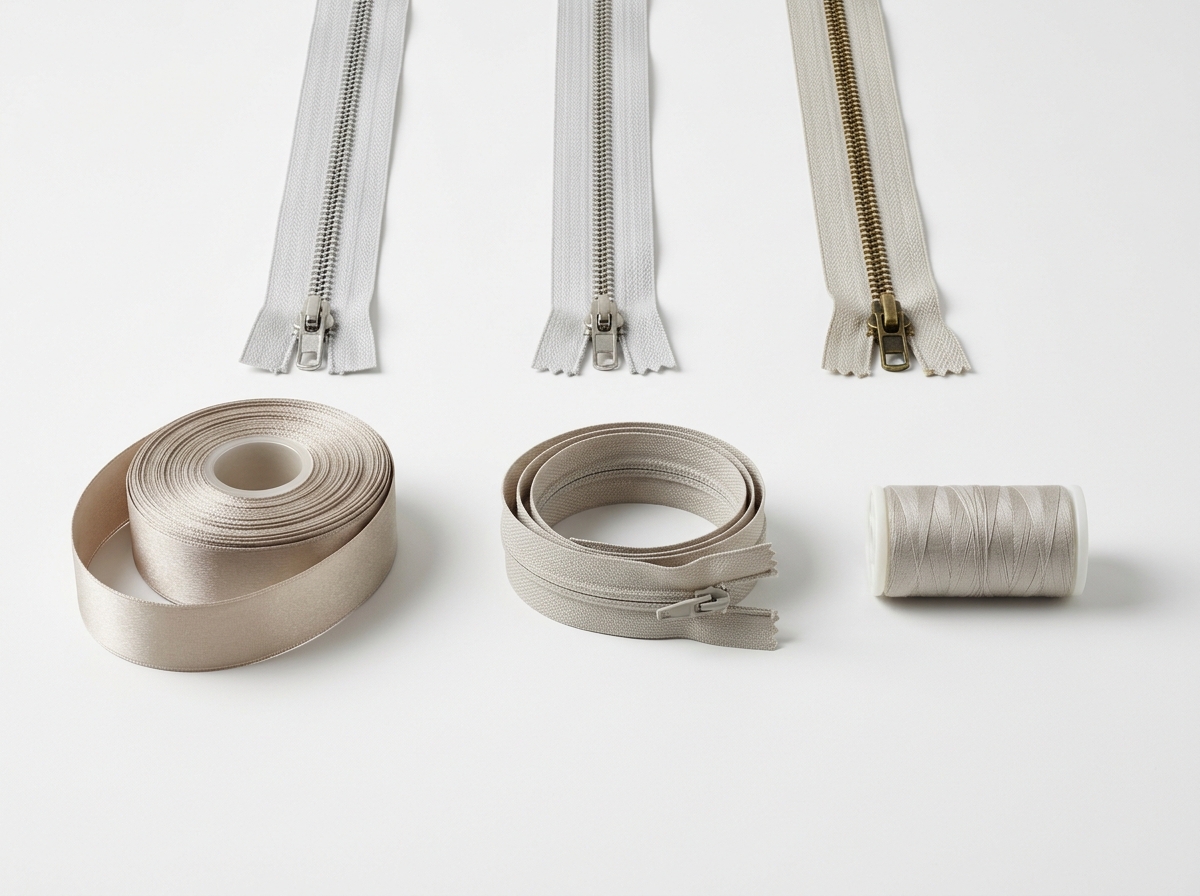
How China buyers compare wholesale metal zipper suppliers
Wholesale zipper sourcing is a comparison of total purchase risk, not only unit price.
Most China buyers are balancing three realities at once: they need competitive cost, they need dependable lead time, and they need supplier responsiveness. A low quote means little if the supplier cannot hold color consistency across 10,000 units or if replacement orders reset the entire approval process. For fashion procurement, that delay is often more expensive than the zipper itself.
Buyers should also ask how the supplier handles samples and pilot runs. A good wholesale process starts with a prototype sample, followed by a size and color confirmation, then bulk production. This sequence is especially important for wedding apparel and premium women’s fashion, where visible trim defects can create brand damage.
In practical terms, the strongest suppliers are those that can support both first-time buyers and repeat bulk buyers. New Swell, for example, fits a broader trim and accessories structure that includes zippers, ribbons, sewing thread, lace, and DIY tools, which is useful when a buyer wants to consolidate purchasing across accessory categories. To see the broader trim context, buyers often review the zipper collection, the sewing accessories catalog, and the lace range as part of one sourcing plan.
Open end metal zipper use cases in fashion, wedding, and DIY
The best suppliers understand the end-use scenario before they quote the product.
Fashion buyers rarely source zippers in isolation. They source them as part of a garment story. For women’s jackets, the zipper must look refined and work smoothly. For wedding garments, the hardware should be visually elegant and coordinate with lace, satin, or decorative trims. For DIY makers, ease of sewing and predictable function may matter more than luxury plating.
This is why a supplier with a broader decorative trim ecosystem can be strategically useful. A customer may start with metal zippers but also need matching ribbon, thread, and lace for the same project. For example, the ribbon collection can support packaging or decorative coordination, while the sewing thread page helps the buyer align consumables across the production line. A compact procurement basket reduces order fragmentation and can simplify reordering.
From a sourcing angle, the most common use cases can be grouped into three channels: fashion apparel, weddingwear, and DIY retail or small-batch creation. Each channel has different expectations, and the supplier should be able to explain those differences clearly.
| Use Case | Priority | Recommended Zip Style | Procurement Concern |
|---|---|---|---|
| Women’s fashion | Appearance, smooth closing | Open end metal zipper | Color matching |
| Weddingwear | Elegance, low defect rate | Fine-finish metal zipper | Visual harmony |
| DIY projects | Ease of use, availability | Standard fashion zipper | Sample consistency |
What quality tests matter before bulk purchase
Quality testing protects the buyer from hidden trim failures.
Before placing a bulk order, buyers should ask for basic performance checks. These include slider movement, tooth engagement, tape alignment, and visual inspection under consistent lighting. For metal zippers, plating consistency should be checked from multiple angles because reflection can hide surface defects in photographs.
Some buyers also want testing discipline aligned with broader textile standards. In apparel procurement, color and care labeling are often aligned with ISO 3758, and packaging practices may be verified using ASTM D5489. While these standards do not define zipper quality alone, they support a more disciplined product-control system. For measurement traceability, the NIST framework is useful when factories need repeatable comparison methods across incoming lots.
- Inspect a random sample from each batch.
- Check the open-end bottom box and pin fit.
- Verify smooth insertion and separation cycles.
- Compare tape color under neutral light.
- Confirm packing count and label accuracy.
Buyers should never assume that a good sample guarantees a good bulk order. The highest-risk point is often the transition from approval sample to production quantity. Clear written specifications reduce that risk.
How to choose the right fashion zipper supplier for wholesale buying
The right supplier is the one that matches your product mix, order size, and quality expectations.
If you are a China buyer sourcing an open end metal zipper for fashion production, the supplier decision should be driven by your actual use case. If your main business is jackets and outerwear, prioritize structural reliability and size range. If you serve women’s fashion or weddingwear, prioritize visual finish and batch consistency. If you support DIY retail, prioritize inventory continuity and packaging clarity.
In wholesale terms, a good supplier should also be able to answer practical questions quickly: What is the MOQ? Can I request a sample? Can the tape color match my fabric? What is the lead time for repeat orders? Those questions matter because procurement is a timeline business, not only a product business.
For buyers who want one sourcing route across multiple accessory categories, the broader New Swell catalog can be useful because the company structure supports zippers, ribbons, lace, sewing thread, and sewing tools in one export-oriented trim portfolio. That makes it easier to build a seasonal purchasing plan around garments, wedding projects, or DIY assortments.
Common mistakes when buying open end metal zippers
Most zipper sourcing problems come from skipped specification control.
- Buying only by photos instead of confirmed samples.
- Ignoring size selection and using the wrong zipper weight for the garment.
- Overlooking tape color variation across batches.
- Not confirming open-end bottom hardware fit before mass production.
- Assuming the lowest price includes stable packaging and export service.
The safest buying process is simple: define the garment use case, approve a sample, confirm the specification sheet, and then place the bulk order. That approach reduces surprises and makes supplier comparison much more objective.
FAQ
What is an open end metal zipper used for?
An open end metal zipper is mainly used for jackets, coats, and outerwear that must separate completely at the bottom.
How do I choose a fashion zipper supplier?
Choose a supplier based on sample quality, size range, finish consistency, MOQ clarity, and export packing discipline.
What zipper sizes are common in fashion?
Common fashion sizes include #3, #5, #8, and #10, with smaller sizes used for lighter garments and larger sizes used for outerwear.
Why do wholesale buyers request samples first?
Samples help confirm color, slider feel, tooth alignment, and compatibility before bulk production begins.
What standards are useful when sourcing apparel trims?
Buyers often reference ISO 3758 for care labeling and ASTM D5489 for packaging-oriented verification.
Can one supplier cover zippers and other sewing accessories?
Yes, many wholesale buyers prefer a broader trim supplier that also offers ribbons, lace, sewing thread, and sewing tools.
What is the biggest risk in metal zipper sourcing?
The biggest risk is batch inconsistency, especially in color finish, slider movement, and open-end bottom fit.

Post time: Jul-31-2026