- Reliable nylon long chain zipper suppliers are judged by process control, not by price alone.
- For wholesale buyers, zipper roll consistency matters more than single-piece appearance.
- Dress, wedding, and DIY applications require different zipper tape and coil specifications.
- MOQ, lead time, and color matching are core procurement variables for bulk buyers.
- Independent standards such as ISO 4915 and ASTM D2061 help buyers evaluate stitching and zipper performance.
Nylon long chain zipper sourcing is a specification-driven purchase, and the wrong choice can create rework, seam distortion, or shade mismatch in bulk apparel programs. In the zipper industry, quality often depends on controlled testing rather than visual inspection, and buyers can reference ISO 4915 for stitch types, ASTM D2061 for zipper strength testing, and NIST metrology resources for measurement discipline. For wholesale programs, a practical target is to request production samples, documented color cards, and batch inspection records before any roll order is confirmed. If your business sells dresses, bridalwear, or DIY sewing kits, a supplier like New Swell product catalog and company profile should be evaluated by export readiness, not only by catalog breadth.
What Makes a Nylon Long Chain Zipper Manufacturer Reliable?
A reliable nylon long chain zipper manufacturer is the one that can keep its zipper roll geometry stable from sample to shipment. In wholesale purchasing, small deviations in coil density, tape width, or slider fit can become major defects after cutting and sewing, especially in long runs for dresses and women’s apparel.
For buyers, the first sign of reliability is process control. The factory should be able to explain how it controls monofilament extrusion, coil winding, dyeing, and final inspection. If those steps are managed inconsistently, the zipper may look acceptable in a sample but fail during high-volume sewing or washing.
| Buyer check | Why it matters | Typical evidence requested |
|---|---|---|
| Coil uniformity | Prevents jamming and visible waviness | Sample roll, inspection report |
| Tape width consistency | Supports seam accuracy in garment assembly | Measurement sheet, QC photos |
| Color lot control | Reduces shade variation across bulk orders | Color card, dye batch number |
| Slider compatibility | Ensures smooth opening and closing | Test fit data, pull test |
The second sign is testability. A serious zipper manufacturer can perform or document pull resistance, dimensional checks, and operational smoothness tests. ASTM D2061 is relevant because it covers tests for zippers used in apparel and other sewn products, giving buyers a structured way to compare suppliers beyond appearance. That matters in B2B sourcing because repeated failures are expensive even when the unit price is low.
The third sign is supply discipline. Bulk buyers need predictable MOQ, lead time, and packing methods. A factory that can only quote an attractive sample price but cannot maintain carton labeling, color separation, and repeat orders is not truly reliable for wholesale.
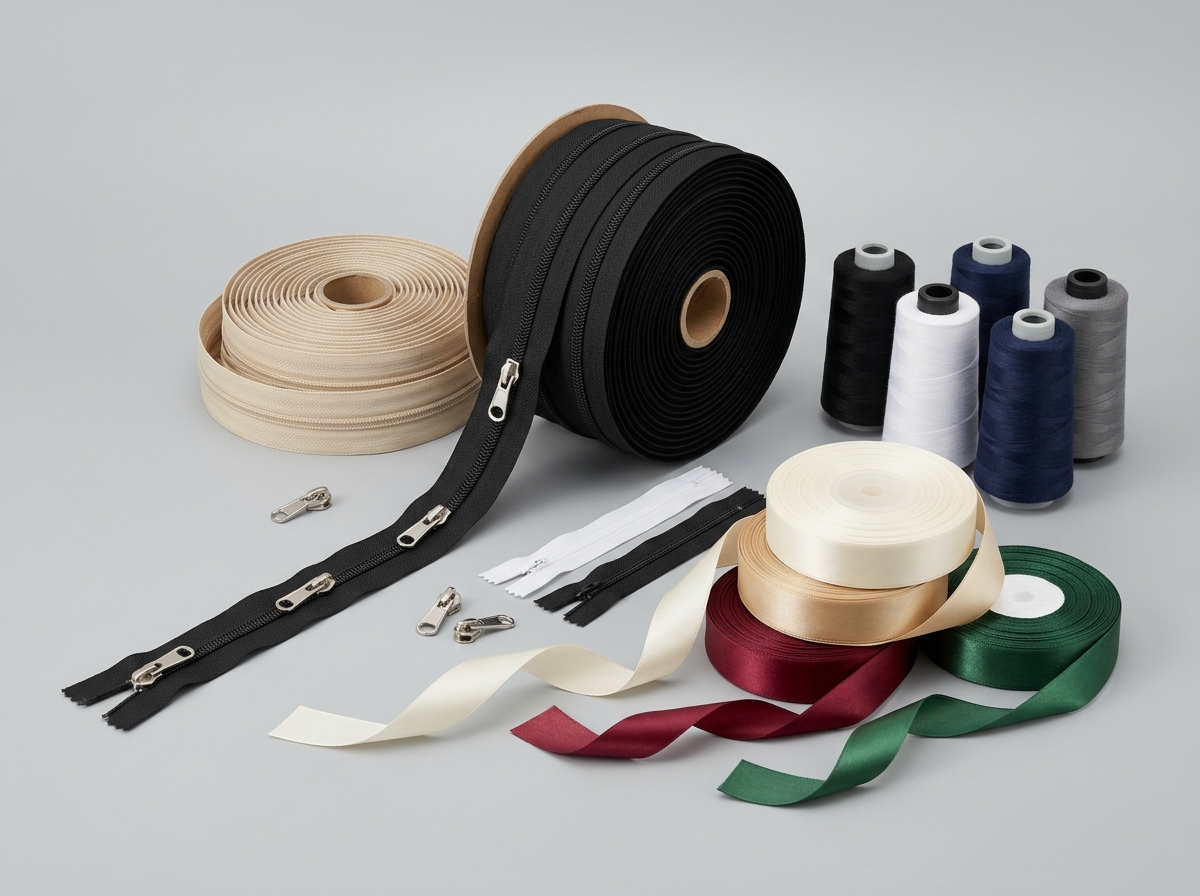
Top 7 Reliable Nylon Long Chain Zipper Manufacturers in China: How Buyers Should Evaluate Them
The best way to read a manufacturer list is to compare capability, not just name recognition. China has many zipper suppliers, but only a smaller group can serve export buyers with stable zipper roll output, packaging options, and consistent replenishment for fashion and DIY channels.
- Export-focused zipper factories that support long chain roll supply for garment production.
- Apparel accessory wholesalers that can bundle zippers with ribbon, thread, and lace.
- Customization-ready manufacturers that support color matching and branded packing.
- High-volume production suppliers with stable monthly output for repeat orders.
- QC-driven factories that provide inspection data and sample approval before shipment.
- Category specialists serving dresses, bridalwear, and womenswear.
- DIY-oriented exporters that can handle mixed SKU packs and small-batch assortment.
When buyers say they want the “top 7,” what they usually need is a shortlist framework. The manufacturer that is right for bridalwear may not be ideal for school uniforms or repair kits, because zipper finish, hand feel, and roll length priorities are different. For that reason, procurement should begin with application fit rather than with brand awareness.
For example, dress factories usually prioritize invisible closure behavior, fine coil appearance, and stitching stability. DIY retailers often care more about color variety, easy handling, and fast replenishment than about ultra-high mechanical specs. Wholesale distributors usually focus on roll length, carton packing, and how many colors can be consolidated into one shipment.
| Supplier type | Best use case | Key buying priority | Risk if ignored |
|---|---|---|---|
| Garment zipper factory | Dress and womenswear programs | Coil smoothness | Visible seam issues |
| Accessory wholesaler | Mixed sourcing baskets | SKU breadth | Fragmented sourcing |
| Customization factory | Private label orders | Color and pack control | Brand inconsistency |
| Export specialist | Cross-border bulk orders | Documentation and lead time | Customs or delay risk |
Nylon Long Chain Zipper Roll Specifications Buyers Should Confirm
The most important zipper roll specifications are measurable, and buyers should insist on them before placing any bulk order. For nylon long chain zipper, the critical points usually include tape width, coil size, roll length, slider type, color fastness, and opening performance after sewing.
One practical reason to request specification sheets is that long chain zippers are cut later during garment production, which means small inconsistencies become amplified in factory workflows. If the coil pitch varies or the tape stretches unevenly, cutting efficiency drops and waste increases.
| Specification | Typical buyer question | What to verify in sample approval |
|---|---|---|
| Chain width | Will it fit the garment seam? | Width tolerance across the roll |
| Tape strength | Will it hold during sewing and wear? | Pull test and seam stress behavior |
| Color consistency | Will bulk rolls match? | Shade comparison under standard light |
| Roll length | Can it reduce line changes? | Actual length versus declared length |
For apparel buyers, a useful benchmark is to align zipper testing with garment quality inspection methods and controlled measurement practices. ISO 4915 helps standardize stitch notation, which matters because zipper installation quality depends on stitch type and seam behavior, not only on the zipper itself. In practice, many buyers also use internal warehouse standards for acceptable variance, especially when ordering multiple colors or multiple width grades in one container.
A smart sourcing team will also ask for packing format. Long chain zipper roll orders can be packed by color, by length, or by mixed SKU assortment. That choice affects warehouse efficiency, carton count, and stitching-line convenience. In high-mix womenswear sourcing, packing by color often reduces picking errors and shortens preparation time.
How Dress, Wedding, and DIY Buyers Use Nylon Zipper Roll Differently
Application context determines the right zipper specification more than generic product names do. A nylon zipper manufacturer that serves dresses may emphasize invisible finishing, while a supplier for DIY craft channels may emphasize color range and simpler packaging.
For dress production, the main concern is appearance after installation. The zipper should stay discreet, open smoothly, and not distort the garment line. For wedding gowns and formalwear, buyers usually demand tighter visual control because even a small coil irregularity can be noticeable in high-satin or light-colored fabrics.
For DIY and home sewing, convenience matters almost as much as technical quality. Retail packaging, easy cutting, and clear length labeling can influence sell-through. A zipper roll that is technically excellent but difficult to handle may underperform in the craft market.
- Dress programs: prioritize seam invisibility, smooth insertion, and color harmony.
- Wedding programs: prioritize refined appearance, matching accuracy, and low visible bulk.
- DIY programs: prioritize ease of use, mixed colors, and retail-friendly packing.
These different uses explain why wholesale buyers often source from one supplier with a broad catalog rather than from many narrow suppliers. A category-based catalog can also simplify repeated purchasing when the same buyer needs zippers, ribbon, thread, and lace in one replenishment cycle.
That is why a diversified supplier model matters. A company such as zippers category or the broader sewing accessories collection is useful for procurement teams that want to consolidate accessories into fewer purchasing touchpoints.
Material, Testing, and Standard References That Improve Buying Confidence
Material and test references give buyers a common language for supplier comparison. Without them, “good quality” becomes a subjective claim, which is risky in export sourcing.
Nylon zipper tape is often selected because it balances flexibility and sewing ease. But buyers should still request data on opening cycles, slider behavior, and dimensional stability after storage and transport. In textile procurement, the cost of a rejected shipment can exceed the savings from a cheaper unit price.
For testing discipline, ASTM D2061 is one of the most useful references because it covers the strength properties of slide fasteners. In production, this supports repeatable comparisons between suppliers and helps procurement teams avoid purely visual judgments. If your team needs independent measurement logic, NIST resources on dimensional metrology and calibration help reinforce the value of traceable inspection.
It also helps to benchmark inspection workflows against real standards instead of informal house rules. For example, a garment supplier may require consistent stitch classification under ISO 4915, while a quality lab may use its own internal test protocols to confirm zipper performance after repeated opening cycles.
| Reference | Use in procurement | Why it matters |
|---|---|---|
| ISO 4915 | Stitch notation | Supports sewing compatibility |
| ASTM D2061 | Zipper strength testing | Enables comparable evaluation |
| NIST metrology guidance | Measurement discipline | Improves traceability and consistency |
Wholesale Buying Checklist for Nylon Zipper Manufacturer Selection
A wholesale buyer should not finalize a nylon long chain zipper order until the factory passes a practical checklist. This prevents common problems such as color drift, roll shortage, weak pull performance, and delayed replenishment.
- Confirm exact zipper type, including nylon coil size and roll length.
- Request sample rolls in the same color family as the bulk order.
- Review MOQ, lead time, carton packing, and mix-color options.
- Ask for test evidence covering smoothness, pull resistance, and tape consistency.
- Verify whether the supplier can repeat the same shade in the next production batch.
- Check whether the factory supports export documents and stable shipping terms.
In practical sourcing, the biggest hidden cost is not price; it is mismatch. A lower-cost roll that requires rework, line stoppage, or sorting can quickly become the more expensive option. That is especially true in women’s apparel, where sewing lines often operate on tight deadlines.
For that reason, the best supplier relationship is one that treats sample approval like a production rehearsal. If the sample passes but the second batch drifts, the supplier is not truly reliable for wholesale.
Common Mistakes Buyers Make When Sourcing Zipper Roll in China
Most sourcing mistakes happen when buyers compare catalog photos instead of performance evidence. Nylon long chain zipper looks simple, but the procurement risks are real.
- Choosing by price only and ignoring dye-lot variation.
- Buying without a sample approval process.
- Not confirming whether the zipper is suitable for dress, wedding, or DIY use.
- Ignoring roll length accuracy and packaging method.
- Failing to ask for a clear test or inspection standard.
Another common mistake is assuming every zipper factory is equally strong in every market. Some are better at mass basics, while others are better at premium appearance, and some are optimized for mixed SKU export bundles. The best choice depends on the end use, the buyer’s reorder rhythm, and the level of technical control required.
When procurement teams understand these differences, they reduce returns, speed up production, and improve customer satisfaction across the supply chain.
FAQ About Nylon Long Chain Zipper Manufacturers in China
1. What is the best way to evaluate a nylon long chain zipper manufacturer?
The best way is to combine sample testing, production consistency review, and MOQ or lead-time checks. A reliable supplier should provide measurable data, not just product photos.
2. Why is zipper roll consistency so important for wholesale buyers?
Zipper roll consistency affects cutting efficiency, seam quality, and final garment appearance. In bulk production, even small variation can create waste and rework.
3. Which standards are useful for zipper sourcing?
ASTM D2061 is useful for zipper strength testing, while ISO 4915 helps standardize stitch notation in sewing applications. NIST resources support traceable measurement discipline.
4. What should buyers ask for before placing a bulk order?
Buyers should request samples, color confirmation, roll length details, packing method, lead time, and inspection records. These details reduce the risk of mismatch.
5. Are nylon long chain zippers better for dresses and womenswear?
Yes, they are widely used in dresses and womenswear because they offer flexibility, sewing ease, and a clean appearance when selected correctly.
6. How do DIY buyers differ from apparel factories?
DIY buyers usually care more about retail packaging, color variety, and easy handling, while apparel factories focus more on sewing performance and repeatability.
7. Why work with a supplier that also sells other sewing accessories?
A broader sewing accessories catalog can simplify sourcing, reduce vendor count, and support mixed replenishment orders for retail or wholesale programs.
For buyers who want a broader sourcing basket, it can be useful to review the supplier’s ribbon products and lace products as part of one procurement cycle, especially when ordering for wedding, womenswear, or DIY markets.

Post time: Jul-14-2026