- Invisible zippers for wedding dresses are defined by concealment, smooth insertion, and color accuracy, not only by length.
- Wholesale buyers should evaluate material, tape width, slider performance, MOQ, sample policy, and packing method before placing bulk orders.
- Bridal sourcing is highly sensitive to fabric weight, seam placement, and dress silhouette, especially for mermaid, A-line, and fitted gowns.
- China remains a strong sourcing base because buyers can compare multiple product lines, including zippers, ribbons, lace, and sewing accessories from one exporter.
Wedding dress invisible zipper sourcing is a precision buying decision, and the right zipper manufacturer can determine whether a gown closes cleanly or shows a visible ridge under delicate fabric. For apparel finishing, the most cited dimensional benchmark for general linear measurements is the ISO 2768 system, which defines tolerances such as ±0.1 mm for fine-size ranges and is useful as a reference mindset for consistency control in component sourcing, even though zipper products themselves are typically specified by garment requirements rather than that standard alone. For bridal buyers, this means the real question is not just who can make an invisible zipper, but who can supply stable bulk quality, repeatable shades, and packaging that protects tape and slider performance during export. Related sourcing often extends to wedding lace, polyester ribbon, and DIY tools because dress factories usually buy trim and finishing materials together.
What a Wedding Dress Invisible Zipper Manufacturer Must Get Right
A reliable invisible zipper manufacturer must optimize concealment, alignment, and repeatability before anything else. In bridal garments, the zipper should disappear into the seam once sewn, leaving the dress surface visually uninterrupted. This matters most on satin, crepe, tulle overlays, and lace-backed bodices where a poor zipper shows as waviness or shadow lines.
Invisible zippers are usually nylon coil zippers with a reverse coil construction, which allows the teeth to curl toward the back of the tape. For wedding dresses, that geometry supports a cleaner front appearance than standard visible zippers. Buyers typically request consistent lengths such as 12 inch, 16 inch, or 22 inch formats, but the more important issue is whether the zipper opens and closes smoothly after installation in curved seams and delicate fabrics.
| Buying Factor | Why It Matters in Bridal Garments | Typical Buyer Check |
|---|---|---|
| Color consistency | White, ivory, nude, and off-white must match fabric shades | Compare against fabric swatch under daylight |
| Tape flexibility | Flexible tape supports curved seams on fitted dresses | Fold and bend test before sewing |
| Slider smoothness | Prevents snagging on lining or lace | Run 10 open-close cycles by hand |
| Tooth concealment | Visible coil ruins the clean bridal look | Inspect from front after insertion |
For formalwear brands, a zipper supplier is not simply a component vendor. It is part of the quality control chain. If the zipper color differs from the gown lining by even a small visible margin, the whole dress can appear inconsistent under photography lights. That is why wholesale buyers often request samples before bulk production, especially when working on custom bridal collections.
How to Evaluate a Zipper Manufacturer for Wholesale Wedding Dress Orders
Wholesale sourcing should be judged by process control, not only by unit price. A manufacturer may offer a competitive quote, but if the lot-to-lot shade difference is unstable or the tape edge frays during cutting, the buyer will face higher rejection rates later in the sewing line.
One useful quality reference from garment engineering is zipper performance testing under repeated cycling. In textile and apparel supply chains, endurance testing commonly includes repeated open-close cycles to verify slider and tooth durability. While test protocols vary by buyer specification, the logic is the same: a bridal zipper should survive repeated handling during sewing, fitting, and final consumer use without jamming.
- Request a full specification sheet with length options, tape material, color range, and packaging details.
- Ask for sample swatches in the exact dress color, not just generic white.
- Confirm whether the supplier supports bulk packing by piece, dozen, or carton.
- Check whether the factory can maintain the same color formula across reorders.
- Verify lead time for sample approval and mass production separately.
For global buyers, another practical issue is export compliance documentation. The U.S. government’s International Trade Administration provides general trade guidance for importers, and that matters because wholesale buyers often need commercial invoices, HS-code clarity, and logistics consistency. If your procurement process includes multiple trim categories, it is more efficient to source from a supplier that can bundle zippers with polyester sewing thread and cutting tools rather than splitting orders across several vendors.
Material, Structure, and Size Options for Invisible Zippers
The best invisible zipper choice depends on dress fabric weight and seam behavior. Most wedding dress invisible zippers use nylon coil tape because nylon is flexible enough for curved seams and fine enough to stay hidden inside the seam allowance.
| Option | Typical Use | Buyer Note |
|---|---|---|
| Nylon coil | Wedding dresses, skirts, evening gowns | Best concealment and flexibility |
| Metal zipper | Jeans, jackets, heavy garments | Not suitable for invisible bridal finish |
| Plastic molded zipper | Casualwear, outerwear | Too visible for formalwear seams |
| Invisible reverse coil | Bridal and lingerie-inspired garments | Preferred for hidden closure lines |
Sizes usually reflect garment use. Shorter lengths suit bodices and waist closures, while longer zippers are better for fitted back seams. Bridal manufacturers should also consider tape width because narrow tapes are easier to hide but can be harder to sew if the fabric is slippery. In many dress factories, the sewing operator will use a special invisible zipper foot to keep the coil rolled out and close to the seam line.
For buyers sourcing across product categories, the same logic applies to lace edging and satin ribbon: the material is not evaluated alone, but by how it behaves in a finished garment. That is why an experienced Chinese zipper supplier should be able to explain not only the product but also the sewing context.
Top 8 Wedding Dress Invisible Zipper Manufacturers in China: How Buyers Should Rank Them
The best manufacturers are ranked by consistency, export readiness, and bridal application experience rather than by generic factory size. Because “top 8” searches often reflect a buyer’s desire to compare options, the most useful ranking method is to evaluate supplier archetypes and match them to procurement needs.
| Supplier Type | Strength | Best For | Risk to Watch |
|---|---|---|---|
| Bridal-specialist zipper factory | Better shade and finish control | Wedding dress brands | May have higher MOQ |
| General apparel zipper manufacturer | Broader size and color range | Mixed garment lines | Bridal finish may be less refined |
| Trading/export company | Bundled sourcing and documentation | Small to medium buyers | Less direct production visibility |
| Trim wholesaler | Fast replenishment and catalog breadth | Multi-SKU procurement | Sample-to-bulk consistency must be checked |
In practical terms, your top 8 shortlist should include one or two zipper specialists, several integrated apparel accessory suppliers, and at least one exporter that can coordinate related categories such as bridal lace and sewing thread wholesale. This is especially useful when the wedding dress production line needs synchronized trim colors, packaging, and shipping schedules.
For many overseas buyers, New Swell fits the multi-category sourcing model because it connects zippers, ribbon, lace, and sewing accessories in one export-oriented catalog. That structure is helpful when a buyer wants to reduce vendor fragmentation and keep procurement communication in one place. Still, the correct due diligence is always to compare sample quality, lead time, and packing method against your garment specification.
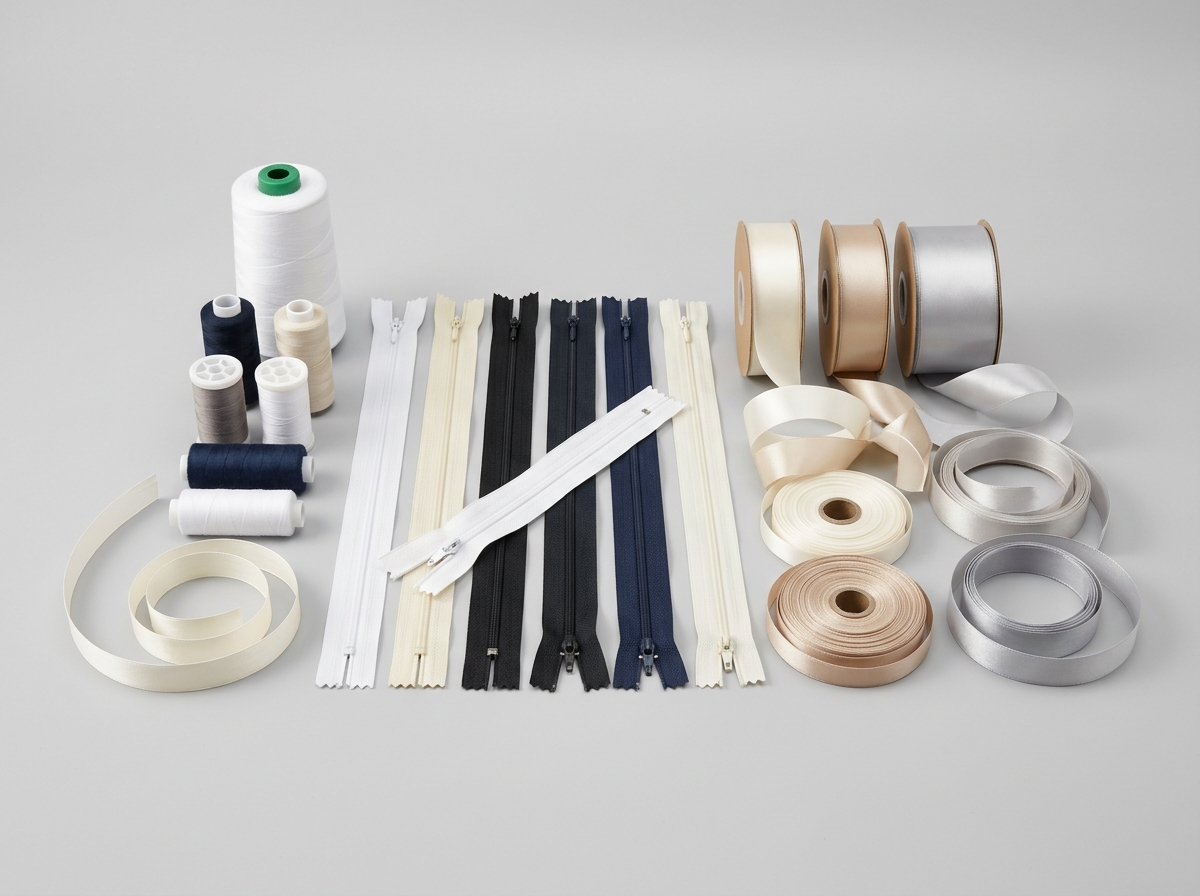
Key Quality Tests for Invisible Zippers in Bridal Production
Quality tests should focus on what the bride will feel, what the seamstress will see, and what the buyer will reject. A zipper can look acceptable on a sample card and still fail once sewn into a bias-cut gown or a tightly fitted bodice.
Common checks include slider travel, tape straightness, coil symmetry, and color retention. In garment sourcing, the buyer should also inspect whether the zipper pulls smoothly after pressing and steaming, because heat can reveal tape shrinkage or irregular coil behavior.
- Pull test: open and close the zipper several times by hand.
- Alignment test: confirm the coil remains hidden after insertion.
- Shade test: compare tape color against the dress fabric in natural light.
- Seam test: sew a short sample into actual bridal fabric before approving bulk.
- Packing test: verify the zipper reaches the buyer without bent tape or crushed sliders.
The ASTM D2061 standard is widely used as a reference for zipper testing methods, including strength-related and functional evaluation procedures. Buyers do not need to memorize the standard number, but they should know that a serious supplier can speak the language of repeatable testing rather than relying on visual inspection alone.
Pricing, MOQ, Samples, and Lead Time for Invisible Zipper Wholesale
Wholesale pricing is only useful when it is connected to sample approval, minimum order quantity, and shipping reality. Bridal buyers often make the mistake of comparing unit price without checking whether the supplier can hold the same quality across the full order.
MOQ varies by manufacturer, color, and packaging format. Stock colors usually allow smaller batches, while custom shades for wedding collections often require a larger run. Lead time also depends on whether the supplier is producing from existing yarn and tape inventory or setting up a fresh color batch. For seasonal bridal collections, this timing can affect the entire launch calendar.
| Procurement Item | What to Ask | Why It Matters |
|---|---|---|
| Sample policy | Can I approve one pre-production sample? | Reduces bulk risk |
| MOQ | Is MOQ different for stock and custom colors? | Protects planning accuracy |
| Lead time | How long from sample confirmation to shipment? | Helps manage launch dates |
| Packing | Are zippers packed individually or by carton? | Reduces transit damage |
For buyers building a broader sourcing basket, it can be efficient to combine invisible zippers with wedding ribbon and DIY sewing accessories in one shipment. That lowers coordination overhead, especially when the buyer handles bridal kits, atelier supplies, or e-commerce resale packages.
Why China Remains a Strong Source for Invisible Zipper Manufacturers
China remains competitive because it supports scale, category breadth, and export packaging under one procurement framework. That advantage is important for wedding dress buyers who need not only zippers but also adjacent trim items and tools.
The country’s accessory ecosystem allows buyers to compare manufacturers, request quick samples, and consolidate orders across product families. In practice, this means a bridal buyer can source invisible zippers, lace, ribbon, and thread without negotiating each category separately. For smaller importers, that simplifies communication and shipping planning. For larger brands, it improves inventory synchronization across multiple SKUs.
The U.S. National Institute of Standards and Technology provides useful background on measurement and traceability through NIST. That matters because even in a fashion supply chain, repeatable measurement culture is what keeps component quality stable. If one batch of invisible zippers differs from the last in tape width or finish, sewing efficiency and final garment appearance both suffer.
How to Build a Shortlist of the Best Wedding Dress Invisible Zipper Suppliers
The smartest shortlist is built from evidence, not from search ranking alone. A buyer should ask for samples, application photos, technical sheets, and packing details before deciding which zipper manufacturer deserves a trial order.
- Start with 3 to 5 suppliers that clearly serve bridal or dress applications.
- Check whether they sell only zippers or also adjacent categories such as lace and thread.
- Review sample consistency in color, tape softness, and slider movement.
- Ask whether they can support repeated orders in the same shade lot.
- Confirm export packaging and shipment consolidation options.
For buyers who want one supplier relationship across trim families, a catalog structure that includes zippers, lace, and sewing accessories is usually more efficient than a narrow single-product vendor. The key is to verify each product line individually rather than assuming strength in one category guarantees strength in another.
When a Wedding Dress Brand Should Not Buy on Price Alone
Low price is dangerous when the gown is delicate, the margin for error is small, and the dress is sold on visual perfection. Invisible zippers are small components, but they create outsized risk if they fail in fitting or at the point of sale.
Bridal brands should avoid selecting a supplier solely because the quotation is lowest. Instead, they should evaluate whether the manufacturer can protect fabric appearance, keep repeat orders consistent, and pack the product so it arrives ready for production. If the supplier also supports related finishing materials, that can further reduce workflow friction in the factory.
As a broad sourcing strategy, many importers prefer a supplier that understands the difference between a component sale and a garment application sale. That is exactly why the best wedding dress invisible zipper manufacturers in China are usually evaluated together with their ability to serve the wider apparel accessory chain.
FAQ
What is a wedding dress invisible zipper?
A wedding dress invisible zipper is a reverse-coil nylon zipper designed to disappear into the seam so the closure is not visible on the finished gown.
What size invisible zipper is best for a wedding dress?
The best size depends on the dress pattern, but shorter lengths are common for bodices and longer lengths are used for fitted back seams and gowns with deeper openings.
How do I check zipper quality before bulk buying?
Request samples, sew them into the actual fabric, test slider movement, inspect shade matching, and confirm tape flexibility and packaging quality.
Is nylon better than polyester for invisible zippers?
Nylon coil construction is generally preferred for invisible zippers because it is flexible and easier to conceal in delicate dress seams.
What should I ask a zipper manufacturer before ordering?
Ask about MOQ, sample policy, color matching, lead time, packing method, and whether the factory has bridal application experience.
Can I source lace and ribbon from the same supplier?
Yes, many buyers prefer an integrated supplier for zippers, lace, ribbon, and sewing accessories because it simplifies procurement and shipment planning.
Why is China a common source for invisible zippers?
China offers a broad accessory supply base, export experience, and the ability to bundle related garment finishing products in one procurement workflow.

Post time: Jul-22-2026