- Viscose embroidery thread delivers a brighter, more natural sheen, while polyester is typically stronger and more wash-resistant.
- Polyester is the better default for high-volume, high-durability embroidery, especially when garments face frequent laundering.
- Viscose is often chosen for wedding, fashion, and decorative applications where appearance matters more than harsh-use durability.
- Thread selection should consider tensile strength, shrinkage, colorfastness, stitch density, and fabric compatibility.
- Wholesale buyers should also compare MOQ, cone size, color matching, and sample approval before placing bulk orders.
Viscose embroidery thread and polyester thread solve different production problems, and the right choice depends on the end-use, not just the price. In industrial textile testing, seam and thread performance is commonly evaluated with standardized methods such as ASTM D1683 for sewn seam strength and ISO 2062:2009 for tensile properties of yarns, because embroidery buyers need repeatable numbers, not vague claims. For bulk purchasing, the most important variables are stitch appearance, color stability, and wash durability. If your sourcing priorities include wholesale embroidery thread, supplier consistency, and decorative finish for dress and wedding use, the thread you choose should match the garment’s service life and care instructions.
Viscose Embroidery Thread vs Polyester Thread: What Each Fiber Is Best At
Polyester thread is usually the better performer in durability-driven embroidery, while viscose thread is usually the better performer in aesthetic-driven embroidery. That conclusion reflects how the fibers behave under heat, moisture, abrasion, and laundering.
Viscose embroidery thread is a regenerated cellulose fiber, which gives it a smooth handle and a bright, natural-looking luster. It is often favored for decorative sewing, bridal ornamentation, and fashion embroidery where the surface must look refined under light. Polyester thread, by contrast, is a synthetic fiber with stronger resistance to abrasion, moisture, and many common wash cycles. That makes it a practical choice for commercial garments, schoolwear, workwear, and garments that must survive repeated machine washing.
For buyers comparing embroidery thread options, the real question is not which one is “better” in the abstract. It is whether the project values sheen and softness more than strength and wash endurance. That distinction becomes especially important in wholesale sourcing, where thread must work across multiple fabric types and production lines.
How Viscose Embroidery Thread Performs in Decorative Sewing
Viscose embroidery thread is strongest where visual quality matters most. It produces a smooth, elegant surface that can elevate satin, lace, tulle, chiffon, and other decorative fabrics without looking overly plastic or harsh.
In practice, viscose is often selected for wedding dresses, eveningwear, lingerie trims, monogramming, and ornamental embroidery. The fiber’s sheen is one of its main advantages, because it reflects light in a softer way than many standard polyester constructions. That is one reason it is common in premium-looking embellishment.
For apparel buyers, that look can be worth more than extra durability. A decorative collar, bridal motif, or lace border is often judged first by appearance. If the customer expects delicate visual depth, viscose embroidery thread is frequently the better fit.
Where viscose thread can struggle
Viscose embroidery thread can be less forgiving than polyester thread in harsh use conditions. It generally has lower resistance to repeated laundering, high friction, and aggressive finishing processes. In production, that means the thread may not be the best default for uniforms, children’s wear, or items designed for heavy daily washing.
Another concern is process consistency. If the thread tension, needle selection, or machine speed is poorly matched, viscose can show fuzzing or breakage more readily than polyester. That is not a defect in all cases; it is a behavior that buyers must plan for during sampling and production setup.
Why Polyester Thread Usually Wins on Strength and Wash Resistance
Polyester thread is the better choice when embroidery must survive real-world wear. Its greatest advantage is consistency under stress, especially in garments that are washed frequently or exposed to friction.
Polyester’s synthetic structure gives it high toughness and good resistance to moisture and many common laundry chemicals. That makes it widely used in industrial sewing and embroidery where functional performance matters. For buyers sourcing embroidery thread for uniforms, kids’ clothing, sportswear, or promotional garments, polyester is often the safer default.
In many production environments, polyester also offers more predictable color retention. A thread that looks stable after repeated washing reduces complaints and protects brand reputation. That matters in wholesale orders because one faded batch can become a costly customer-service issue.
When polyester is the more economical choice
Polyester thread often delivers lower risk at scale. Even if the unit price is close to viscose, the reduction in breakage, rework, and wash-related returns can make polyester more cost-effective over the full production cycle.
That is why buyers who search for embroidery thread wholesale often end up choosing polyester for core SKUs and reserving viscose for higher-margin decorative collections. The right sourcing strategy is usually a mix of both fibers, not an all-or-nothing decision.
Viscose Embroidery Thread vs Polyester Thread: Side-by-Side Comparison
A direct comparison makes the trade-offs easier to see before sampling and bulk ordering.
| Property | Viscose Embroidery Thread | Polyester Thread |
|---|---|---|
| Surface appearance | Soft sheen, natural luster | Bright sheen, slightly more synthetic look |
| Abrasion resistance | Moderate | High |
| Wash durability | Moderate | High |
| Best use case | Wedding, fashion, decorative embroidery | Uniforms, daily wear, high-laundering garments |
| Risk of fraying under stress | Higher than polyester | Lower than viscose |
| Production tolerance | Requires careful tension setup | More forgiving in mass production |
For most commercial buyers, polyester thread is the safer technical choice, while viscose embroidery thread is the stronger visual choice. The best result comes from aligning the thread with garment function, not from chasing a single “best” fiber for every job.
What the Numbers Say About Embroidery Thread Performance
Thread performance becomes easier to judge when you compare measurable properties, not just marketing language. Standards like ISO 2062:2009 define how tensile properties of yarns are measured, while textile care and performance expectations are often shaped by practical wash testing and end-use requirements.
For sewing and embroidery applications, thread size, machine speed, and needle choice all affect breakage and appearance. Industrial embroidery machines commonly operate at thousands of stitches per minute, and many production systems run at about 600 to 1,200 stitches per minute in real-world setup depending on design complexity and fabric stability. That range is widely used in commercial embroidery planning because denser designs need more controlled speeds than simple logos.
Needle compatibility also matters. Embroidery needles commonly range from 75/11 to 90/14 for many garment applications, with the final choice driven by fabric weight, thread thickness, and design density. A heavier needle may reduce thread abrasion in tougher fabrics, while a finer needle can protect delicate materials from visible holes.
| Production Factor | Typical Value Range | Why It Matters |
|---|---|---|
| Embroidery machine speed | 600 to 1,200 stitches per minute | Affects heat buildup, breakage, and stitch quality |
| Common needle sizes | 75/11 to 90/14 | Must match thread thickness and fabric weight |
| Test method for tensile properties | ISO 2062:2009 | Supports repeatable yarn strength comparison |
| Seam strength reference method | ASTM D1683 | Useful for checking sewn construction performance |
These figures do not make one thread automatically better. They show why viscose thread and polyester thread must be sampled on the actual fabric, at the actual machine speed, before a wholesale order is finalized.
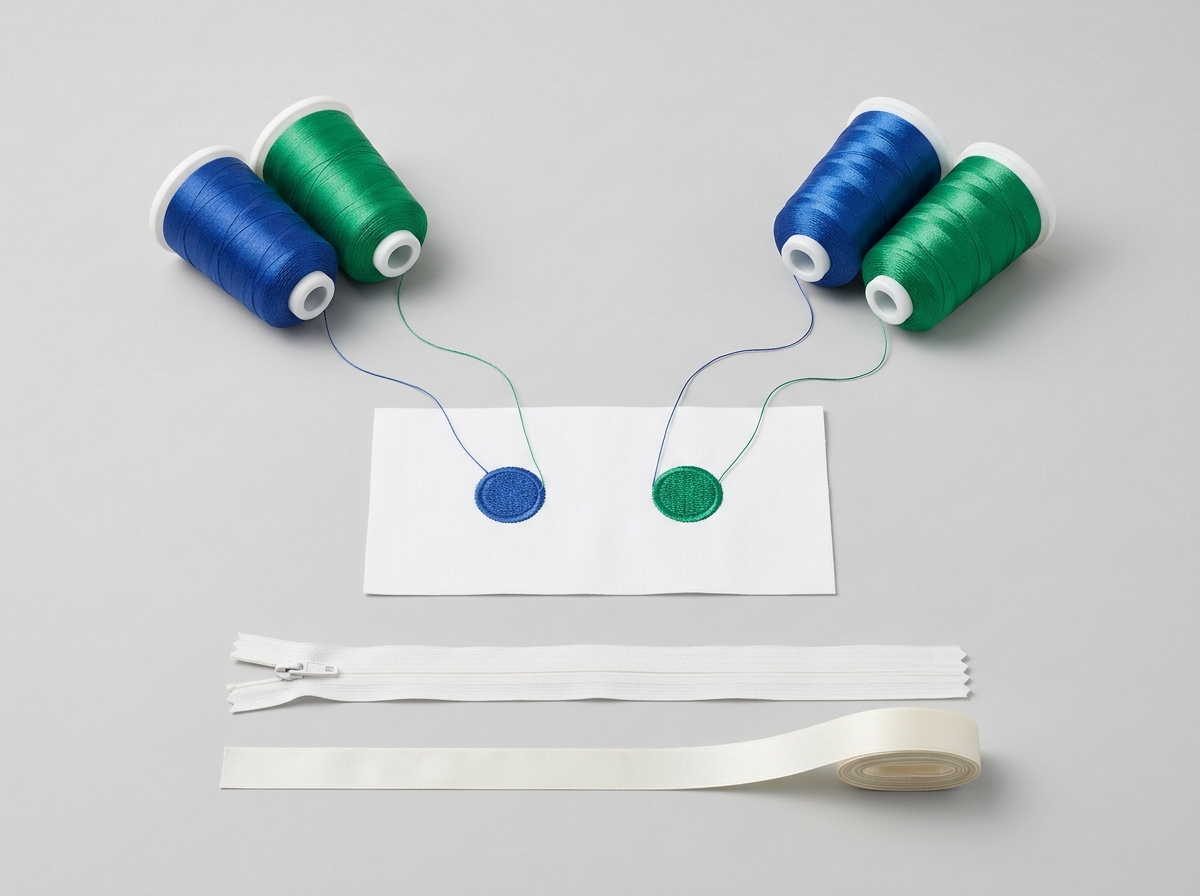 Choosing the Right Embroidery Thread for Wedding, Fashion, and DIY Use
End use is the fastest way to decide between viscose embroidery thread and polyester thread. Wedding and fashion embroidery usually prioritize appearance, while DIY and utility projects often prioritize simplicity and durability.
For wedding dresses, veils, lace overlays, and formal accessories, viscose is often preferred because it produces a refined finish under lighting. For logos on uniforms, children’s garments, or items that will be laundered often, polyester usually performs better over time. For DIY buyers, the decision can go either way depending on whether the project is decorative or functional.
If a craft seller is making embellished gift items, viscose can add a premium look that supports a higher retail price. If a small workshop is producing washable tote bags or branded apparel, polyester may protect margins by reducing customer complaints and thread failure.
- Choose viscose embroidery thread when visual softness and sheen are your top priority.
- Choose polyester thread when repeated washing and abrasion resistance matter most.
- Match the thread to fabric behavior, not just to color matching.
- Ask for a sample cone before placing a bulk embroidery thread order.
- Confirm packaging, cone size, and MOQ before comparing suppliers.
Wholesale Buying Checklist for Embroidery Thread Suppliers
Wholesale embroidery thread purchasing is not only about fiber type. It is also about supply stability, shade consistency, and production usability.
Buyers should request a sample run, check whether the dye lot remains stable across repeated cones, and confirm whether the thread can be packed in the cone size their production line expects. For factories and exporters, even a small mismatch in winding or packaging can slow output.
| Buying Check | What to Confirm | Why It Reduces Risk |
|---|---|---|
| MOQ | Per color, per count, per order | Prevents overspending on slow-moving shades |
| Color consistency | Same dye lot across replenishment | Reduces visible shade variation |
| Packaging | Cone size, spool type, carton packing | Ensures machine compatibility and storage efficiency |
| Sample approval | Fabric test under real machine conditions | Reduces breakage and appearance issues |
| Lead time | Production and shipping schedule | Protects garment delivery timelines |
For a wholesale buyer, these operational details can matter more than the thread fiber itself. A technically good embroidery thread can still create problems if the cone is packed badly or the shade cannot be repeated on the next order.
For product browsing, it is useful to compare related sourcing categories such as Sewing Accessories, Sewing Thread, Lace, and DIY Tools to build a broader bulk purchasing plan. In a mixed-supply catalog, thread selection often connects directly with trims, closures, and finishing accessories.
How to Test Viscose Embroidery Thread and Polyester Thread Before Bulk Order
A controlled sample test is the most reliable way to decide between viscose and polyester. It reveals how each thread behaves on your exact fabric, needle, and machine settings.
Start with a narrow test plan: run the same design on the same fabric, compare stitch surface after embroidery, then wash and inspect the result. If the project involves delicate decoration, evaluate sheen under natural and indoor light. If the project involves utility wear, inspect pilling, fraying, and color change after laundering.
- Stitch a sample on the final fabric, not a substitute fabric.
- Test at the intended machine speed and tension.
- Wash or steam the sample according to final garment care.
- Inspect for breakage, distortion, and shade shift.
- Compare the finished look against the intended end-use.
That process is simple, but it is the fastest way to avoid expensive guesswork. It also helps wholesale buyers justify why one embroidery thread is selected for a premium SKU and another for a mass-market SKU.
Practical Recommendation for Buyers
The best thread is the one that fits the garment’s purpose, not the one with the most impressive headline feature. For premium decoration, viscose embroidery thread often gives the most attractive finish. For dependable production, polyester thread usually gives the strongest overall performance.
If you source for wedding, dress, and DIY decorative categories, keep both fibers in your catalog and use them intentionally. That gives you flexibility across different customers, different price points, and different care requirements. For wholesale procurement, this dual-thread strategy is often more profitable than forcing one material to do every job.
In short, viscose wins on appearance, polyester wins on durability, and the right embroidery thread depends on the end-use environment. That is the most useful answer for buyers, designers, and sourcing teams alike.
FAQ
Is viscose embroidery thread better than polyester thread?
Viscose is better for sheen and decorative softness, while polyester is better for strength and wash resistance. The better choice depends on the garment and its care requirements.
Which embroidery thread lasts longer?
Polyester thread usually lasts longer in garments that are washed often or exposed to abrasion. It is generally more durable than viscose in demanding conditions.
Is viscose embroidery thread good for wedding dresses?
Yes. Viscose embroidery thread is often chosen for wedding dresses because it creates a refined, elegant look with a smooth surface and attractive luster.
Can polyester thread be used for decorative embroidery?
Yes. Polyester thread can be used for decorative embroidery, especially when the buyer wants a balance of appearance and durability.
Which thread is better for wholesale embroidery production?
Polyester is usually better for mass production because it is more forgiving, more durable, and better suited to repeated washing.
Does embroidery thread choice affect machine speed?
Yes. Thread type influences breakage risk, heat buildup, and stitch stability, so machine speed must be adjusted to the fabric and thread behavior.
What should wholesale buyers ask before ordering embroidery thread?
Buyers should ask about MOQ, sample availability, color consistency, packaging, lead time, and whether the thread has been tested on the intended fabric.

Post time: Jul-30-2026