- Viscose embroidery thread is chosen for shine, smooth stitching, and premium-looking decoration.
- It works especially well for wedding items, women’s apparel, monograms, and DIY ornamentation.
- For buyers, the key trade-offs are luster versus durability, wash resistance, and production stability.
- Thread selection should match fabric weight, needle size, machine speed, and end-use care instructions.
- Wholesale procurement should consider cone size, color consistency, MOQ, and lead time, not just price.
Viscose embroidery thread is widely used in decorative stitching because its filament structure reflects light beautifully, creating a smooth and luxurious appearance that stands out on garments and craft projects. In machine embroidery, visual quality matters as much as stitch accuracy, and standards like ISO 1833 help define fiber composition testing so buyers know what they are sourcing. For production planning, decorative threads are often evaluated alongside machine limits such as measurement and tolerance practices referenced by NIST, especially when stitch placement and repeatability affect final appearance. For wholesale buyers, this makes viscose embroidery thread a practical decorative thread for wedding, fashion, and DIY assortments from New Swell, while broader accessory programs may also include sewing thread, lace trims, and ribbons.
Why viscose embroidery thread looks more premium in decorative stitching
Viscose embroidery thread produces a high-luster effect that many buyers associate with elegant, gift-ready, or occasion-focused products.
That visual advantage comes from the fiber’s smooth surface and light reflection, which gives satin stitches, fill stitches, and lettering a richer appearance than matte utility thread. In decorative applications, this matters because embroidery is often judged first by how it photographs, how it catches light, and how cleanly it defines edges.
Compared with standard polyester sewing thread, viscose embroidery thread is designed to contribute appearance first and structural function second. This is why it performs especially well on wedding napkins, bridal accessories, women’s fashion trims, and branded monograms. The end user sees the finished surface, not the spool, so the decorative thread must support a refined visual result.
| Thread type | Visual effect | Typical use | Primary trade-off |
|---|---|---|---|
| Viscose embroidery thread | High sheen, soft gloss | Decorative stitching, monograms, fashion embellishment | Lower wash and abrasion resistance than some synthetics |
| Polyester embroidery thread | Moderate to high sheen | Uniforms, frequent laundering, high-wear items | Less silk-like look in some designs |
| Cotton embroidery thread | Natural, low sheen | Quilting, heritage craft, matte designs | Less reflective and less vivid in photos |
For buyers building a wholesale assortment, the right thread choice depends on whether the product is meant to look elegant, last through hard use, or do both.
Benefits of viscose embroidery thread for wedding, dress, and DIY applications
Viscose embroidery thread is especially valuable when the project needs strong decorative impact without a heavy or industrial look.
Wedding products are a clear example. Table runners, veil accents, ring pillows, favors, and ceremony linens often need a thread that photographs well under bright light and blends with lace, ribbon, and delicate fabrics. In these cases, viscose embroidery thread supports a luxurious finish that aligns with premium presentation.
Women’s apparel is another strong fit. Decorative stitching on dresses, blouses, cuffs, collars, and hems benefits from thread that enhances detail rather than distracting from it. A smooth decorative thread can make floral motifs, border patterns, and logo marks appear sharper and more intentional.
DIY makers also value viscose embroidery thread because it is beginner-friendly in appearance even when the design is simple. A basic outline stitch or a single-color motif can still look elevated if the thread has a rich finish.
- Better visual depth on satin stitch and fill stitch patterns
- Strong color presence for floral, lettering, and border motifs
- Good match for lace, ribbon, and occasion textiles
- Suitable for retail-ready craft kits and gift items
For merchants serving these markets, bundling decorative lace, ribbons, and sewing kits can create a more complete scene-based offer than selling thread alone.
Viscose embroidery thread vs polyester: how to choose the right decorative thread
The best decorative thread is the one that matches the garment’s use case, washing requirements, and visual target.
Polyester embroidery thread is usually favored for utility, abrasion resistance, and colorfastness in demanding environments. Viscose embroidery thread, by contrast, is often chosen when the visual finish is the top priority. That distinction matters in wholesale sourcing because the cheapest option is not always the lowest-risk option.
| Decision factor | Viscose embroidery thread | Polyester embroidery thread |
|---|---|---|
| Decorative shine | Higher | Medium to high |
| Wash durability | Moderate | Higher |
| Abrasion resistance | Moderate | Higher |
| Suitability for wedding decor | Excellent | Good |
| Suitability for daily-wear uniforms | Good only if care is gentle | Usually better |
In procurement terms, viscose embroidery thread is the better decorative thread when the customer will accept gentle-care instructions, while polyester is the safer choice for repeated washing and heavy use. Many importers keep both in the catalog and position them by scenario rather than by fiber alone.
That scenario-based positioning is especially relevant for wholesale buyers who sell into wedding, fashion, and DIY channels at the same time. A single product page rarely works as well as a category structure that separates decorative and utility applications.
Technical factors that affect embroidery quality and production stability
Embroidery quality depends as much on process settings as on thread type.
Even a premium decorative thread can produce puckering, looping, or dull-looking stitches if needle size, tension, stabilizer, and machine speed are not matched correctly. In production, thread performance is evaluated in the context of the full stitching system, not in isolation.
One useful reference point is needle compatibility. Many commercial embroidery setups use needles in sizes such as 75/11 or 80/12 depending on fabric density and thread count. The chosen needle must create a clean passage for the thread while minimizing friction and skipped stitches. Machine speed also matters: if the stitching head runs too fast for the design density or fabric support, shine and edge definition can suffer.
For quality control, buyers often inspect the following practical factors:
- Consistent color lot across cones or spools
- Even winding and low snag risk during high-speed embroidery
- Stable stitch appearance on both light and dark fabrics
- Compatibility with common stabilizers and backing materials
- Acceptable performance after washing, steaming, or handling
According to the ASTM D5034 grab test framework, tensile-related fabric evaluation is standardized in textile work, which is useful context when assessing how embroidery and base fabric interact under load. For fiber identification and care labeling, the ISO 2076 textile terminology system is also widely used. These references matter because the thread does not exist alone; it performs inside a tested textile assembly.
For decorative stitching, this means a buyer should ask not only, “Is the thread shiny?” but also, “Will it run cleanly on our machine, on our fabric, with our needle, at our production speed?”
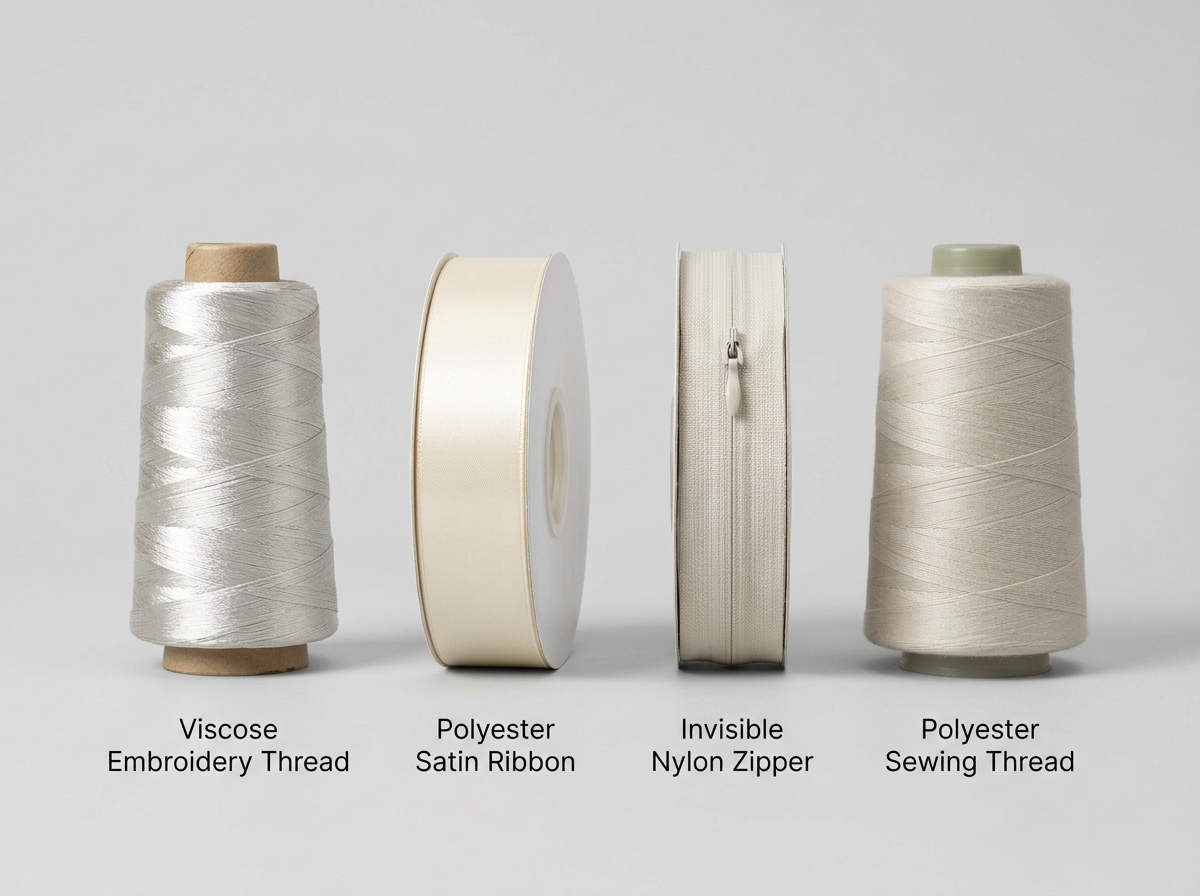 Wholesale buying criteria for viscose embroidery thread
Wholesale buyers should evaluate viscose embroidery thread by specification, not by appearance alone.
A small quality difference becomes expensive when multiplied across dozens of colors and thousands of meters. That is why procurement teams should compare cone length, break behavior, color lot tolerance, package format, and labeling consistency before placing a bulk order.
| Purchase criterion | What to check | Why it matters |
|---|---|---|
| Cone or spool size | Meterage, net weight, winding density | Affects unit cost and machine run time |
| Color consistency | Shade repeatability across dye lots | Critical for sets and reorder programs |
| Packing format | Individual wrap, bulk carton, barcode label | Impacts warehouse efficiency and retail readiness |
| MOQ | Minimum order quantity by color or style | Determines SKU risk and inventory depth |
| Lead time | Sample and mass production schedules | Affects seasonal delivery and launch planning |
Many importers also want clear sample policies, especially when building wedding and DIY assortments where color matching is essential. A sample cone can save a much larger inventory mistake later. If the end market requires coordinated trims, buyers should request matching options across ribbons, lace, and sewing thread so the decorative program feels cohesive.
For businesses that serve resellers, adding a clear wholesale structure around the decorative thread category improves conversion because it answers the buyer’s real questions: can this be reordered, can it be packed for retail, and can the color remain stable across batches?
Where viscose embroidery thread performs best in real market scenarios
Viscose embroidery thread performs best in products where appearance drives purchase intent.
In wedding decoration, the thread often appears on ceremonial textiles, favor gifts, and event accessories. In women’s apparel, it is used for motifs that need to feel elegant rather than technical. In DIY, it helps small makers create products that look premium enough for online selling or gifting.
A useful way to think about decorative thread is by output, not by fiber name. If the customer is buying for photographs, gifting, boutique presentation, or seasonal collections, the thread’s shine becomes a commercial asset. If the customer is buying for hard-wear uniforms or frequent wash cycles, durability becomes the first priority.
This is why many B2B catalogs segment by use case. A wedding buyer may browse lace trims and decorative thread together. A DIY buyer may combine thread with sewing kits and tools. A fashion buyer may compare thread with hidden closure products such as invisible zippers for the same garment line.
Those connections matter because the commercial decision is rarely about thread alone. It is about whether the entire trim package supports the design story.
Common mistakes when sourcing decorative thread
Most sourcing problems come from choosing by color card alone and ignoring use conditions.
One common mistake is ordering viscose embroidery thread for garments that will undergo frequent aggressive laundering without confirming care expectations. Another is ignoring machine compatibility, which can lead to thread breakage, fuzzing, or poor stitch definition. A third mistake is failing to lock down shade consistency before bulk production.
- Do not compare thread only by price per cone.
- Do not assume one decorative thread works for every fabric.
- Do not skip sew tests on the intended base material.
- Do not order bulk color runs before checking re-order stability.
For wholesale buyers, the safest practice is to request a sample, run a small machine test, verify the finish under daylight and indoor lighting, and then confirm packing and labeling standards before mass purchase.
That process is especially important when the thread will be sold into wedding or fashion assortments where aesthetic consistency is part of the product value.
How to specify viscose embroidery thread in a wholesale RFQ
A clear RFQ shortens sourcing time and reduces misunderstandings.
When requesting viscose embroidery thread, buyers should specify the intended application, fabric type, machine type, preferred cone format, color targets, and packing requirements. If the product line is decorative, include the end scene such as wedding decor, dress embellishment, or DIY craft kits.
- State the end use: wedding, dress, monogram, or DIY.
- List the fabric: satin, cotton, tulle, lace, or blended textiles.
- Provide required color references or Pantone targets if available.
- Confirm cone size, label format, and carton packing.
- Ask for sample lead time, bulk lead time, and MOQ by color.
This level of detail helps suppliers quote more accurately and avoids the common problem of receiving a decorative thread that looks good in isolation but fails in the actual production setting.
For buyers building a broader accessory line, combining thread with lace, ribbons, and scissors can also improve average order value because the assortment supports a full making workflow.
FAQ about viscose embroidery thread for decorative stitching
Is viscose embroidery thread good for decorative stitching?
Yes. It is one of the best choices when the goal is a glossy, elegant finish rather than maximum wear resistance.
What is the main advantage of viscose embroidery thread over polyester?
The main advantage is its richer, silk-like sheen, which often looks more premium in fashion and wedding applications.
Is viscose embroidery thread suitable for dresses?
Yes, especially for decorative stitching on dresses that are worn occasionally or cared for gently.
Does viscose embroidery thread wash well?
It can be used in washable items, but polyester is usually the safer option for frequent or harsh laundering.
Can viscose embroidery thread be used in bulk wholesale orders?
Yes. It is commonly purchased in wholesale quantities for fashion trims, event decor, and DIY assortments.
What should I test before buying decorative thread in bulk?
Test color consistency, stitch appearance, break resistance, and performance on the exact fabric and machine you will use.
Which products pair well with viscose embroidery thread in a retail catalog?
It pairs well with lace, ribbons, sewing kits, and scissors because these products support the same decorative and DIY scenarios.

Post time: Aug-16-2026