- Elastic garments need thread that stretches enough to reduce seam breakage without sacrificing seam strength.
- Polyester stretch sewing thread is especially useful for knitwear, sportswear, swimwear, and other high-movement applications.
- Thread selection should match fabric recovery, seam type, needle size, and production speed.
- Wholesale buyers should evaluate color range, cone size, MOQ, lead time, and package consistency, not only tensile performance.
Polyester stretch sewing thread is a practical answer to one of apparel manufacturing’s most common problems: how to keep seams intact on fabrics that are designed to move, recover, and deform repeatedly. The sewing thread catalog is where many bulk buyers start when they need a dependable polyester thread for elastic garments, while the broader sewing accessories range helps complete the production workflow. From a technical standpoint, polyester is favored because it absorbs less than 0.8% moisture by mass under standard conditions, according to material property references used in industry design tables, which helps maintain stability during washing and wear. That stability matters when a seam must survive repeated stretch cycles in garments for dress and wedding applications, sportswear, or everyday knit basics.
Why polyester stretch sewing thread performs well in elastic garments
Polyester stretch sewing thread works because it helps the seam recover after deformation instead of staying rigid under load. Elastic garments fail when the seam restricts the fabric, creating popped stitches, seam grin, or localized puckering. Polyester has a useful balance of elongation, strength, and abrasion resistance, so it is often preferred over more brittle or less stable alternatives in high-movement clothing. In production, that translates into fewer repair returns and better garment appearance after repeated laundering.
The best known benefit is seam compatibility with stretch textiles. Knit fabrics, jersey, rib structures, and many synthetic blends can expand significantly during wear. If the thread cannot accommodate that movement, the seam becomes the weak point. A polyester stretch sewing thread helps distribute strain across the stitch line, especially in overlock, coverstitch, and reinforced lockstitch operations.
| Garment Type | Primary Stress | Thread Need | Typical Sewing Concern |
|---|---|---|---|
| Leggings | High stretch at knee and seat | Elastic recovery and abrasion resistance | Seam popping |
| Swimwear | Wet stretch and chlorinated exposure | Dimensional stability and wet strength | Thread degradation |
| Underwear | Soft contact and repeated flexing | Fine, smooth stitch formation | Skin irritation and seam distortion |
| Activewear | Repeated motion and sweat exposure | Durability and color consistency | Premature abrasion |
For buyers comparing options, it is useful to look at the entire construction rather than the label alone. A polyester stretch sewing thread may be spun, textured, or engineered for extra compliance. Each form changes the hand feel, seam elasticity, and appearance. That is why procurement teams should request samples and test them on actual fabric, not just rely on catalog descriptions.
Polyester thread, stretch thread, and seam behavior: what buyers should know
Polyester thread is not automatically the same as stretch thread, and that distinction matters in elastic garment sourcing. In most apparel contexts, polyester thread refers to a broad general-purpose category, while stretch thread implies a construction designed to extend more readily with fabric movement. For high-stretch seams, a supplier may recommend a specific textured or high-compliance polyester construction rather than a standard smooth filament.
The right choice depends on the seam objective. If the garment needs low-profile sewing with clean topstitching, one thread type may be ideal. If the seam must survive constant stretch, another may be better even if it looks slightly softer or bulkier. For large-scale buyers, the most reliable method is to align thread type with end use, production speed, and fabric recovery requirements.
| Thread Option | Main Advantage | Main Limitation | Best Use |
|---|---|---|---|
| Standard polyester sewing thread | Strong and versatile | Less stretch compliance | General apparel and repairs |
| Polyester stretch sewing thread | Better seam recovery | May need process tuning | Elastic garments and activewear |
| Textured polyester thread | Soft hand and coverage | Bulkier appearance | Overlock and seam coverage |
| Core-spun polyester thread | Balanced strength and softness | Higher cost in some specs | Premium garment lines |
For reference, thread performance is often discussed in linear density and strength terms. The textile industry commonly uses tex or ticket systems to describe thread size, while fabric behavior is evaluated through elongation and seam efficiency. Buyers do not need to memorize every technical metric, but they should insist on a clear spec sheet that includes size, breaking strength, recommended needle, and intended stitch type.
Technical standards and measurable performance for stretch sewing thread
Reliable thread sourcing becomes much easier when it is tied to test methods instead of vague claims. Thread tensile properties are commonly measured under standard laboratory procedures, and fabric-related seam performance is evaluated with recognized methods that help buyers compare suppliers consistently.
One useful reference is ASTM D2256, which covers tensile testing of yarns by the single-strand method. For seam performance, apparel buyers often also look at related fabric and seam evaluation methods used in quality control. On the textile care side, ISO 105-C06 specifies colorfastness to domestic and commercial laundering, which is highly relevant for elastic garments that must retain appearance after repeated washing.
Dimensional expectations are also important. In stretch garments, a seam that looks acceptable at rest may fail after cyclic extension. That is why many production teams run in-house stretch and recovery trials using the actual seam construction, fabric, and thread combination. Buyers should treat test data as part of the purchase decision, not an afterthought.
| Reference Area | Standard | What It Helps Verify | Why It Matters |
|---|---|---|---|
| Yarn tensile testing | ASTM D2256 | Breaking force and elongation | Thread strength comparison |
| Laundering colorfastness | ISO 105-C06 | Color retention after wash | Appearance stability in apparel |
| Textile fiber content labeling | FTC labeling guidance | Fiber disclosure accuracy | Market compliance for exports |
| Buyer inspection | In-house seam test | Stretch recovery and seam integrity | Real garment performance |
In garment sourcing, data is most valuable when it is tied to actual use. For elastic garments, a supplier should be able to tell you not only the thread composition, but also the needle recommendation, lubrication behavior, and whether the thread is better suited for overlock, coverstitch, or lockstitch operations. That level of detail is what separates a commodity item from a dependable production input.
How to choose polyester stretch sewing thread for different elastic garments
The best thread choice depends on garment category, seam visibility, and end-user expectations. A thread that works for leggings may not be ideal for lingerie, and a sportswear seam may need different properties than a decorative side seam on fashion knitwear. For wholesale buyers, this means segmenting demand by application instead of ordering one generic specification for all products.
- Match thread compliance to fabric stretch level.
- Check seam type: overlock, coverstitch, flatlock, or lockstitch.
- Confirm needle compatibility and stitch density.
- Request bulk samples in the intended colors.
- Test wash, abrasion, and recovery on the actual garment.
For wedding and fashion garments, the visual finish can be as important as the mechanical finish. A thread may perform well technically but still be unsuitable if it creates too much seam bulk or sheen. In contrast, for sportswear and children’s wear, strength and comfort typically matter more than ultra-fine appearance. Those trade-offs should be discussed before mass production begins.
| Application | Recommended Priority | Buyer Question | Typical Risk if Missed |
|---|---|---|---|
| Leggings | Recovery and stretch | Will the seam snap after repeated flexing? | Returned goods |
| Swimwear | Wet durability | Will laundering and chlorine affect performance? | Premature failure |
| Lingerie | Soft seam and low irritation | Will the thread feel comfortable on skin? | Customer complaints |
| Fashion knitwear | Appearance and drape | Does the stitch line remain neat? | Visual defects |
Wholesale procurement also needs practical criteria. Color matching is not trivial when a garment line includes several fabric shades. Cone size affects machine downtime. Packaging consistency helps with inventory control. MOQ and lead time influence whether a buyer can react quickly to seasonal orders. These operational details matter as much as the thread chemistry itself.
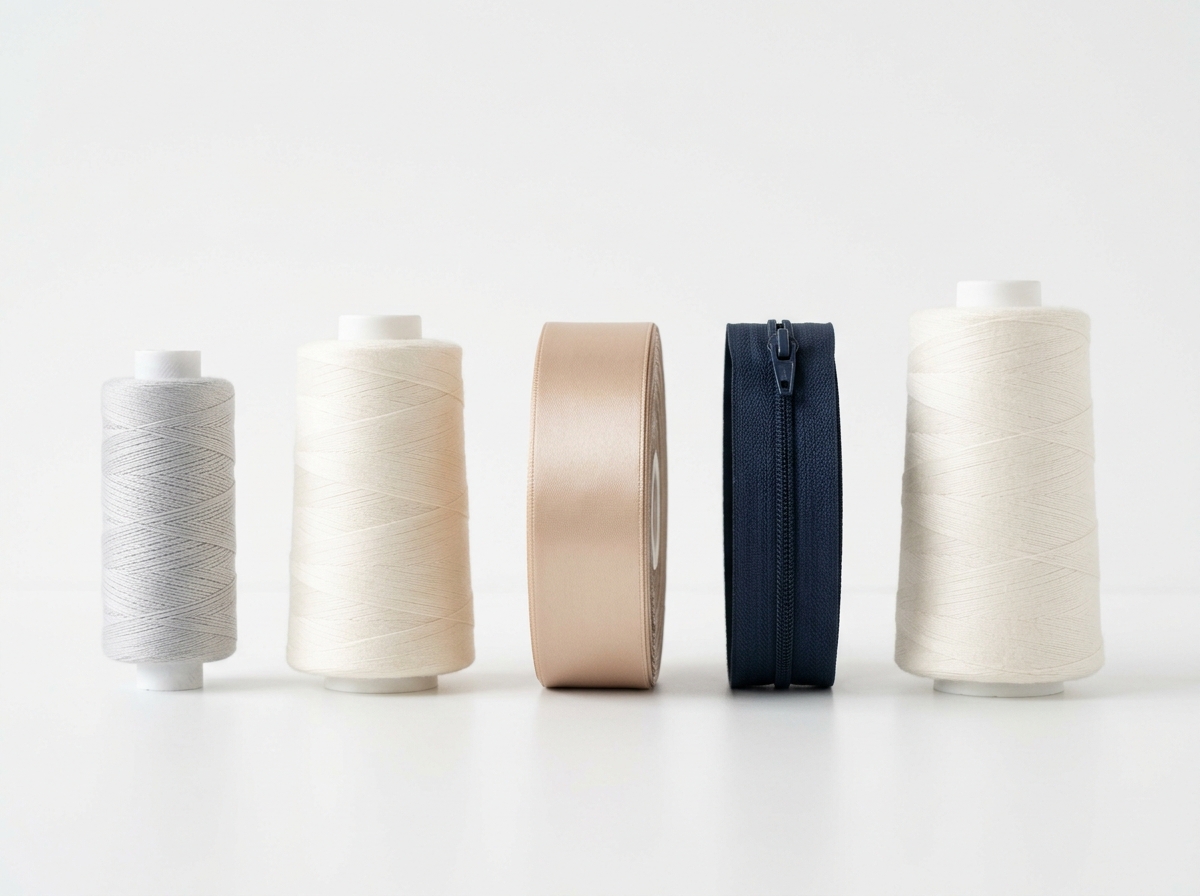 Wholesale sourcing considerations: MOQ, color range, and production reliability
Bulk buyers need to evaluate supply continuity, not just thread quality. In garment manufacturing, a thread shortage can stop a line even when the fabric and trims are ready. That is why thread sourcing should be reviewed alongside packaging, shade consistency, and delivery reliability. For elastic garments, stable supply is especially important because color and performance often need to remain consistent across multiple production batches.
A good sourcing checklist should include sample approval, cone specifications, carton packing, and the supplier’s ability to repeat the same shade lot. If the thread is used across several garment styles, confirm whether the supplier can offer consistent dye lots and manageable MOQ levels. This is particularly useful for buyers working in DIY and decorative applications where flexibility in color range is often as important as mechanical performance.
- Ask for the thread size, composition, and recommended needle range.
- Confirm whether the product is intended for overlock, coverstitch, or lockstitch.
- Request wash and stretch test results on the intended fabric.
- Check carton counts and cone weights for shipping efficiency.
- Verify MOQ, sample policy, and lead time before launch.
For international buyers, documentation matters. A supplier that can explain product structure, application limits, and packing details clearly is usually easier to work with over repeat orders. That transparency reduces the chance of mismatch between the sample stage and the bulk shipment.
Common sewing problems with elastic fabrics and how polyester stretch thread helps
Most stretch-garment defects are not caused by the fabric alone. They often come from the interaction of thread, needle, tension, and stitch geometry. When any one of those variables is off, the seam can pucker, break, or look uneven after finishing.
Polyester stretch sewing thread helps by giving the seam a better chance to move with the garment. However, it is not a cure-all. The machine setup still has to be tuned correctly. In practical terms, buyers should expect the sewing line to check tension, presser foot pressure, and needle condition before approving mass production.
| Problem | Likely Cause | Thread-Related Fix | Process Note |
|---|---|---|---|
| Seam popping | Low seam extensibility | Use more compliant polyester thread | Test at garment stress points |
| Puckering | Too much thread tension | Adjust tension and use smoother thread | Check stitch density |
| Uneven stitch appearance | Wrong thread size | Match thread to fabric weight | Sample before bulk sewing |
| Abrasion wear | Repeated friction | Use higher abrasion-resistant polyester | Review seam placement |
In many cases, a small change in thread choice can improve garment reliability more than a large change in machine speed. That is why experienced buyers treat thread as a functional component, not just a consumable. The right thread reduces rework, supports better fit retention, and makes the final garment more predictable in use.
Where polyester stretch sewing thread fits in a complete apparel supply chain
Thread sourcing is most effective when it sits inside a broader trim strategy. Elastic garments usually need more than thread: they may require zippers, lace, ribbons, sewing kits, scissors, and other production or finishing items. A supplier with a broader accessory catalog can simplify purchasing, reduce vendor count, and make replenishment easier. For example, buyers who already source invisible zipper solutions for dresses often prefer to consolidate trim procurement with one export-oriented partner.
This matters because buying behavior in apparel is often seasonal. Wedding wear, women’s fashion, and DIY demand can rise quickly, and the ability to source thread plus related accessories from one catalog can shorten planning time. In bulk operations, time saved on coordination can be worth more than a minor price difference.
For elastic garment lines, the strategic question is simple: will the thread support the garment through cutting, sewing, washing, wearing, and retail return risk? If the answer is yes, polyester stretch sewing thread is usually a strong candidate. If the answer is uncertain, a sample-based trial is the safest path.
Practical buyer checklist for polyester stretch sewing thread
Buyers should use a disciplined checklist before confirming an order. Thread quality is best assessed through repeatable criteria rather than intuition.
- Confirm garment category and seam stress level.
- Review thread composition and recommended stitch type.
- Test stretch recovery on the actual fabric.
- Verify wash performance using recognized test methods.
- Check shade consistency across sample and bulk lots.
- Confirm MOQ, packaging, and lead time.
- Approve final production only after pilot sewing.
When these steps are followed, polyester stretch sewing thread becomes a low-risk, high-utility component in elastic garment production. It supports fit, appearance, and durability while keeping procurement straightforward for wholesale buyers.
FAQ
Is polyester stretch sewing thread better than regular polyester thread for knitwear?
Yes, when the seam must move with the fabric. Regular polyester thread may work for some knitwear, but polyester stretch sewing thread is usually better for high-stretch garments because it gives the seam more recovery and reduces seam failure risk.
What garments use polyester stretch sewing thread most often?
It is commonly used in leggings, swimwear, lingerie, sportswear, children’s wear, and fashion knit garments. These items all experience repeated movement, so seam compliance matters.
How do I test whether the thread is suitable for elastic garments?
Run a pilot seam on the actual fabric, then test stretch recovery, wash performance, and seam appearance. If possible, compare results under your production stitch type and machine settings.
Does polyester stretch sewing thread work for wholesale buyers?
Yes. Wholesale buyers often prefer it because polyester is stable, broadly available, and suitable for repeated production runs. It also works well when color consistency and bulk packaging are important.
What should I ask a supplier before placing a bulk order?
Ask for composition, size, recommended needle, MOQ, packaging, shade consistency, and lead time. For elastic garments, you should also request sample testing on the intended fabric.
Why is colorfastness important for elastic garments?
Elastic garments are often washed frequently, stretched during wear, and exposed to sweat or detergents. A thread that passes laundering expectations, such as those referenced in ISO 105-C06, is more likely to keep the garment looking acceptable over time.
Can polyester stretch sewing thread reduce garment returns?
It can help when seam failure or appearance defects are caused by poor thread-fabric compatibility. The biggest gains usually come from matching thread type, stitch construction, and process settings to the garment’s real use case.

Post time: Jul-17-2026