- Choose a sewing thread manufacturer that can prove consistency in count, twist, and colorfastness.
- Match thread type to the end use: dresswear, wedding decor, repairs, or DIY production.
- Ask for MOQ, sample policy, packaging format, and lead time before comparing unit price.
- Use technical standards and test methods to verify performance, not just catalog claims.
- For wholesale sourcing, prioritize suppliers with broad color ranges and stable export logistics.
A professional sewing thread manufacturer should be judged by measurable performance, not by product photos alone. In textile testing, thread behavior is tied to stitch formation, seam durability, and break resistance, which is why many buyers reference standards such as ASTM D2256 for tensile properties of yarns and threads and ISO 2062 for determination of breaking force and elongation at break. For apparel buyers, the practical question is simple: will the thread run smoothly on the machine, hold tension under wear, and stay visually consistent across batches? That is exactly why wholesale buyers looking for sewing accessories, sewing thread, or related wholesale ribbon lines should evaluate the supplier as a process partner, not just a seller.
What a professional sewing thread manufacturer should prove first
The first sign of a reliable sewing thread supplier is process control across fiber selection, twisting, dyeing, winding, and packaging. In practical sourcing, buyers do not need every laboratory detail, but they do need evidence that each step is controlled well enough to prevent thread breakage, shade variation, and uneven buildup on cones. Polyester sewing thread is widely used because polyester fibers offer strong abrasion resistance and stable performance in general garment sewing, while cotton thread is often chosen for natural-fiber projects and a softer hand feel. For buyers in dresswear and wedding production, the choice usually depends on whether the seam must be visible, decorative, elastic, or hidden.
The best suppliers also make the buying decision easier by organizing product ranges around use cases. That matters because a distributor-facing catalog is not the same as a consumer shelf. A wholesale buyer usually needs a thread family that supports factory sewing, alterations, craft kits, and emergency repair use, often in multiple spool or cone formats. For that reason, a broad product structure like lace, zippers, and DIY tools can be a strength when the customer wants a one-stop sourcing list rather than a single SKU purchase.
Polyester thread manufacturer quality checks that matter in wholesale buying
Polyester thread quality is easiest to judge by what happens during sewing, not by the catalog description alone. The thread should feed evenly, resist fraying, and maintain enough strength for repeated needle penetration without excessive lint generation. For a sewing factory, those details affect both productivity and seam appearance; for a home sewing buyer, they affect whether the machine jams or the stitch looks clean. A good polyester thread manufacturer should be able to discuss yarn construction, twist direction, lubrication, and recommended needle size in plain language.
Buyers should also ask for objective test references. ASTM D2256 is commonly used to assess yarn tensile properties, while ISO 2062 provides a standardized route for measuring breaking force and elongation. For thread sourcing, that matters because a sample that looks smooth can still fail under real machine tension. If a supplier can explain how their thread behaves in single-needle lockstitch, overlock, or decorative sewing applications, that is a stronger sign of competence than generic “high quality” claims. For product categories such as sewing thread and sewing accessories, this kind of technical clarity helps buyers reduce trial-and-error costs.
How to compare a sewing thread supplier by measurable criteria
Comparing suppliers works best when the evaluation is built around measurable sourcing questions. A buyer should ask about thread count or ticket system, cone weight, available colors, sample lead time, bulk MOQ, carton dimensions, and whether shade matching can be done against a fabric swatch or Pantone reference. In wholesale trade, these details can matter more than a small unit-price difference because they determine how quickly a buyer can launch production or replenish stock.
| Buyer Checkpoint | Why It Matters | What to Ask |
|---|---|---|
| Thread type | Controls stitch strength and appearance | Polyester, cotton, or blended construction |
| Color range | Reduces stockouts for apparel and craft buyers | How many colors are available per batch |
| Packaging | Impacts storage and export efficiency | Spool, cone, carton, and private label options |
| MOQ | Determines order feasibility for wholesale buyers | Minimum order per color or per SKU |
| Sample policy | Reduces sourcing risk | Free sample, paid sample, or freight collect |
In a professional sourcing workflow, these checkpoints should be reviewed before price negotiation. A thread that is slightly more expensive but arrives in consistent shade and cone weight can save time in production and reduce rework. That logic is especially important for wedding and dress applications, where thread color and seam neatness are highly visible.
Material choice in sewing thread supplier selection: polyester, cotton, and blended options
Material choice should follow end use, not habit. Polyester sewing thread is usually the default for broad commercial use because it offers strong all-around performance and better moisture resistance than cotton in many everyday applications. Cotton thread is often favored for natural-fiber garments, quilting, and certain heritage sewing projects where a softer matte look is preferred. Blended or core-spun options can be useful when a buyer needs a balance of smooth sewing and mechanical strength.
| Thread Type | Typical Strength Profile | Best Use Case |
|---|---|---|
| Polyester | High abrasion resistance, stable elongation | Apparel, repairs, wholesale general sewing |
| Cotton | Moderate strength, softer hand feel | Quilting, natural-fiber garments, decorative sewing |
| Core-spun | Balanced tensile performance and sewability | Durable seams, mixed-use production |
For many buyers, the real question is not which fiber is “best” in absolute terms, but which one matches the fabric, machine, and customer expectation. A sewing thread supplier that can explain those tradeoffs clearly is more useful than one that simply lists products by color.
Why wedding, dress, and DIY buyers need different sewing thread specifications
Different applications create different purchasing priorities. Wedding buyers often need color precision, soft visual appearance, and dependable batch consistency because the thread may be used in visible finishing, lace attachment, or garment repair before delivery. Dress buyers care about seam neatness, stretch compatibility, and the ability to keep up with fine fabrics. DIY buyers often value convenience, mixed kits, and practical spool sizes more than industrial-scale volume.
That is why a good sewing thread manufacturer should be able to support both industrial and small-batch use cases. For example, lace products and ribbon products often travel together with sewing thread in wedding and decorative sourcing plans, while a buyer focused on home repair may pair thread with DIY tools or zippers. This product-structure logic is especially useful for B2B buyers who want to place one mixed order rather than manage multiple vendors.
Technical data that helps buyers verify a sewing thread manufacturer
Verifiable data reduces sourcing risk. Buyers should not accept vague claims such as “strong,” “durable,” or “premium” without numbers, test methods, or working parameters. In textile and sewing applications, the most useful specifications are thread count, tensile strength, elongation, color fastness, and winding consistency. A supplier who can provide those figures, along with test methods, is generally more credible than one who only offers marketing language.
| Technical Item | Why It Is Useful | Reference Point |
|---|---|---|
| Tensile testing | Shows break resistance under load | ASTM D2256 / ISO 2062 |
| Elongation at break | Indicates stretch before failure | Measured in percent |
| Breaking force | Supports seam durability decisions | Measured in newtons |
| Color stability | Reduces shade mismatch in bulk orders | Batch-to-batch comparison |
| Packaging consistency | Prevents logistics issues | Cone weight and carton count |
For context, ISO 2062 and ASTM D2256 are useful because they turn thread quality into testable results rather than subjective impressions. That is exactly the kind of evidence a serious sewing thread supplier should be ready to discuss with export buyers, sourcing teams, and private-label customers.
Wholesale sourcing questions to ask before you buy sewing thread in bulk
Wholesale buying becomes easier when the supplier can answer operational questions quickly and consistently. A buyer should always clarify whether samples are available, whether colors can be matched to a reference, and whether the supplier can keep the same specification across repeat orders. In export trade, these details are often more important than a single quote because the cost of delay or mismatch can exceed the savings from a lower unit price.
- What is the MOQ per color, per count, and per carton?
- Can you provide pre-production samples before bulk confirmation?
- How do you handle shade variation between dye lots?
- What is the normal lead time for repeat orders?
- Can the packaging support retail, wholesale, or private-label resale?
These questions also reveal how mature the supplier is. A professional sewing thread manufacturer will answer them with clear policies rather than vague promises. Buyers sourcing for wedding, dress, or DIY use should especially ask about color swatches, because decorative applications are more sensitive to visual mismatch than general repair work.
Cost, quality, and logistics: the real tradeoff in sewing thread supplier selection
The lowest quote is not always the lowest total cost. In wholesale sourcing, total cost includes defect risk, unusable shade lots, delayed shipping, and labor spent checking every cone. A thread supplier with stable quality may be more economical even if the purchase price is slightly higher. This is particularly true for apparel and wedding production, where missed deadlines can be expensive.
For large buyers, the ideal supplier should be able to balance consistent quality with practical logistics such as carton labeling, export packing, and container efficiency. That matters because sewing thread is a replenishment item; buyers often reorder based on seasonality, production cycles, and repeat color needs. In that sense, a dependable supplier reduces uncertainty as much as it reduces cost.
| Sourcing Factor | Low-Cost Risk | Value-Based Advantage |
|---|---|---|
| Unit price | May hide quality inconsistency | Stable economics over repeat orders |
| Sample accuracy | Mismatch can create rework | Better production predictability |
| Lead time | Rush shipping raises cost | Better planning and inventory control |
| Packaging | Damaged cones or mixed cartons | Lower receiving loss and sorting time |
In practice, many buyers find that supplier responsiveness matters nearly as much as technical quality. If a vendor can solve small problems quickly, that often predicts better performance on larger replenishment orders.
How New Swell’s catalog structure helps sewing thread buyers
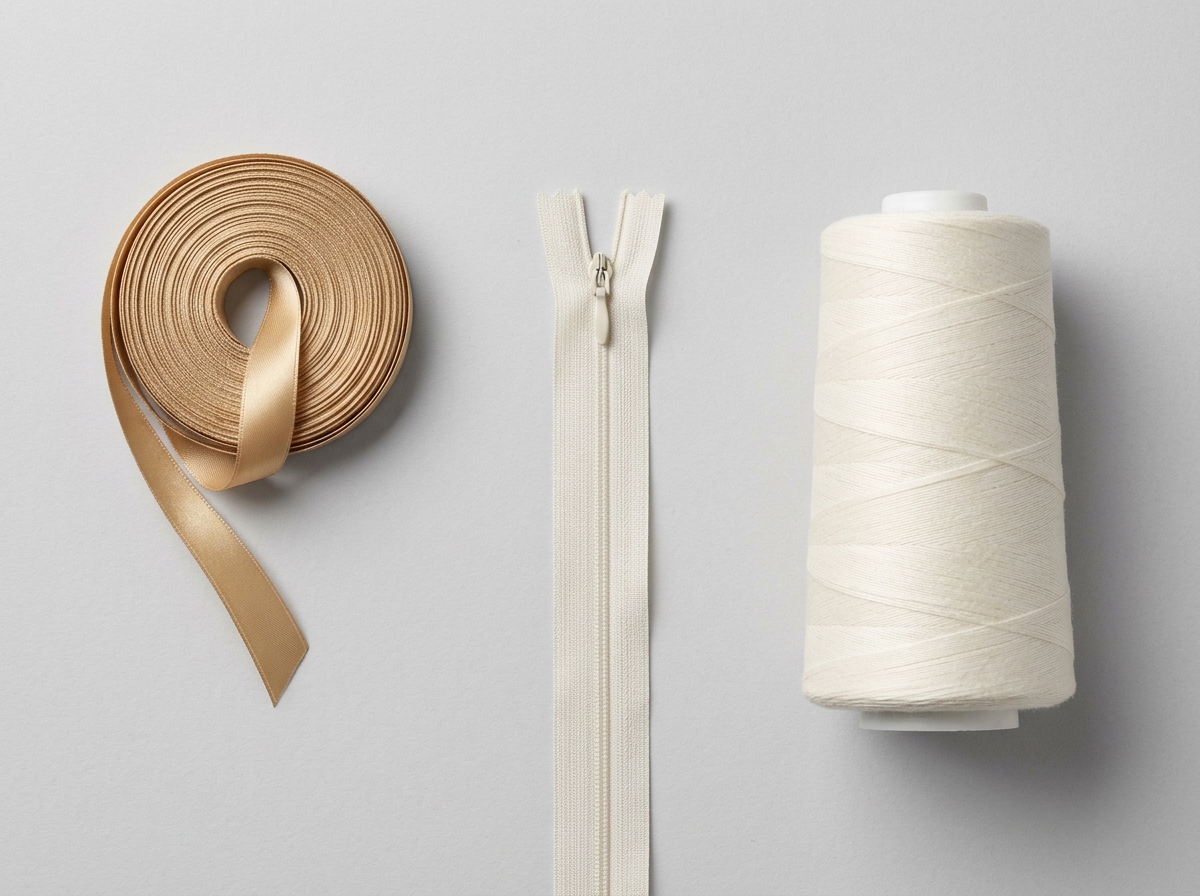
A catalog built around accessories and tools can be useful when a buyer is sourcing a full sewing or craft program. New Swell’s product structure combines thread with related categories such as ribbon, zipper, lace, and DIY tools, which fits the way many wholesale buyers actually purchase. Instead of sourcing a single item in isolation, they often need a coordinated basket of products for apparel production, wedding decoration, or retail resale.
That structure also supports broader commercial planning. For example, a wedding buyer may need thread, lace, and ribbon in matching color families. A garment buyer may want thread and invisible zippers in one shipment. A DIY distributor may bundle sewing thread with scissors and kits for an entry-level starter set. This is why a one-category view is often too narrow for procurement.
Decision framework: how to identify the right sewing thread manufacturer quickly
The fastest way to choose a sewing thread manufacturer is to compare evidence, not slogans. Buyers should look for the combination of technical clarity, wholesale flexibility, and product relevance to their end market. If the supplier can explain construction, provide measurable specs, offer sampling support, and keep consistent packaging and color control, that is usually a strong sign of maturity.
A practical decision framework is to score each supplier on five areas: product fit, test transparency, MOQ flexibility, logistics readiness, and repeat-order stability. For apparel and decorative sourcing, this framework usually outperforms price-only comparison because it reflects real procurement risk. In many cases, the best sewing thread supplier is the one that reduces operational friction across the full buying cycle.
- Confirm fiber type and intended use.
- Request sample cones and compare on your own machine.
- Review MOQ, packaging, and color options.
- Check whether the supplier cites standards such as ASTM D2256 or ISO 2062.
- Test repeatability with a second order before scaling up.
FAQ
What should you look for in a sewing thread manufacturer first?
Start with material consistency, tensile performance, color stability, MOQ, and sample support. A professional sewing thread manufacturer should be able to explain how the thread performs in real sewing conditions.
Is polyester thread better than cotton thread for wholesale sewing?
Polyester is usually preferred for general commercial sewing because it offers strong abrasion resistance and stable performance. Cotton is often chosen for softer hand feel, quilting, and natural-fiber projects.
How do I test a sewing thread supplier before placing a bulk order?
Ask for samples, sew them on your own machine, check breakage and feed consistency, and compare shade across more than one sample lot. Repeat-order consistency is especially important.
Why are ISO 2062 and ASTM D2256 relevant to thread buying?
They provide standardized methods for measuring breaking force and tensile properties. That gives buyers objective data instead of relying only on catalog claims.
What MOQ should I expect from a wholesale sewing thread supplier?
MOQ varies by color, count, and packaging format. The right answer is not one fixed number; it is whether the MOQ fits your production volume and inventory plan.
How important is packaging for sewing thread in export orders?
Very important. Packaging affects storage, transport damage, carton efficiency, and private-label readiness. Good packaging also reduces sorting time after receiving.
Can one sewing thread supplier cover dress, wedding, and DIY needs?
Yes, if the supplier has a broad catalog and can support multiple thread types, color ranges, and packaging formats. That is often more efficient for mixed wholesale buyers.

Post time: Aug-08-2026