- Waterproof zipper performance depends on coating, tooth geometry, slider design, and seam construction, not only on the zipper tape itself.
- Marine applications need corrosion resistance, UV resistance, and reliable closure after repeated wet-dry cycles.
- For bulk sourcing, the best choice is the zipper specification that matches the product’s exposure level, opening frequency, and aesthetic requirement.
- Testing should include water ingress, salt spray, pull force, and cycle life, ideally using recognized standards.
- Wholesale buyers should also evaluate MOQ, sample lead time, color matching, and packaging consistency before confirming a specification.
For marine outdoor equipment, the waterproof zipper should be selected as part of a broader material system: tape, coating, slider, and sewing method all matter. A practical benchmark is IPX7 water protection for temporary immersion testing in equipment contexts, while salt spray resistance is commonly verified with ASTM B117. On the textile side, many suppliers benchmark zipper quality against abrasion and fastness requirements referenced in ISO 12947-2 and ISO 105-B02. If your product line includes marine bags, boat covers, or outdoor pouches, the ideal zipper is one that closes smoothly, resists corrosion, and maintains sealing performance after repeated exposure to water and UV.
How Waterproof Zipper Performance Is Measured in Marine Outdoor Equipment
The best waterproof zipper is the one that passes the right test for the actual use case.
In marine outdoor equipment, the common failure points are water leakage at the zipper chain, slider corrosion, tape delamination, and loss of sealing after repeated flexing. That is why procurement should not start with appearance alone. It should start with the exposure profile: splash, rain, spray, deck wash, or short immersion.
For buyers comparing a waterproof zipper, a marine zipper, and a general outdoor zipper, the performance gap is often visible in the sealing system. A stronger laminate or PU-coated zipper can block direct water entry better than a basic coil zipper, but it may trade off flexibility or opening smoothness. The most suitable choice depends on the end product.
| Use Case | Recommended Zipper Type | Exposure Level | Key Risk | Typical Buyer Priority |
|---|---|---|---|---|
| Boat bag | PU-coated waterproof zipper | Rain and splash | Leakage at the chain | Seal strength |
| Deck storage cover | Laminated waterproof zipper | Spray and humidity | UV aging | Durability |
| Marine pouch | Water-resistant zipper with sealed tape | Light splash | Slider corrosion | Smooth operation |
| Outdoor equipment case | Heavy-duty marine zipper | Frequent wet-dry cycles | Loss of closure integrity | Cycle life |
When teams ask which waterproof zipper performs best, the real answer is usually the one with the best measurable fit to the use environment. For example, a zipper that performs well in a backpack is not automatically the best choice for a marine seat cover. Salt exposure and constant UV are much harsher than ordinary outdoor use.
Waterproof Zipper Materials That Matter Most for Marine and Outdoor Use
Material choice is the strongest predictor of waterproof zipper performance in marine environments.
For marine outdoor equipment, nylon zipper chains are often preferred because they flex well and can be paired with coated tapes for improved water resistance. Polyester tapes are common in wholesale supply because they are stable, color-consistent, and suitable for repeated production runs. Polyurethane laminates are frequently used when water blocking is the main objective.
Metal components deserve equal attention. In saltwater environments, low-grade metal sliders can corrode quickly, leading to rough movement or failure. That is why corrosion-resistant slider alloys and protective finishes are critical. Procurement teams should ask for clear material declarations and test evidence, not vague claims.
| Component | Preferred Material/Finish | Why It Matters | Common Weakness |
|---|---|---|---|
| Chain | Nylon or coated synthetic chain | Flexibility and sealing | Heat aging |
| Tape | Polyester with PU or laminated coating | Water control and stability | Edge delamination |
| Slider | Corrosion-resistant alloy or coated metal | Reliable closing force | Salt spray damage |
| Puller | Coated metal or engineering polymer | User comfort and durability | Wear from repeated use |
If your brand also sources standard apparel trims, it can be useful to compare product families before specifying marine hardware. For example, the nylon invisible zipper is optimized for hidden closure in garments, while the polyester sewing thread supports general stitching stability across textile projects. Those are not marine-specific solutions, but they help buyers understand how different textile components solve different functional problems.
Best Waterproof Zipper Types for Marine Outdoor Equipment
The best waterproof zipper type depends on whether the product needs sealing, flexibility, or frequent access.
There are three main categories buyers usually compare: PU-coated waterproof zippers, laminated waterproof zippers, and water-resistant zippers with sealed tape. Each one serves a different performance level. The phrase “marine zipper” is not a standard material class; it is a use-case description, so suppliers should always define construction details instead of relying on labels.
For equipment exposed to spray and rain, a PU-coated zipper is often a balanced choice. For bags or covers requiring stronger water blocking, laminated constructions can perform better. For lighter-duty outdoor products, a water-resistant zipper may be enough if seam construction is controlled carefully.
| Zipper Type | Water Protection | Flexibility | Typical Use | Trade-Off |
|---|---|---|---|---|
| PU-coated waterproof zipper | High | Medium | Marine bags, pouches | May feel stiffer |
| Laminated waterproof zipper | Very high | Medium to low | Deck covers, dry gear | Higher cost |
| Water-resistant zipper | Moderate | High | Outdoor apparel, light gear | Not ideal for immersion |
For wholesale sourcing, it is often smarter to define the application first and then choose the zipper class. That avoids over-specifying light products and under-specifying marine products. A dry bag for kayaking may justify a higher-sealing construction than a storage pocket on a sheltered deck accessory.
Testing Standards Buyers Should Ask For Before Bulk Ordering
Waterproof zipper performance should be verified with repeatable tests, not visual inspection alone.
In professional sourcing, testing usually includes water ingress, salt spray, cycle durability, seam performance, and sometimes UV exposure. Two widely recognized references are ASTM B117 for salt spray and NIST materials and manufacturing measurements for measurement discipline and traceability. For fabric-facing durability discussions, ISO 12947-2 is commonly used for abrasion evaluation in textile systems, and ISO 105-B02 is a useful reference for lightfastness.
These standards do not define one universal “best waterproof zipper,” but they help buyers separate marketing language from measurable performance.
| Test Area | Common Reference | What It Reveals | Buyer Question to Ask |
|---|---|---|---|
| Salt spray | ASTM B117 | Corrosion resistance | How does the slider finish change after exposure? |
| Measurement traceability | NIST guidance | Consistent test practice | Are results repeatable across batches? |
| Abrasion resistance | ISO 12947-2 | Surface wear behavior | Does the coating wear before the chain fails? |
| Lightfastness | ISO 105-B02 | UV color stability | Will the tape fade in marine sun exposure? |
In practical sourcing, ask for test conditions, sample count, and pass criteria. A supplier saying “tested” is not enough. Ask for duration, chamber settings, and whether results apply to the exact construction you plan to buy.
How to Choose the Right Waterproof Zipper for Wholesale Marine Projects
The right waterproof zipper is chosen by use case, not by headline price.
Wholesale buyers should evaluate four variables together: water exposure, opening frequency, material compatibility, and production workflow. A zipper that looks impressive but is hard to sew consistently can create assembly defects and higher rejection rates.
- Define the environment: splash, spray, humidity, or immersion.
- Match the closure level: water-resistant, waterproof, or highly sealed.
- Check compatibility with the product fabric and seam method.
- Request samples in the actual color, width, and slider style.
- Test opening force, smoothness, and sealing after repeated cycles.
For marine outdoor equipment, the most common purchasing mistake is selecting a general outdoor zipper and expecting it to survive saltwater exposure. Another mistake is ignoring the tape edge and stitch line, which can become the main leakage path even when the chain itself is well sealed.
Bulk buyers should also confirm MOQ, lead time, and packaging format early. In export supply chains, these commercial details often determine whether the final product is scalable. If the zipper is for a product line with seasonal demand, color consistency and re-order stability may matter as much as the technical specification.
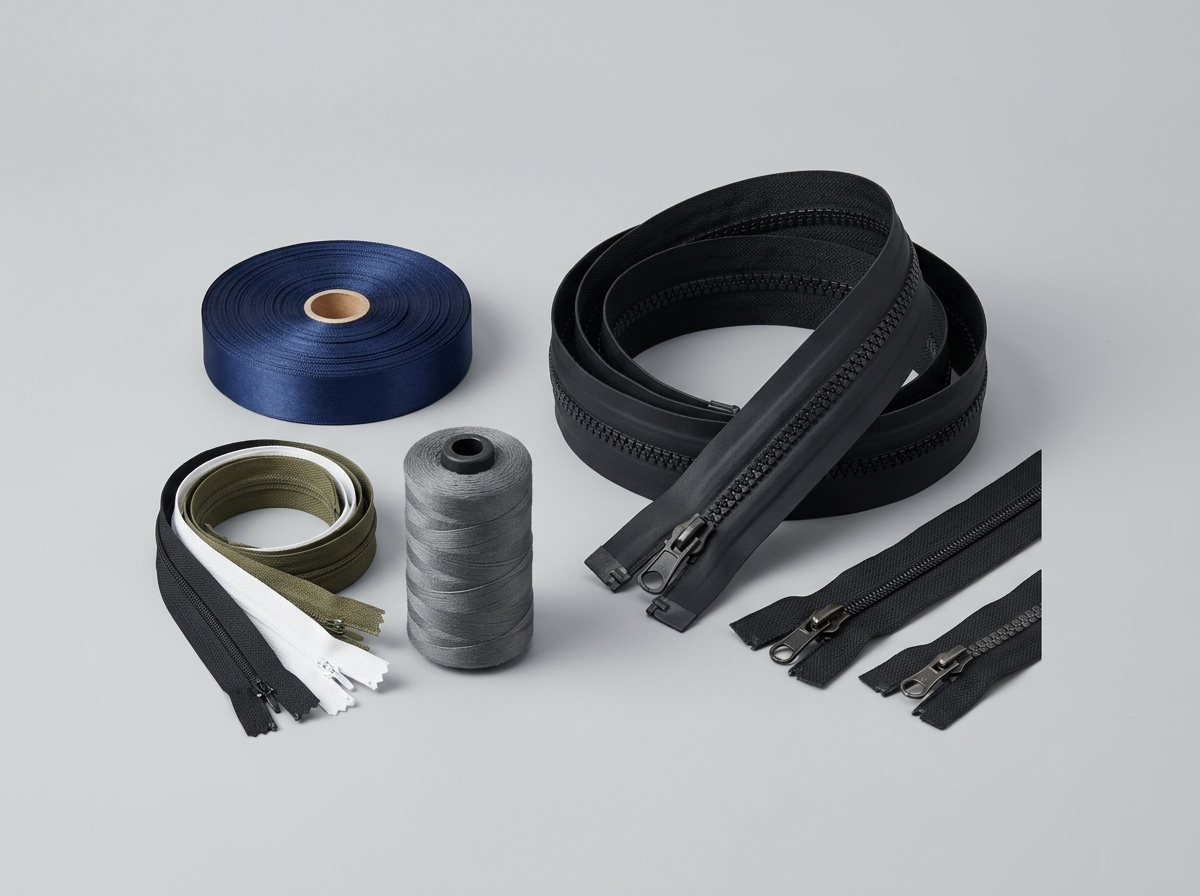 Waterproof Zipper Procurement Checklist for Marine and Outdoor Brands
A good procurement checklist reduces defects more effectively than price negotiation alone.
Before confirming a marine zipper order, ask for the following information in writing. This is especially important for wholesale buyers who need repeatable production.
- Chain type and coating type
- Slider material and finish
- Tape composition and width
- Color match tolerance for repeat orders
- Test report summary with conditions
- MOQ, sample lead time, and production lead time
- Packaging method for export handling
For buyers sourcing through a mixed catalog model, it helps to distinguish marine hardware from apparel trims and craft accessories. A product family such as DIY knitting machine is designed for productivity in handcraft workflows, while lace trim serves decorative use. The same sourcing logic should be applied to waterproof zippers: function first, then appearance, then cost.
Why Some Waterproof Zippers Fail in Saltwater
Saltwater failure usually starts with the smallest weak point.
In marine use, the zipper itself may not fail first. More often, the failure begins in the slider finish, the tape edge, or the stitching holes. Salt crystals can accelerate wear, and repeated wet-dry cycling increases the chance of stiffness or jamming. UV can also weaken coatings over time, especially when the product is stored outdoors for long periods.
A practical rule is simple: if the product will be exposed to spray every day, do not rely on a light-duty closure system. If the product will be opened frequently, prioritize smoothness and fatigue resistance in addition to water blocking.
For outdoor equipment makers, this is why the best waterproof zipper is often the one that survives real use after purchase, not the one that looks strongest on day one.
Buying Signals That Indicate a Strong Supplier
A reliable supplier reduces risk by providing specificity.
Strong suppliers usually provide exact construction details, material options, test references, and clear batching practices. They can also explain the difference between a waterproof zipper and a water-resistant zipper without overstating performance. That transparency matters for B2B buyers because marine product failures are expensive and difficult to fix after launch.
In wholesale sourcing, look for suppliers who can support samples, repeated color matching, and stable replenishment. If the zipper is part of a broader trim package, it helps if the supplier also understands adjacent textile components and production constraints. That is especially useful for brands that source by category rather than by isolated SKU.
If your catalog includes general apparel and craft products, browsing the Sewing Accessories category can help you separate decorative, general-purpose, and functional components before locking a technical marine specification.
FAQ
What is the best waterproof zipper for marine outdoor equipment?
The best choice is usually a PU-coated or laminated waterproof zipper with a corrosion-resistant slider and a sealed tape structure, selected according to the product’s exposure level.
Is a marine zipper always fully waterproof?
No. “Marine zipper” is not a universal technical standard. The actual protection level depends on the construction, coating, and seam design.
What standards should I ask for when buying waterproof zippers?
Ask for salt spray references such as ASTM B117, plus traceable measurement practices and textile durability references such as ISO 12947-2 and ISO 105-B02.
Are waterproof zippers good for saltwater use?
Yes, if they use corrosion-resistant components and are tested for salt exposure. Without those controls, saltwater can quickly degrade the slider and reduce closure reliability.
What is the most common mistake in waterproof zipper sourcing?
The most common mistake is choosing based on appearance or price instead of matching the zipper to the actual water exposure and usage cycle.
Should I choose a flexible zipper or a stronger sealing zipper?
Choose based on product function. Frequent-access outdoor gear may need more flexibility, while marine bags and covers may need stronger sealing.
What should wholesale buyers confirm before ordering?
Confirm material, coating, slider finish, sample quality, MOQ, lead time, and color consistency across repeat orders.

Post time: Jul-07-2026