- OEM polyester sewing thread is preferred when buyers need consistent quality, private-label control, and scalable wholesale supply.
- Global sourcing decisions usually depend on three factors: specification stability, sample approval process, and packaging flexibility.
- For apparel and DIY channels, polyester thread is favored because it offers strong seam performance, good abrasion resistance, and broad machine compatibility.
- Supplier selection should be based on measurable criteria such as tensile strength, elongation, colorfastness, cone weight, and MOQ.
- In B2B procurement, the most reliable sewing thread supplier is the one that can support repeat orders with the same shade, twist, and finish.
OEM polyester sewing thread is a core wholesale consumable for apparel factories, wedding accessory sellers, and DIY kit distributors, and buyers compare it using measurable quality targets rather than brand claims. In textile testing, tensile performance is commonly verified under ISO 2062, while seam performance and thread-to-fabric compatibility are often checked against methods such as ASTM D204 for twist-related properties and related textile inspection routines. For procurement teams, the practical question is simple: can the polyester sewing thread manufacturer deliver the same shade, the same cone build, and the same sewing behavior across repeated bulk orders?
Why Global Buyers Choose an OEM Polyester Sewing Thread Manufacturer
Global buyers prefer OEM polyester sewing thread manufacturers because the OEM model aligns product control with commercial scale. The first advantage is specification control. A buyer can request ticket size, ply count, filament structure, lubricant finish, cone weight, and packaging format instead of accepting a fixed catalog item. The second advantage is repeatability. When a wedding supplier reorders the same ivory shade six months later, the cost of a color mismatch is higher than a small unit-price difference.
The third advantage is brand flexibility. Many importers want thread sold under their own label, especially in bulk channels where customers expect private packaging, barcode labels, and carton markings. The fourth advantage is operational efficiency. A sewing thread supplier that already serves wholesale buyers can usually coordinate sampling, color matching, carton loading, and export documents in one workflow. That matters because sewing thread is a high-frequency replenishment item, not a one-time specialty purchase.
For buyers in dressmaking and garment repair, polyester thread is also a practical material choice. Polyester is known for higher abrasion resistance than many natural-fiber alternatives and for better moisture stability in everyday use. In ordinary garment seams, that combination reduces breakage during sewing and improves service life in wear conditions. When buyers ask for a supplier of polyester sewing thread, they are usually asking for a stable production system, not just a spool.
| Buyer Need | Why OEM Helps | Typical Procurement Metric |
|---|---|---|
| Private label growth | Custom packaging and carton branding | 1 to 2 label versions per SKU |
| Color consistency | Controlled shade approval before mass production | Approved strike-off before bulk order |
| Stable replenishment | Repeatable process and batch traceability | Same ticket, ply, and finish per reorder |
| Wholesale margins | Factory-direct or export-ready supply chain | MOQ based on cone or carton count |
What Makes Polyester Sewing Thread the Default Choice in Apparel and DIY
Polyester sewing thread is the default choice because it covers the broadest range of sewing scenarios with acceptable cost, strength, and machine compatibility. In garment production, the thread must feed smoothly, maintain stitch formation, and survive repeated friction through needles, guides, and fabric layers. Polyester performs well in all three areas, which is why it is widely used in clothing factories, repair shops, and home sewing kits.
One reason buyers prefer polyester is that it supports both industrial and consumer sewing needs. Apparel factories often prioritize consistent tension performance on high-speed machines, while DIY customers want fewer breakages on domestic machines. Polyester handles both better than many niche threads because it offers a balanced profile rather than an extreme one. For many purchasing managers, that balance reduces the number of SKUs they must hold in stock.
From a market standpoint, the thread category is also attractive because it is consumable. Consumables generate repeat orders, so buyers care about continuity more than novelty. A wedding decor seller may reorder the same decorative thread every season, while a repair shop may reorder monthly based on usage. This is why wholesale buyers often prefer a sewing thread supplier that can support multiple shipment cycles without changing appearance or performance.
For buyers comparing thread materials, the decision often comes down to end use. Polyester is a general-purpose choice for dresses, shirts, uniforms, bags, and many home projects. If the application is more specialized, the buyer may compare bonded thread, core-spun thread, cotton thread, or specialty decorative options. But for broad-spectrum purchasing, polyester sewing thread remains the most efficient baseline.
| Thread Type | Main Advantage | Typical Use Case | Purchasing Risk |
|---|---|---|---|
| Polyester sewing thread | Balanced strength and abrasion resistance | Apparel, repair, DIY kits | Low when shade is controlled |
| Cotton thread | Natural hand-feel | Vintage garments, niche crafts | Shrinkage and lower durability |
| Bonded thread | Extra abrasion resistance | Heavy-duty seams | Higher cost and narrower use |
| Core-spun thread | Better seam appearance and strength | Jeans, workwear | More demanding specification control |
How a Polyester Sewing Thread Manufacturer Should Be Evaluated
A reliable polyester sewing thread manufacturer should be judged by measurable quality controls, not by catalog breadth alone. The first checkpoint is raw material consistency. Buyers should ask whether the thread is made from continuous filament polyester, spun polyester, or another construction, because the structure affects sewing behavior, lint generation, and seam appearance. The second checkpoint is testing discipline. Tensile properties should be verified using standard methods such as ISO 2062, which is widely used for tensile testing of textile yarns.
The third checkpoint is color control. For fashion, bridal, and trims supply, shade consistency can determine whether the order is acceptable. Buyers should request lab dips, strike-offs, or approved master samples before bulk production. The fourth checkpoint is packaging accuracy. Spool weight, cone density, shrink wrap quality, and carton labeling all affect warehouse handling and retail presentation. An export-oriented sewing thread supplier should be able to provide both neutral bulk packing and OEM retail formats.
There is also a commercial checkpoint: communication speed. In wholesale sourcing, sample turnaround, proof approval, and shipment coordination often matter as much as the unit price. Buyers who serve wedding or DIY markets face seasonal spikes, so a delayed sample can mean a missed selling window. That is why procurement teams usually choose manufacturers that can quote clearly on MOQ, lead time, and reorder repeatability.
- Confirm thread construction, ticket size, and intended fabric type.
- Request a physical sample and approve color under daylight or standard light.
- Check tensile, elongation, and stitch performance on your own machines.
- Verify packaging, labeling, and carton count before mass production.
- Lock the approved reference sample for all repeat orders.
| Evaluation Point | Buyer Question | Evidence to Request | Why It Matters |
|---|---|---|---|
| Material structure | Spun or filament polyester? | Technical sheet | Impacts lint and seam feel |
| Tensile performance | Will it survive machine sewing? | ISO 2062 test report | Reduces thread breakage |
| Color stability | Will reorder shades match? | Master sample or strike-off | Prevents batch mismatch |
| Packaging | Is it ready for wholesale? | Carton spec and label proof | Supports warehouse efficiency |
 Quantitative Quality Signals Buyers Can Actually Compare
Buyers should compare polyester sewing thread using numbers they can verify, not vague claims. One useful benchmark is the test standard itself: ISO 2062 defines the tensile testing approach for textile yarns, which helps procurement teams compare claims from different sewing thread manufacturers under a common method. Another relevant reference is ASTM D204, which covers twist testing for yarns and is useful when buyers want to understand how thread structure may affect sewing behavior.
In practical procurement, buyers often ask for thread count, ticket size, and break strength ranges. Exact values vary by construction, but the important point is consistency. If a supplier offers multiple polyester sewing thread grades, the buyer should ask for a specification table showing the same metric set for every SKU. That lets the buying team compare fine thread for apparel seams, medium thread for general stitching, and heavier options for bags or reinforced seams.
Machine settings also matter. A thread that works on one machine at one needle size may fail on another. Procurement teams should therefore verify compatibility across their own sewing line, including needle system, stitch density, and fabric thickness. In high-volume garment sewing, this is often more important than a small difference in tensile number. The best sewing thread supplier will understand that a thread is only “good” if it runs well at scale.
| Comparative Signal | What to Ask For | Reference Method | Buyer Impact |
|---|---|---|---|
| Tensile strength | Result by ticket size | ISO 2062 | Thread breakage risk |
| Twist level | Turns per meter | ASTM D204 | Stitch balance and lint |
| Color match | Approved master sample | Visual approval under standard light | Reorder consistency |
| Package weight | Net cone weight | Supplier spec sheet | Warehouse planning |
Why Wholesale Buyers Care About MOQ, Samples, and Lead Time
MOQ, samples, and lead time are often the real decision drivers in OEM polyester sewing thread sourcing. A buyer can accept a slightly higher unit cost if the supplier supports a manageable MOQ and fast sampling. That is especially true for wedding accessories, seasonal DIY kits, and private-label retail packs, where cash flow depends on inventory turns rather than one large production run.
Sampling is not a formality. It is the point at which the buyer checks sewing performance on real fabric, confirms color under real lighting, and sees whether the cone winding matches warehouse expectations. If the sample passes but the bulk order changes in shade or twist, the supplier has created a hidden risk. Strong manufacturers solve this by treating the sample as the production reference and documenting all approved details.
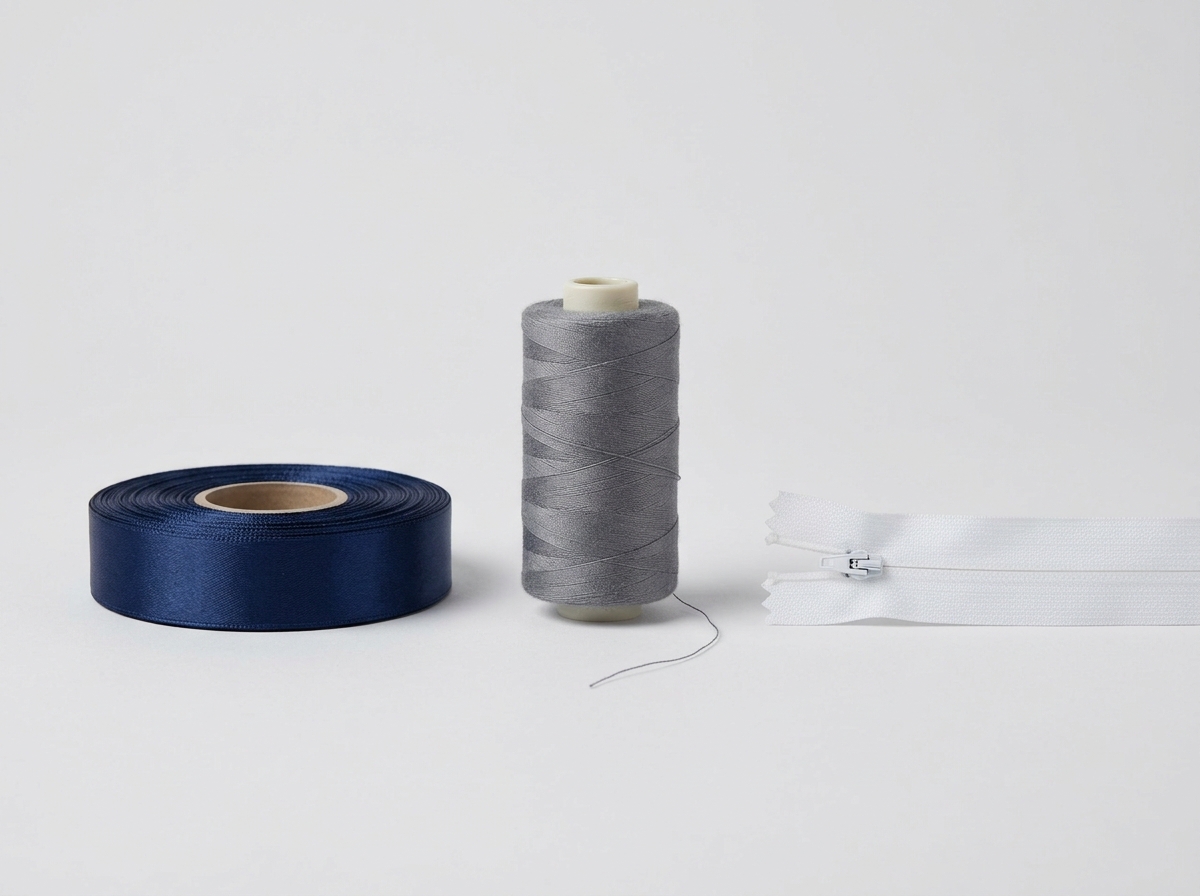
Lead time also matters because sewing thread is often purchased as part of a wider accessory bundle. A buyer may need ribbons, zippers, lace, and tools in the same shipment. If one item misses the schedule, the bundle is delayed. This is one reason many importers prefer suppliers with a broader accessory catalog and export coordination capability, such as sewing thread, ribbon, and lace pages that support mixed-category sourcing.
For buyers building a broader sourcing program, it helps to understand the supplier’s product structure. A catalog organized around accessories and tools often supports cross-selling and consolidated shipping better than a single-item vendor. That is useful for procurement teams that want to source thread alongside zippers, scissors, or kits from the same export partner.
- Ask for MOQ in cones, cartons, or mixed-color sets.
- Request a physical sample before any large purchase order.
- Confirm whether lead time changes for custom colors or OEM labels.
- Lock the same packaging spec for all future reorders.
Use Cases: Dress, Wedding, and DIY Buying Scenarios
Different channels buy polyester sewing thread for different reasons, and the best supplier understands those differences. In dress and apparel supply, thread selection is tied to seam appearance, machine runnability, and color matching with fabric. In wedding and bridal supply, the thread may need to disappear visually while maintaining a clean seam on delicate fabrics. In DIY retail, the buying decision is often driven by convenience, small pack formats, and easy color selection.
For dressmaking, the buyer usually needs a reliable general-purpose thread that can handle hems, seams, and small repairs. For wedding products, the buyer may prioritize ivory, white, champagne, and other neutral tones, plus neat winding that looks presentable in retail packaging. For DIY kits, the buyer often wants a thread set that pairs with scissors, needles, and basic sewing accessories. This is why a category structure built around sewing accessories and sewing kit offerings is useful for wholesale merchandising.
Commercial buyers also care about assortment strategy. A wedding seller may order fewer SKUs but deeper color coverage in ivory and white. A home sewing distributor may want smaller mixed packs with visible labels. A garment exporter may need only a few technically defined thread options in large volume. A good polyester sewing thread manufacturer can support all three patterns without changing core production discipline.
| Use Case | Primary Buyer Concern | Typical Thread Priority | Packaging Preference |
|---|---|---|---|
| Dressmaking | Seam finish and color match | General-purpose polyester | Neutral bulk cones |
| Wedding supply | Appearance and consistency | White and ivory shades | Clean retail packs |
| DIY kits | Ease of use and assortment | Mixed-color thread packs | Small branded sets |
| Repair shops | Replenishment speed | High-usage standard shades | Wholesale cartons |
How to Reduce Risk When Sourcing OEM Polyester Sewing Thread
The easiest way to reduce sourcing risk is to document the order before production starts. Buyers should specify thread construction, color code, package type, cone size, carton count, and tolerable shade variation. They should also keep one approved master sample per color and, when possible, record the sewing machine settings used during approval. That way, if a future order behaves differently, the team can isolate whether the issue came from the thread, the machine, or the fabric.
Another useful risk control is incoming inspection. In wholesale sewing thread purchasing, buyers do not need to test every cone, but they should inspect carton marks, random cone weight, shade uniformity, and visible winding quality. For higher-risk orders, a small in-house sewing test on the target fabric is worth the time. This is especially true for delicate bridal fabrics and fast-moving DIY retail packs, where even a minor defect can create returns.
Finally, buyers should think beyond the product itself and evaluate the supplier’s export system. Can the supplier issue consistent commercial invoices, packing lists, and shipping marks? Can it support staggered deliveries if the buyer needs multiple colors? Can it keep the same quality standard when a reorder is placed months later? Those are the questions that separate a transactional vendor from a dependable OEM partner.
- Write one technical sheet for each approved SKU.
- Keep one physical reference sample in the buyer file.
- Record shade code, carton spec, and approved machine settings.
- Use incoming inspection on each batch before distribution.
- Reorder only against the documented reference, not memory.
Why Global Buyers Prefer a Sewing Thread Supplier With a Broader Accessory Catalog
Global buyers prefer a sewing thread supplier with a broader accessory catalog because it reduces procurement complexity. If the same export partner can also supply ribbon, lace, zippers, scissors, and sewing kits, the buyer can consolidate freight, simplify communication, and shorten the sourcing cycle. That matters in wholesale trade, where the hidden cost of coordination is often higher than the visible cost of unit price.
For the New Swell business model, this category structure fits especially well because the company is not selling a single vertical product; it is selling a coordinated accessories portfolio. That means a buyer sourcing OEM polyester sewing thread can also expand into complementary items for wedding, dress, and DIY channels. From a merchandising perspective, that improves basket size. From a procurement perspective, it improves shipment efficiency.
The strongest suppliers are usually the ones that understand both the technical and commercial sides of the order. They know the difference between a decorative ribbon buyer and a factory sewing buyer. They know that a wedding customer expects presentation quality, while a garment factory expects consistency and machine performance. That combination of context awareness is what global buyers mean when they say a supplier is easy to work with.
- Consolidated shipping can reduce coordination overhead across multiple accessory SKUs.
- Broader catalog coverage supports mixed orders for wedding, dress, and DIY markets.
- OEM-ready packaging makes private-label expansion faster for importers.
- Repeatable quality standards reduce reorder disputes and inspection delays.
FAQ About OEM Polyester Sewing Thread Manufacturers
1. Why do global buyers prefer OEM polyester sewing thread?
Global buyers prefer OEM polyester sewing thread because it gives them control over specifications, branding, packaging, and repeat orders while keeping a stable wholesale supply chain.
2. What should buyers check first in a polyester sewing thread manufacturer?
Buyers should first check material structure, tensile testing method, color consistency, and packaging accuracy, because those factors determine whether the thread will work in real production.
3. Is polyester sewing thread suitable for dress and wedding products?
Yes. Polyester sewing thread is widely used for dress, wedding, and decorative applications because it balances strength, appearance, and general machine compatibility.
4. How can a buyer verify quality before bulk order?
Buyers can request samples, check sewing performance on their own fabric, and ask for test references based on ISO 2062 and related textile methods.
5. What information should be included in an OEM thread order?
An OEM order should include thread construction, ticket size, color code, cone weight, packaging format, carton count, MOQ, and approved sample reference.
6. Why does MOQ matter for wholesale sewing thread?
MOQ matters because it affects cash flow, inventory risk, and the ability to test a new SKU before committing to a large shipment.
7. Why do buyers prefer a supplier with multiple accessory categories?
Buyers prefer a broader sewing thread supplier because it simplifies sourcing, supports mixed shipments, and helps them build coordinated product assortments for wholesale channels.

Post time: Aug-07-2026